
Simple, timeless, and undeniably delicious, deviled eggs are more than just a dish; they’re a culinary tradition, a staple at holiday gatherings, and a cherished treat at summer picnics. This guide will reveal the secrets to crafting the ultimate classic deviled eggs – ones that are not only irresistibly creamy but also wonderfully fresh and bright. Prepare to master the trick to making perfect hard-cooked eggs with shells that practically glide off, ensuring a smooth and effortless preparation every time.

Many deviled egg recipes, in my opinion, often miss a crucial element: sufficient acidity. The result is often an egg filling that tastes overly rich and one-dimensional, lacking the vibrant complexity that truly makes deviled eggs shine. This recipe takes a different approach, prioritizing a harmonious balance of flavors that keeps you coming back for more.
Drawing inspiration from my celebrated egg salad recipe, this deviled egg filling introduces a secret weapon: pickle juice. While lemon juice or white vinegar can also provide a delightful tang, pickle juice adds a unique depth and brininess that elevates the overall taste profile. Coupled with a generous amount of fresh chives, which contribute both a subtle oniony flavor and a touch of freshness, the filling achieves an exquisite balance. As with most beloved classic deviled egg preparations, this recipe includes a measured amount of Dijon mustard for a hint of pungency and, of course, creamy mayonnaise to bind it all together. A general guideline is about one tablespoon of mayonnaise for every two eggs, but the beauty of this recipe lies in its adaptability. You are always encouraged to taste and adjust the proportions of acid and mayonnaise to match your personal preference for richness and tang.
Garnished with finely snipped fresh chives and a delicate dusting of paprika, these deviled eggs present a truly festive appearance, making them a captivating centerpiece on any holiday table. Their refreshing taste and creamy texture also make them an absolute favorite for casual summer picnics, backyard barbecues, and potluck gatherings. They are an appetizer that consistently earns rave reviews and disappears quickly, a testament to their simple perfection.
Crafting the Perfect Deviled Eggs: A Step-by-Step Guide
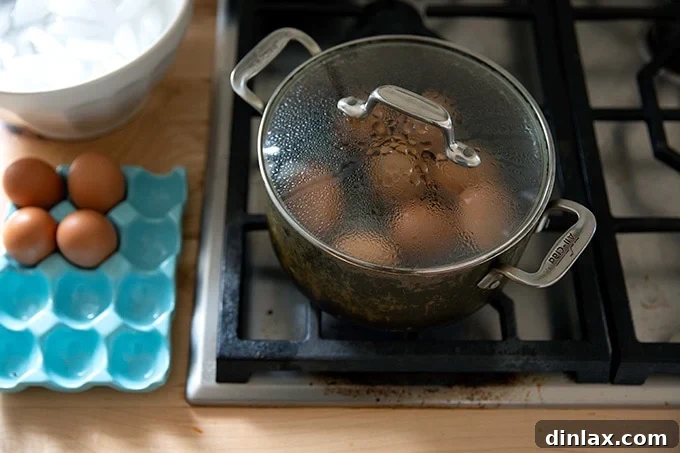
The journey to perfect deviled eggs begins with perfectly cooked eggs. The method of steaming your eggs, followed by an immediate ice bath, is a game-changer. This technique consistently yields eggs that are cooked just right—firm but tender yolks without any green ring—and, most importantly, shells that peel off with remarkable ease. This eliminates the common frustration of stubborn shells clinging to the egg whites, ensuring a beautiful, unblemished presentation. For this recipe, we recommend steaming eggs for precisely 12 minutes. If you own an Instant Pot, that’s another fantastic tool for achieving similar results; specific instructions for Instant Pot cooking can often be found in a detailed recipe box. Whether you choose the stovetop steaming method or your Instant Pot, the goal is always the same: perfectly cooked eggs with easy-to-peel shells.
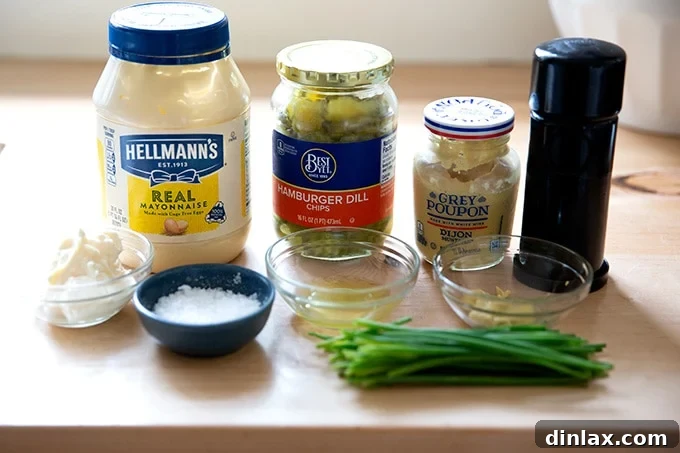
While your eggs are steaming to perfection, it’s the ideal time to gather all your other essential ingredients. This includes smooth mayonnaise, piquant Dijon mustard, the crucial pickle juice (or your chosen alternative like fresh lemon juice or white vinegar), fine kosher salt, freshly cracked black pepper, and vibrant fresh chives. Having everything prepped and ready will streamline the process, allowing you to focus on the art of flavor blending once the eggs are ready.
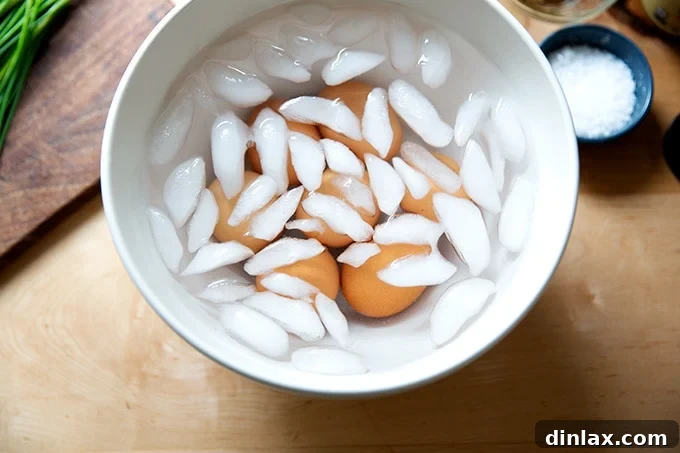
As soon as your eggs have completed their 12-minute steam, it’s critical to transfer them immediately into an ice bath. This abrupt temperature change halts the cooking process, preventing overcooking, and is instrumental in causing the egg membrane to separate from the shell, which makes peeling significantly easier. Allow them to cool for several minutes in the ice bath until they are comfortable to handle.
Once cooled, proceed to peel the eggs. You’ll likely find that the shells come off with remarkable ease, a testament to the effectiveness of the steaming and ice bath method. Gently tap the egg on a hard surface, then roll it to create small cracks all over before peeling under cool running water. This step ensures clean, smooth whites, essential for an attractive presentation.
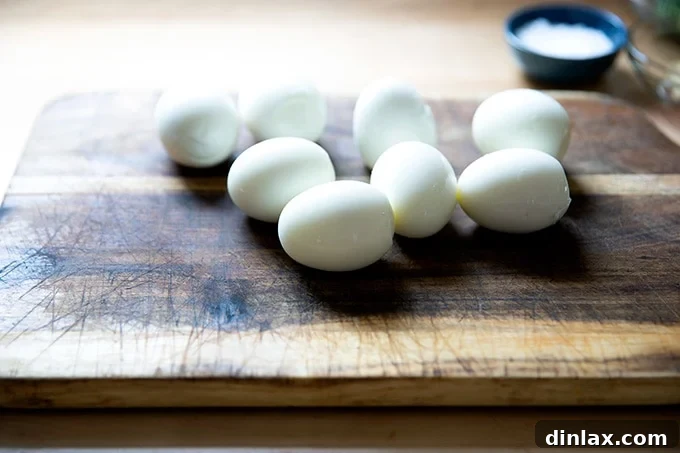
With the eggs peeled, carefully halve each egg lengthwise. A sharp knife is best for clean cuts. After halving, gently scoop out the vibrant yellow yolks and transfer them to a spacious mixing bowl. Arrange the hollowed egg white halves neatly on a serving platter or a plate, ready to be filled, and perhaps chill them slightly in the refrigerator while you prepare the filling.
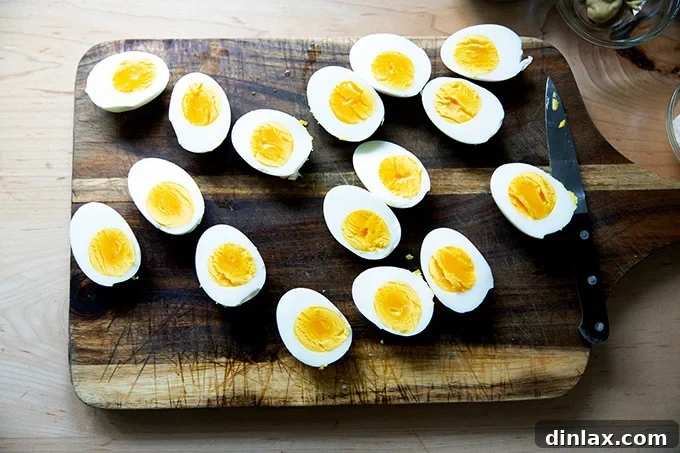
Now, separate the yolks from the whites. Place the creamy yolks into a large bowl, leaving the pristine egg white halves on a plate. The whites can be lightly covered and refrigerated while you prepare the rich filling. This separation allows for precise seasoning and a velvety smooth texture in your filling.
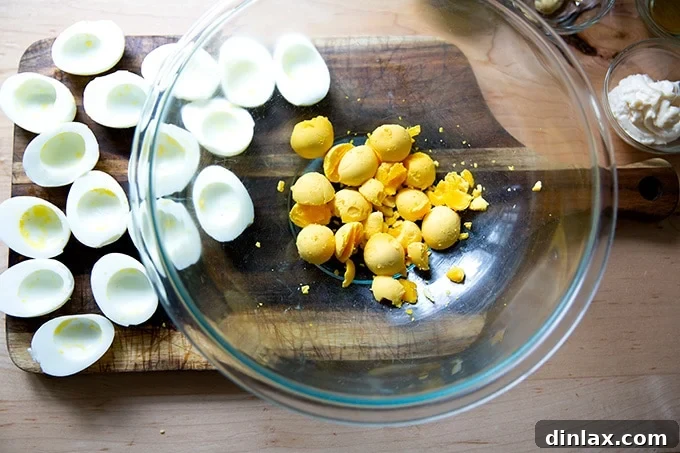
Using the back of a sturdy fork, thoroughly mash the egg yolks until they reach a fine, crumbly consistency. This step is crucial for achieving a smooth, lump-free filling. Ensure there are no large pieces remaining, as a silky texture is key to the deviled egg experience. You’re aiming for a uniform, soft texture that will easily combine with the other ingredients.
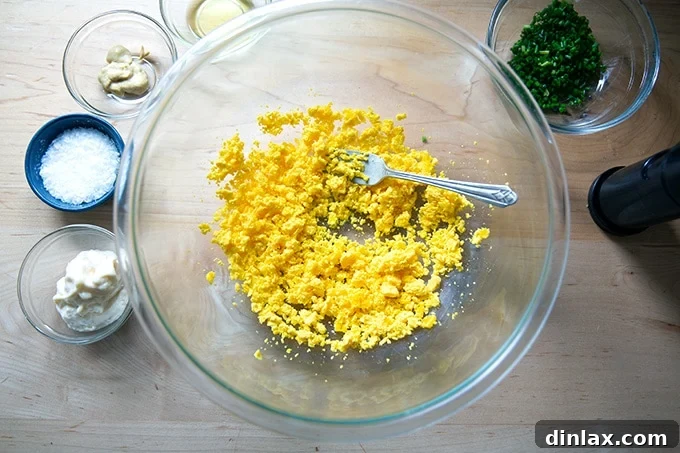
To the mashed yolks, add the mayonnaise, Dijon mustard, the tangy pickle juice (or lemon/vinegar), and a pinch of salt and pepper to taste. Incorporate the finely chopped fresh chives, reserving a small amount for garnish. Start with the suggested amounts, but remember that the ideal flavor profile is a matter of personal preference, so prepare to adjust. A good rule of thumb is 1 tablespoon of mayonnaise and 1-2 teaspoons of pickle juice per every two eggs.
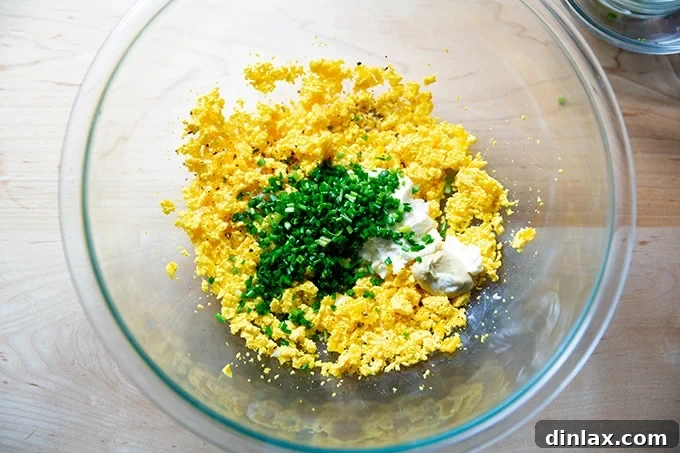
Thoroughly stir all the ingredients together until the mixture is uniform, creamy, and completely smooth. Once combined, taste the filling and adjust the seasoning as needed. If it feels too rich, a little more pickle juice or lemon juice will cut through the creaminess and add brightness. If it’s not quite creamy enough, a small extra dollop of mayonnaise will do the trick. For more mustardy kick, add another half teaspoon. This tasting and adjusting phase is where you truly make the recipe your own.
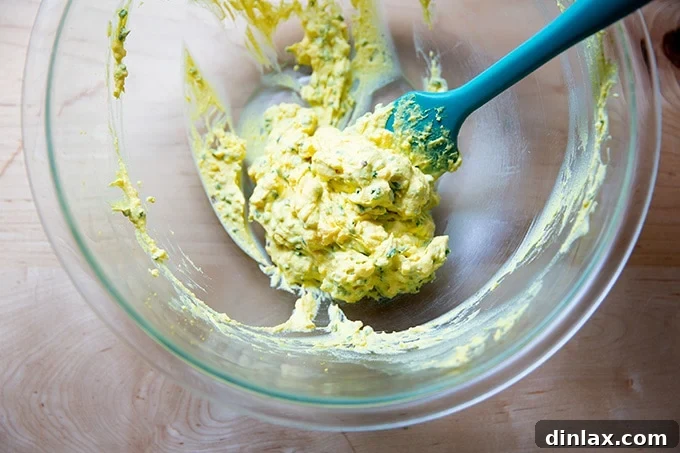
For an elegant presentation, transfer the creamy yolk mixture into a quart-sized resealable storage bag. Snip off one corner of the bag to create a makeshift piping bag. This allows for precise and aesthetically pleasing filling of the egg white cavities, giving your deviled eggs a professional, polished look. Alternatively, a small spoon can be used for a more rustic approach, but many find the piping method surprisingly simpler and quicker for neat results.
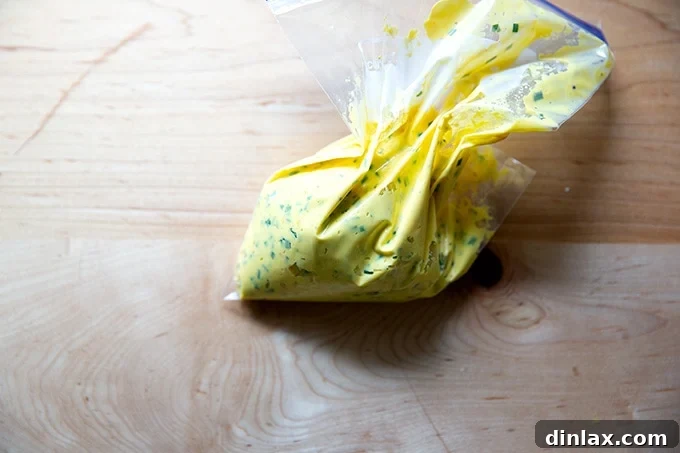
Carefully pipe the rich, flavorful filling into each hollowed egg white half, creating beautiful mounds. Aim for an even distribution, ensuring each deviled egg offers a generous bite of the creamy filling. Once all the egg whites are filled, your deviled eggs are almost complete, awaiting their final touch of garnish. The visual appeal of piped filling instantly elevates this classic appetizer.
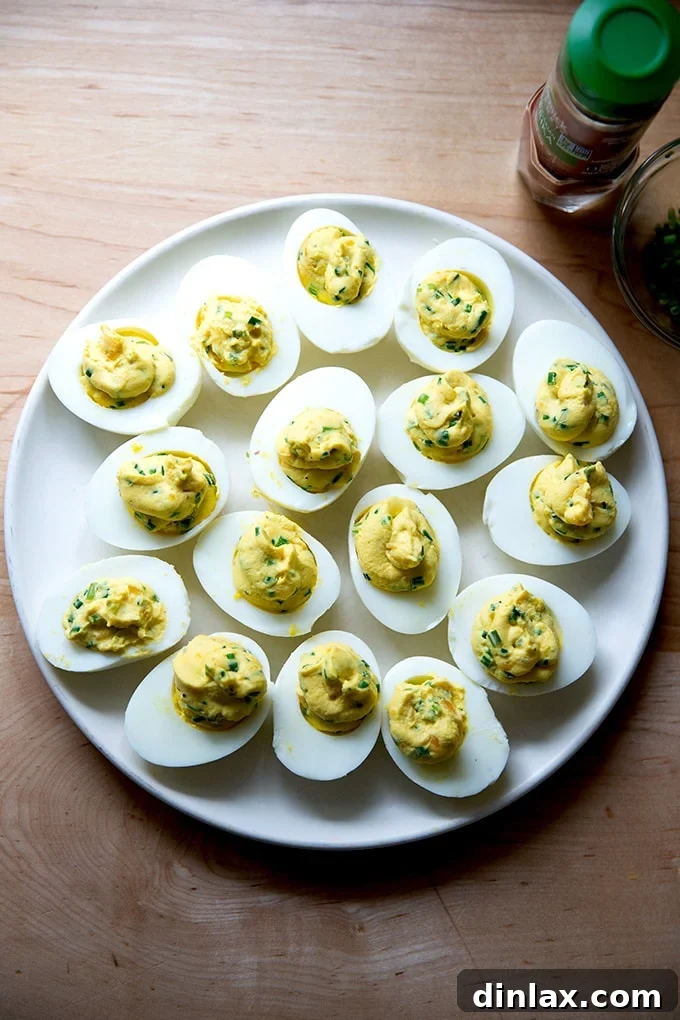
Before serving, sprinkle the deviled eggs with the reserved fresh chives for a pop of green and a final flourish of paprika for color and a hint of smoky flavor. These garnishes not only enhance the visual appeal but also add subtle layers of taste. Serve immediately, or cover lightly and chill until ready to present. Deviled eggs are always best enjoyed fresh.

Print Recipe

Classic Deviled Eggs
5 Stars
4 Stars
3 Stars
2 Stars
1 Star
5 from 12 reviews
- Author: Alexandra Stafford
Total Time: 22 minutes
Yield: 16 Deviled Eggs 1x
Diet: Vegetarian
Description
Simple and classic, these deviled eggs are a perfect festive addition to any holiday table or a welcome guest at any picnic. This recipe guides you through steaming methods that guarantee perfectly cooked eggs with shells that slip off effortlessly, resulting in deviled eggs that are fresh, bright, and wonderfully creamy all at once!
This recipe has been thoughtfully adapted from various reliable sources, including my favorite egg salad sandwich recipe, The New York Times Cooking, and The Food Network, bringing together the best techniques for a truly exceptional result.
Helpful Notes:
- The egg steaming method is inspired by J. Kenji Lopez Alt’s The Food Lab. Steaming for 12 minutes has consistently yielded perfect results for me, but cooking times can vary slightly based on your stove and egg size. A little trial and error might be needed to find your ideal timing. For those who prefer using an Instant Pot, refer to my Instant Pot hard-boiled egg recipe here.
- The Power of Pickle Juice: This ingredient has been a recent revelation in my kitchen and is often an underutilized secret weapon. If you don’t have pickle juice on hand, don’t fret! White vinegar or freshly squeezed lemon juice make excellent substitutes, offering a similar bright, acidic contrast.
- Scaling the Recipe: To adjust this recipe for larger or smaller batches, a good starting point is approximately 1 tablespoon of mayonnaise for every 2 eggs. I also prefer about 1 teaspoon of pickle juice (or substitute) for every 2 eggs, as I lean towards a more acidic, tangy flavor. However, personal taste is paramount—always feel free to adjust these ratios. For mustard, I find 1 teaspoon for 8 eggs provides just the right subtle kick without being overpowering, but you can certainly add more or less to your liking.
Ingredients
- 8 large eggs
- Kosher salt or flaky sea salt, to taste
- Freshly cracked black pepper, to taste
- 1/4 cup (4 tablespoons) mayonnaise
- 1 teaspoon Dijon mustard
- 2 – 4 teaspoons pickle juice, white vinegar, or fresh lemon juice (start with 2 and add more to taste)
- 1/4 cup finely chopped fresh chives, plus extra for garnish
- Paprika, for finishing garnish
Instructions
- Prepare and Cook the Eggs: Place a steamer basket into a large pot. Add about 1 inch of water to the pot, ensuring the water level is below the bottom of the steamer basket. Cover the pot with a lid and bring the water to a rapid simmer over high heat. Once simmering, carefully remove the lid and gently place the eggs into the steamer basket. Cover the pot again tightly and steam the eggs for exactly 12 minutes. While the eggs are steaming, prepare an ice bath by filling a large bowl with ice cubes and covering them with cold water. After 12 minutes, promptly remove the pot lid and, using tongs or a slotted spoon, carefully transfer the hot steamed eggs into the prepared ice bath. Let them cool completely for at least 5-10 minutes, or until they are comfortable to handle. This shock cooling helps prevent the green ring around the yolk and makes peeling much easier.
- Peel and Separate: Once the eggs are fully cooled, gently peel them under cool running water. The shells should slip off with ease. Halve each peeled egg lengthwise using a sharp knife. Carefully scoop out the bright yellow yolks and transfer them to a medium to large mixing bowl. Arrange the hollowed-out egg white halves on a clean serving platter or plate, cover them lightly, and place them in the refrigerator to chill while you prepare the filling. This ensures they remain firm and ready for piping.
- Prepare the Creamy Yolk Filling: In the bowl with the egg yolks, use the back of a fork to thoroughly mash them until they are completely smooth and free of lumps. Season the mashed yolks with a generous pinch of kosher salt and freshly cracked black pepper. Add the mayonnaise, Dijon mustard, and start with 1 to 2 teaspoons of pickle juice (or vinegar or lemon juice). Set aside a small amount (about 1-2 teaspoons) of the finely chopped chives for garnish. Add the remaining chopped chives to the yolk mixture. Stir everything together until all ingredients are well combined and you have a smooth, creamy filling.
- Taste and Adjust Flavor: Now, taste the yolk filling. This is your opportunity to fine-tune the flavors to your preference. If the mixture tastes too rich or heavy, add more pickle juice (or your chosen acid) in half-teaspoon increments, stirring and tasting after each addition, until you achieve a bright, tangy balance. If it’s not creamy enough, add another small spoonful of mayonnaise. If you desire a stronger mustard flavor, incorporate an additional 1/2 teaspoon or more of Dijon mustard. Continue to adjust salt and pepper as needed. The goal is a perfectly balanced filling that is creamy, savory, and tangy.
- Fill and Garnish: Once the filling is seasoned to your liking, you have two options for filling the egg white cavities. For a classic, elegant presentation, transfer the mixture into a quart-sized resealable plastic storage bag. Snip off one corner of the bag to create a piping opening, and pipe the filling neatly into each hollowed egg white. Alternatively, you can simply use a small spoon to mound the filling into the whites; while less precise, it’s still perfectly delicious. To finish, delicately sprinkle the filled deviled eggs with paprika for color and the reserved fresh chives. Serve immediately, or cover loosely and refrigerate for up to 2 days for optimal freshness and flavor.
- Prep Time: 10 minutes
- Cook Time: 12 minutes
- Category: Appetizer
- Method: Stovetop
- Cuisine: American