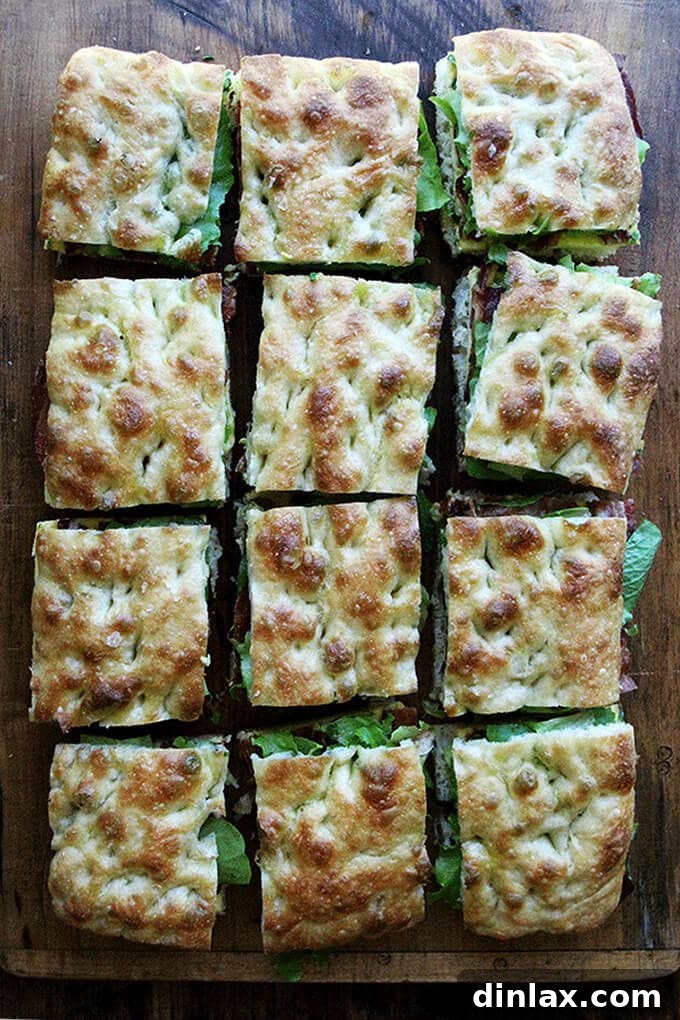
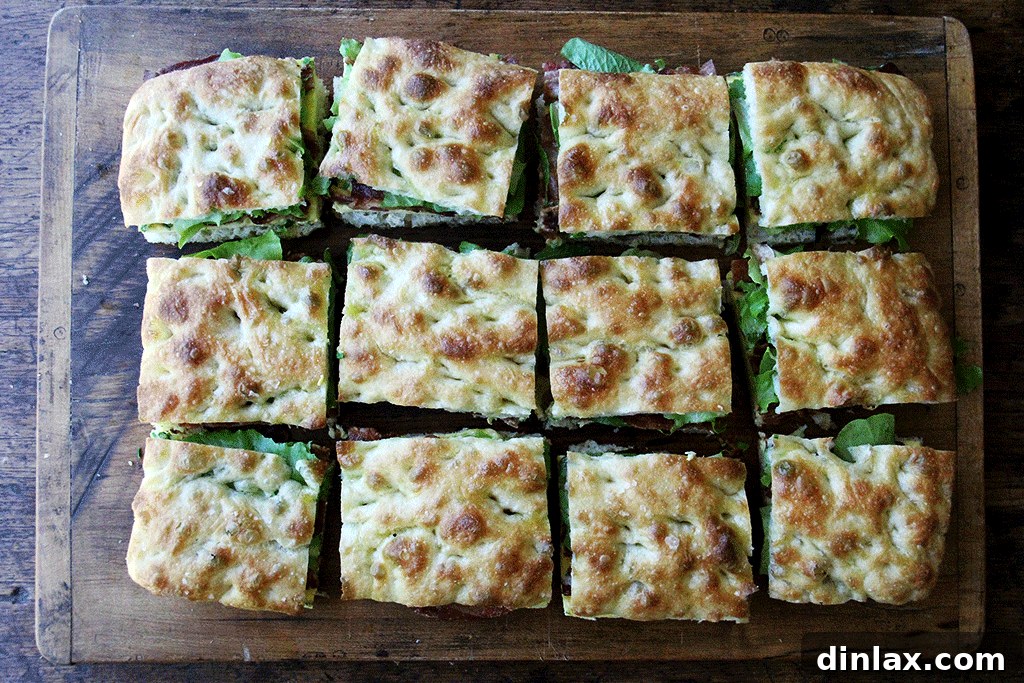
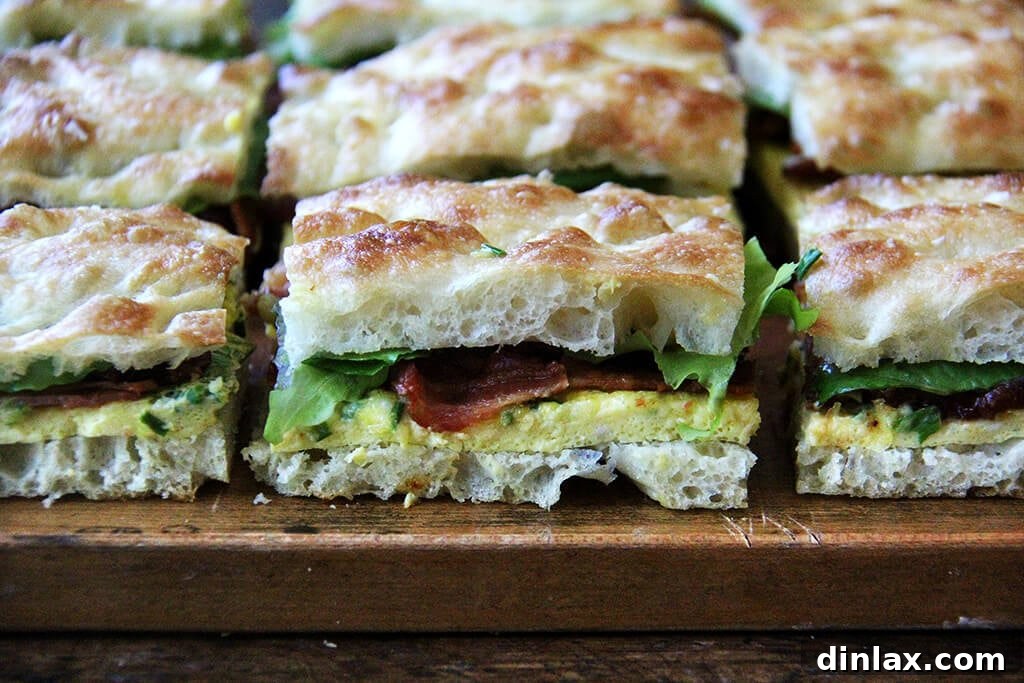
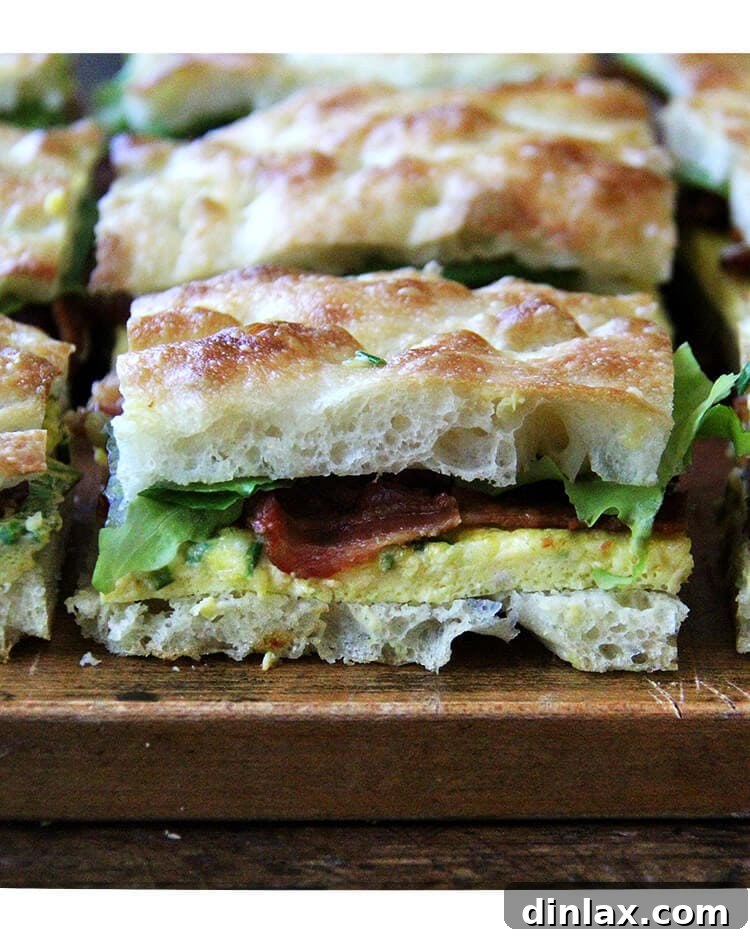
Imagine waking up to the aroma of freshly baked focaccia, sizzling bacon, and fluffy eggs, all coming together in one epic breakfast sandwich designed to feed a crowd. This isn’t just any breakfast sandwich; it’s the Ultimate Sheet Pan Breakfast Slab Sandwich, a culinary dream brought to life using the efficiency of sheet pan cooking. This innovative recipe brings together the best of sheet pan eggs, perfectly crisp sheet pan bacon, and a tender, golden sheet pan focaccia. Layered with fresh greens and your favorite condiments, these three components unite to form an impressive and utterly delicious slab sandwich that is perfect for any gathering.
While creating a feast of this magnitude might sound like a significant undertaking, with a little foresight and proper planning, it’s entirely manageable and incredibly rewarding. Picture this show-stopping dish at your next Father’s Day brunch, a graduation celebration, or any weekend gathering where you want to impress without being chained to the stove. The beauty of the sheet pan method lies in its ability to streamline the cooking process, allowing you to prepare multiple elements simultaneously and with minimal fuss.
Crafting Your Ultimate Breakfast Slab Sandwich: A Master Plan
Success with this large-format breakfast sandwich hinges on a well-orchestrated plan. While some steps require patience, such as the focaccia’s proofing, the active cooking time is surprisingly short, making this a perfect weekend project. Here’s a strategic game plan to ensure your breakfast slab sandwich comes out perfectly:
- Evening Prep (Saturday): Begin by mixing your focaccia dough. This overnight proofing not only develops incredible flavor but also makes the dough much easier to handle the next day. Once mixed, simply cover and refrigerate the dough.
- Morning Rise (Sunday): On Sunday morning, remove the focaccia dough from the refrigerator. Allow it to come to room temperature and undergo its second rise, which typically takes 2 to 4 hours, depending on your kitchen’s warmth. Aim to pull it out no later than 7 AM if you plan for a mid-morning brunch.
- Bacon Bliss: While the focaccia dough is in its final rise, turn your attention to the bacon. Cooking bacon on a sheet pan in the oven is a game-changer for consistency and mess-free cleanup.
- Focaccia Bake: Once the focaccia has completed its second rise and is beautifully dimpled, it’s ready for the oven. Bake it until golden and crisp.
- Eggs-traordinary Finish: While the freshly baked focaccia cools, prepare and bake the sheet pan eggs. This timing ensures both components are warm and ready for assembly.
- The Grand Assembly: With all components ready, the focaccia will have rested long enough to be halved horizontally. Now, comes the fun part: layering all the deliciousness together!
Once each individual component is prepared, the assembly process is incredibly fast and enjoyable. You’ll be amazed at how quickly this impressive meal comes together, ready to be devoured by your hungry guests.
The Art of Sheet Pan Cooking: Components Unveiled
The secret to this ultimate breakfast lies in mastering three key components, each prepared efficiently on its own sheet pan. This not only simplifies cooking but also ensures consistent results for every element.
Fluffy Sheet Pan Eggs
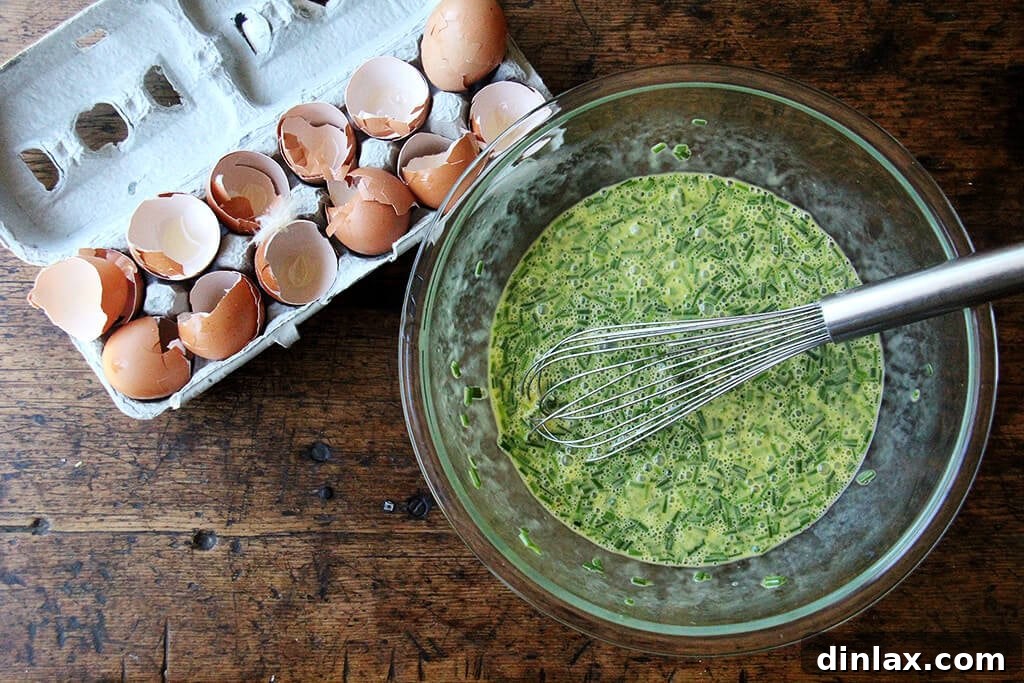
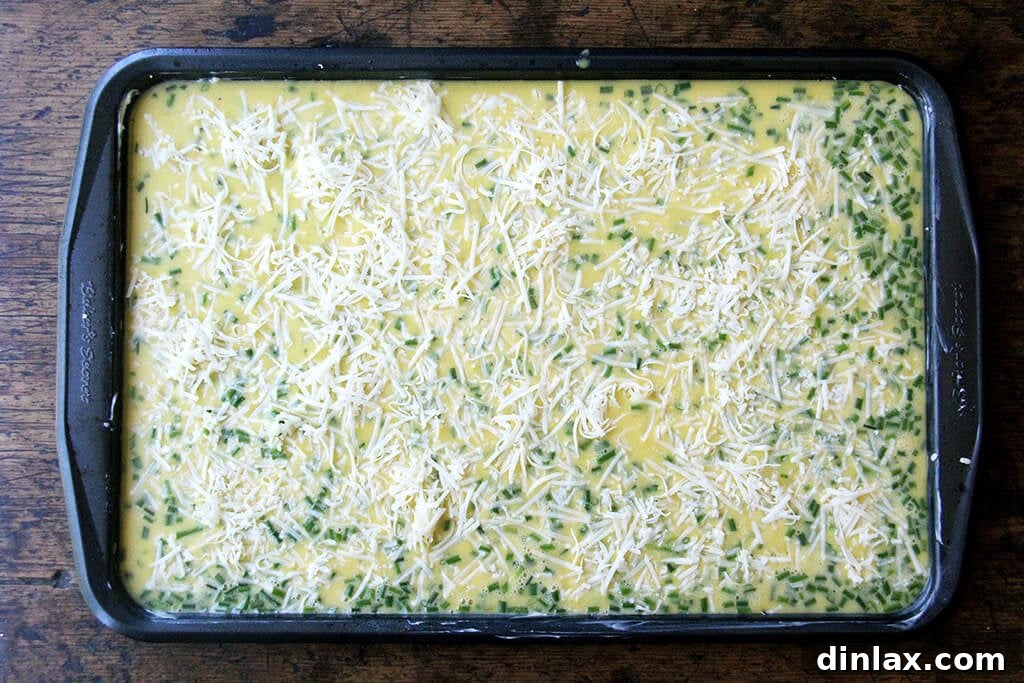
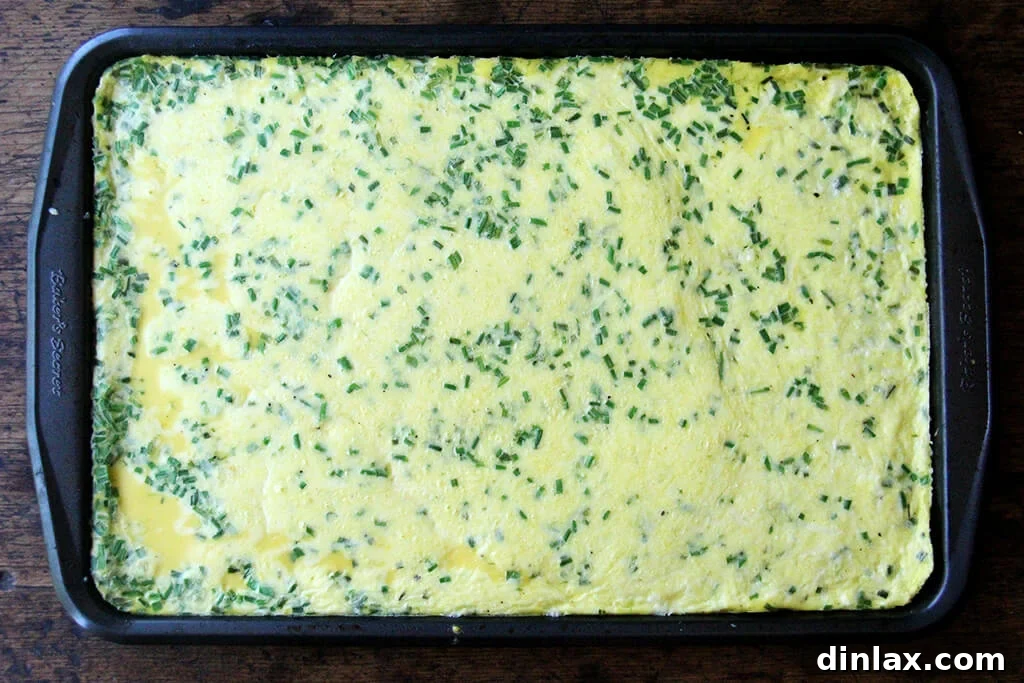
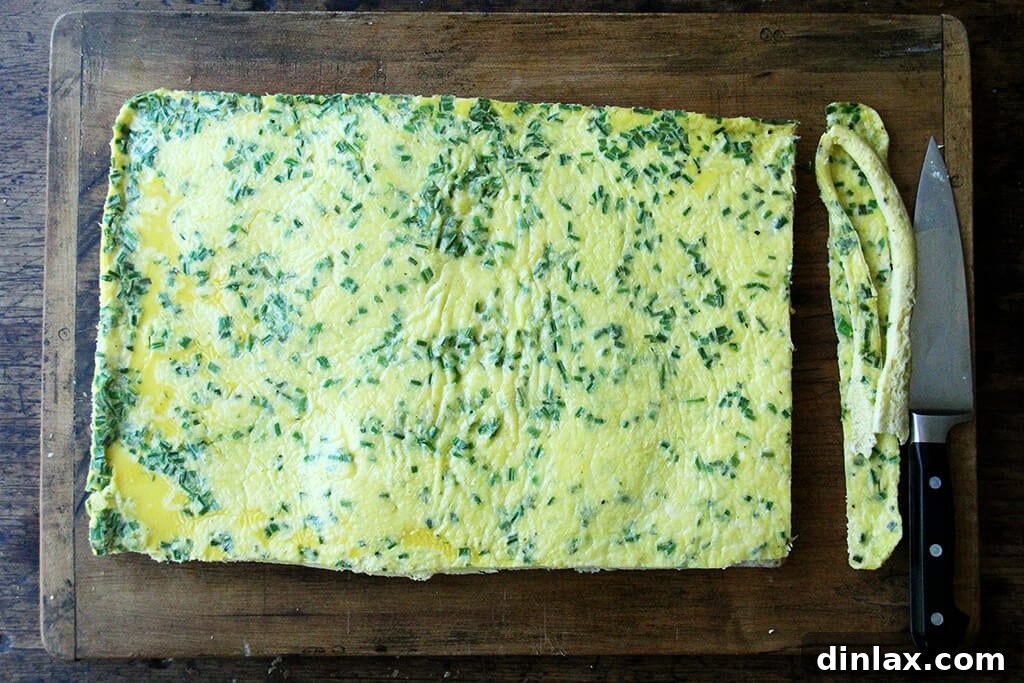
Baking eggs on a sheet pan is a brilliant technique for feeding a crowd. Instead of scrambling individual portions on the stovetop, you create one large, uniformly cooked slab of eggs that fits perfectly onto your focaccia. To achieve light and airy sheet pan eggs, whisk twelve large eggs vigorously with a splash of cream, a generous seasoning of kosher salt and freshly ground pepper, and finely chopped chives for a delicate oniony flavor. The cream adds richness and helps create that desirable fluffy texture. For an extra layer of flavor and melty goodness, sprinkle grated Cheddar cheese evenly over the egg mixture before baking. The key is to bake them just until set, ensuring they remain moist and tender, not rubbery. A well-buttered half sheet pan (approximately 11×16.5 inches) is essential to prevent sticking and ensure easy transfer. This method guarantees a consistent cook and a beautiful presentation.
Crispy Sheet Pan Bacon
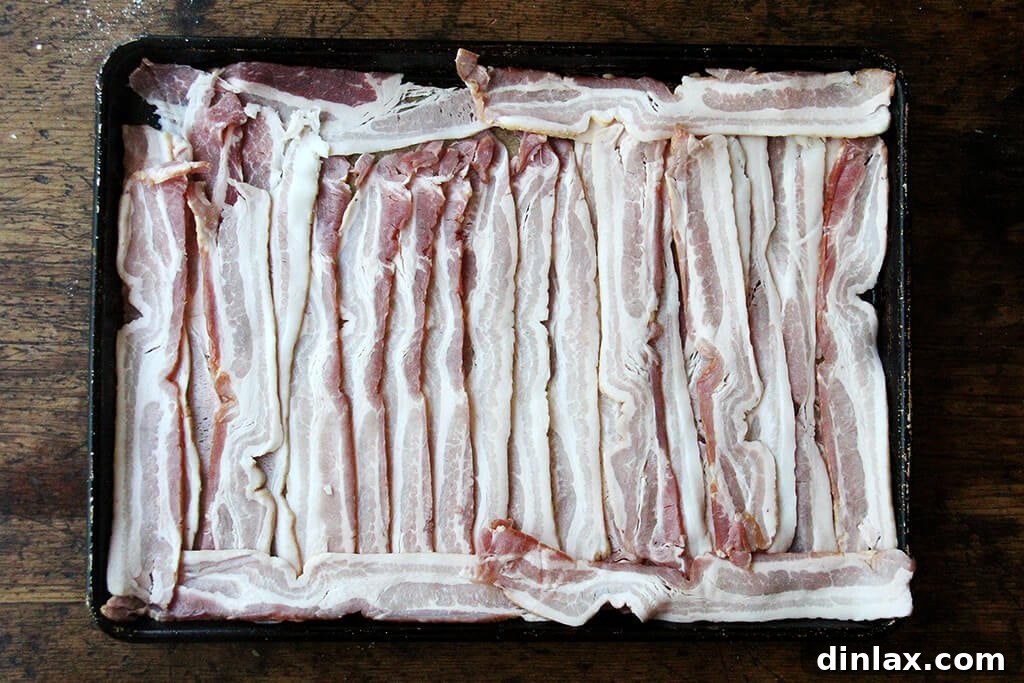
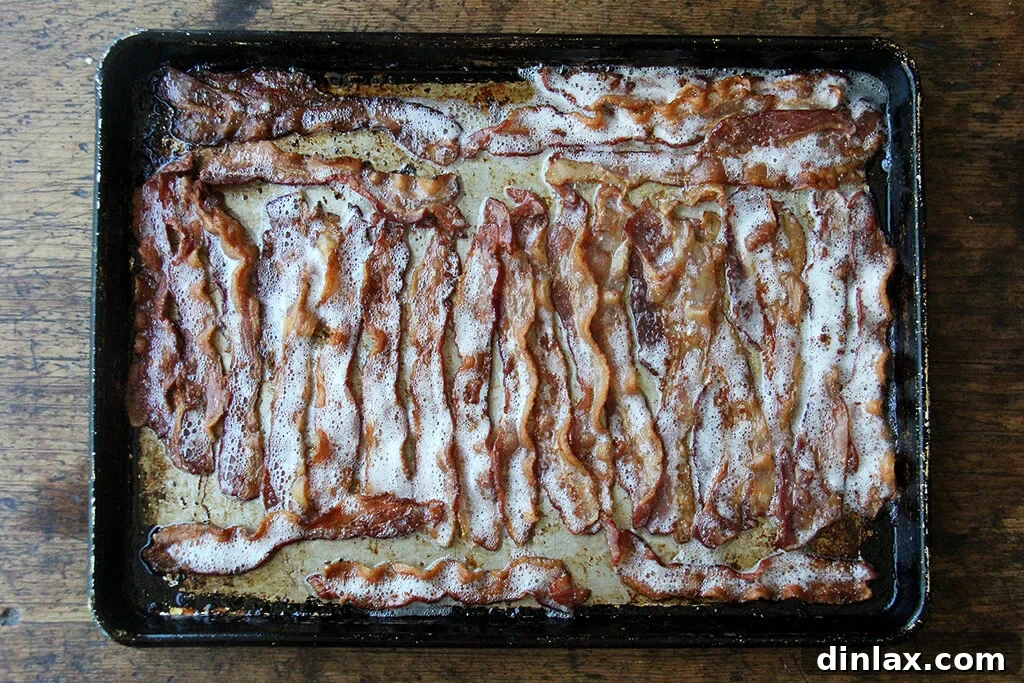
Say goodbye to splattering stovetops and unevenly cooked strips. Baking bacon on a sheet pan is arguably the best way to achieve consistently crispy results with minimal effort. Lay 1.5 pounds of bacon across a large sheet pan. Don’t worry if the slices overlap a bit initially; as they cook and shrink, you can easily separate and spread them out. Start with a higher temperature (like 425°F) to get a good render, then reduce if needed to prevent burning. After about 10 minutes, pull the pan out, use forks to spread out any overlapping pieces, and return it to the oven for another 10 to 15 minutes, or until the bacon reaches your desired level of crispness. Transfer the cooked bacon to a paper-towel lined plate to drain any excess fat, ensuring each bite is perfectly crunchy. If you have a particularly large batch, you might need to drain some fat from the pan mid-cook and re-crisp any softer pieces. This method is incredibly efficient, allowing you to cook a significant amount of bacon at once, a crucial element for a breakfast built for a crowd.
Homemade Sheet Pan Focaccia
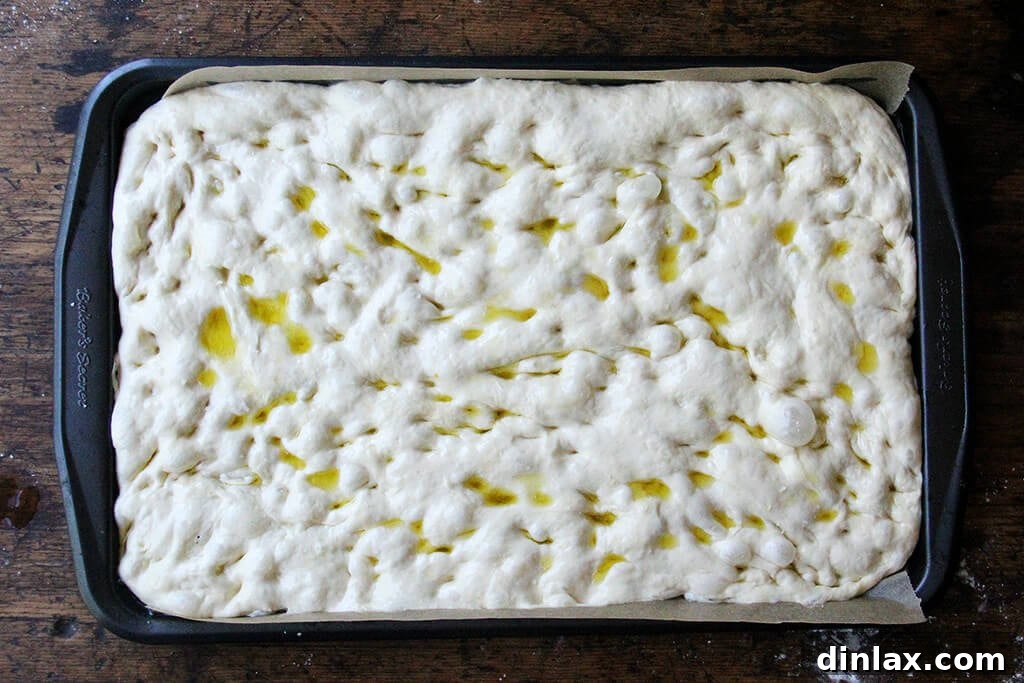
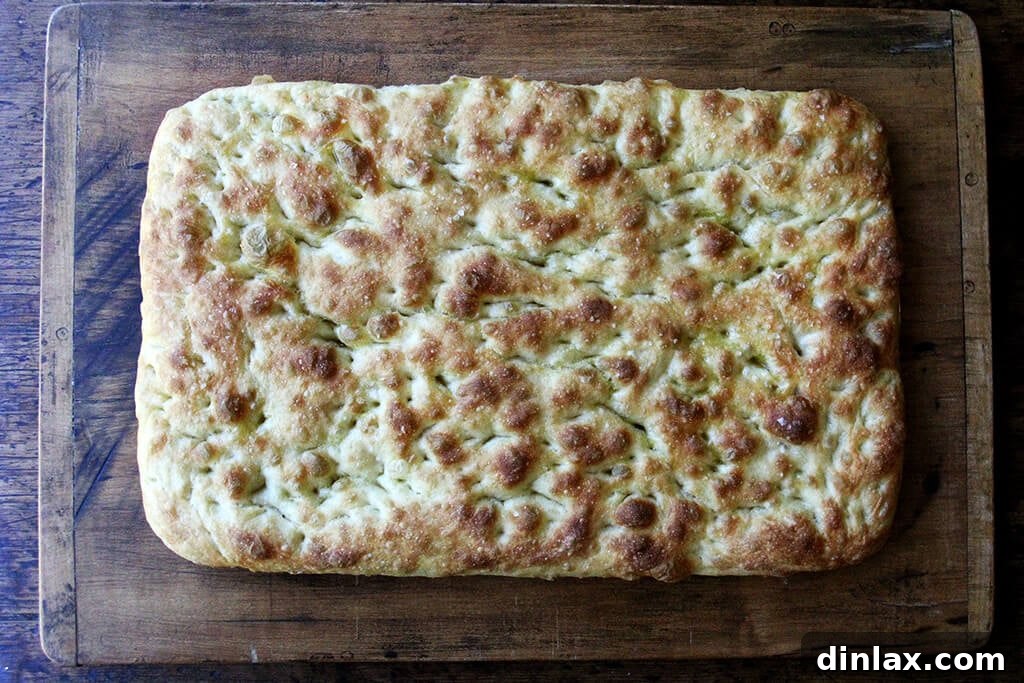
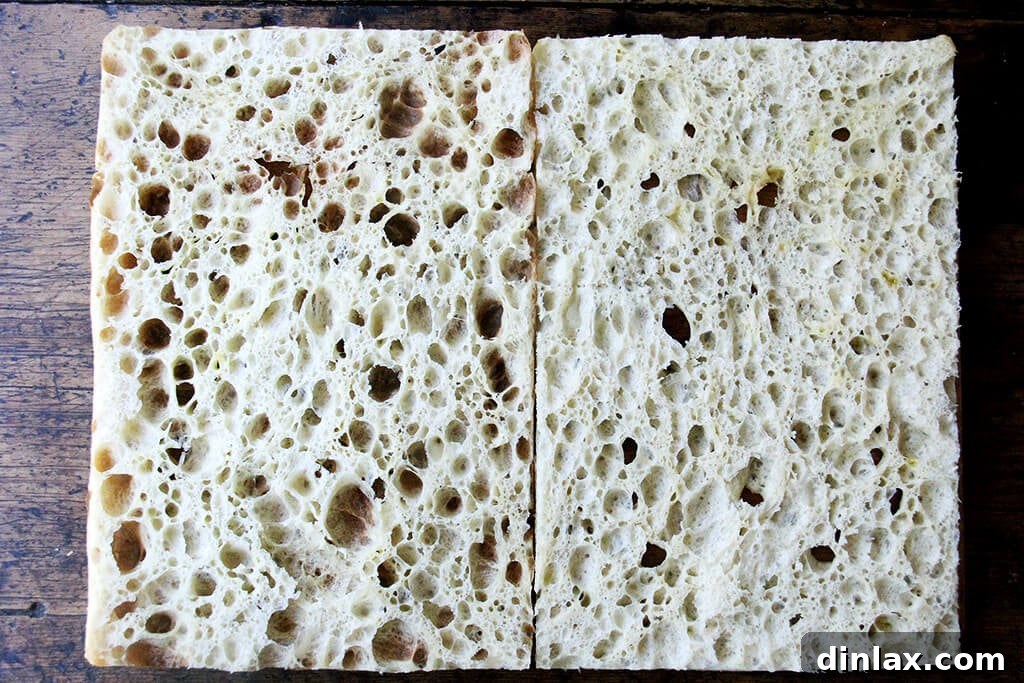
The foundation of this incredible sandwich is a tender, airy focaccia, baked directly on a sheet pan. Starting the dough the night before with an overnight rise in the refrigerator is key to developing a rich, complex flavor and a wonderfully soft crumb. This method also makes the dough much more pliable and easier to handle on baking day. The next morning, you’ll transfer the dough to a well-oiled sheet pan, ensuring it’s coated in plenty of olive oil for that signature crispy bottom and flavorful crust. The second rise takes place on the pan itself, allowing the dough to relax and expand before baking. Drizzling more olive oil and dimpling the dough with your fingertips creates those iconic focaccia indentations, perfect for catching pockets of olive oil and a sprinkle of sea salt. Baking at 425°F results in a beautiful golden crust and a light, chewy interior. Once baked, cooling the focaccia for at least an hour is crucial for it to set properly and make slicing much easier. When it’s time to assemble, carefully halving the focaccia horizontally with a sharp serrated knife creates the perfect “slab” to house your fillings. Trimming the very outer edges exposes the soft crumb, making the halving process even smoother and ensuring a consistent bite throughout the sandwich.
Assembly: The Grand Finale
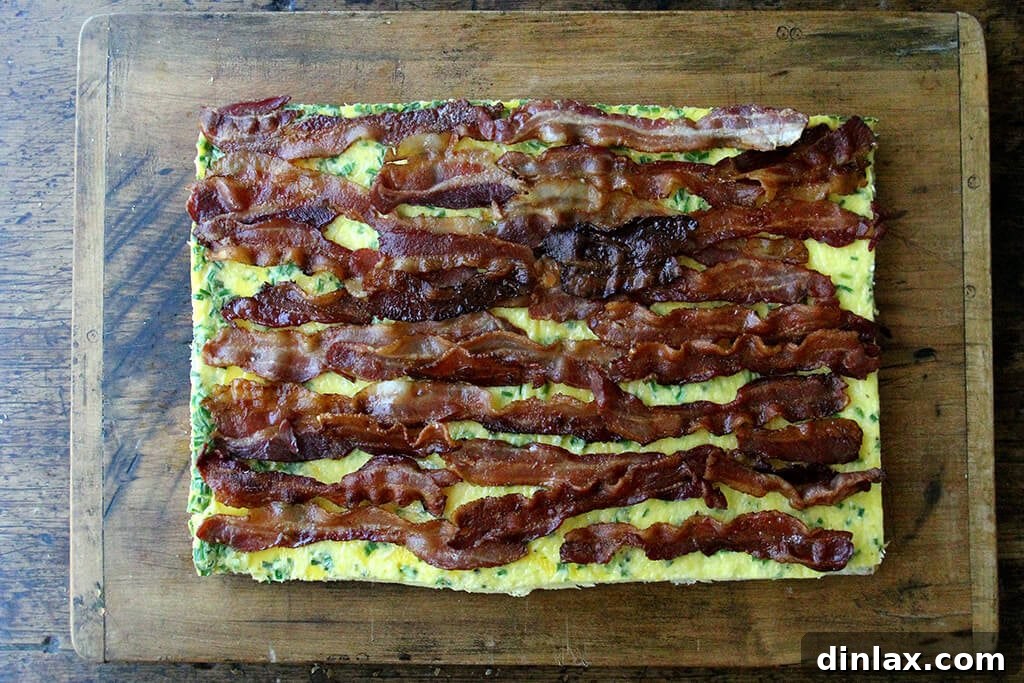
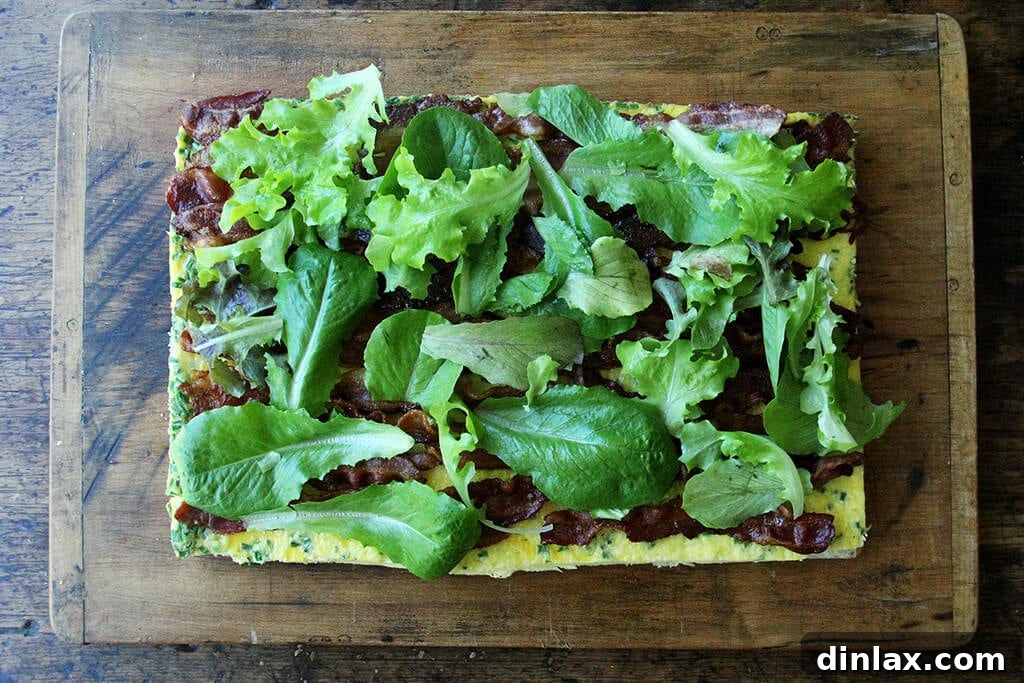
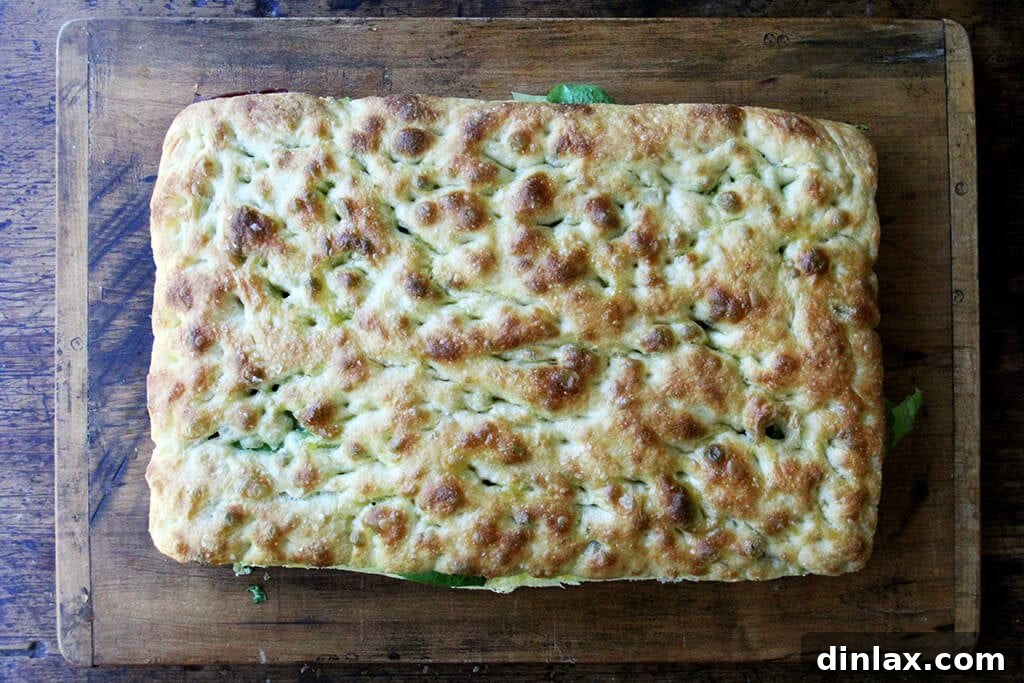
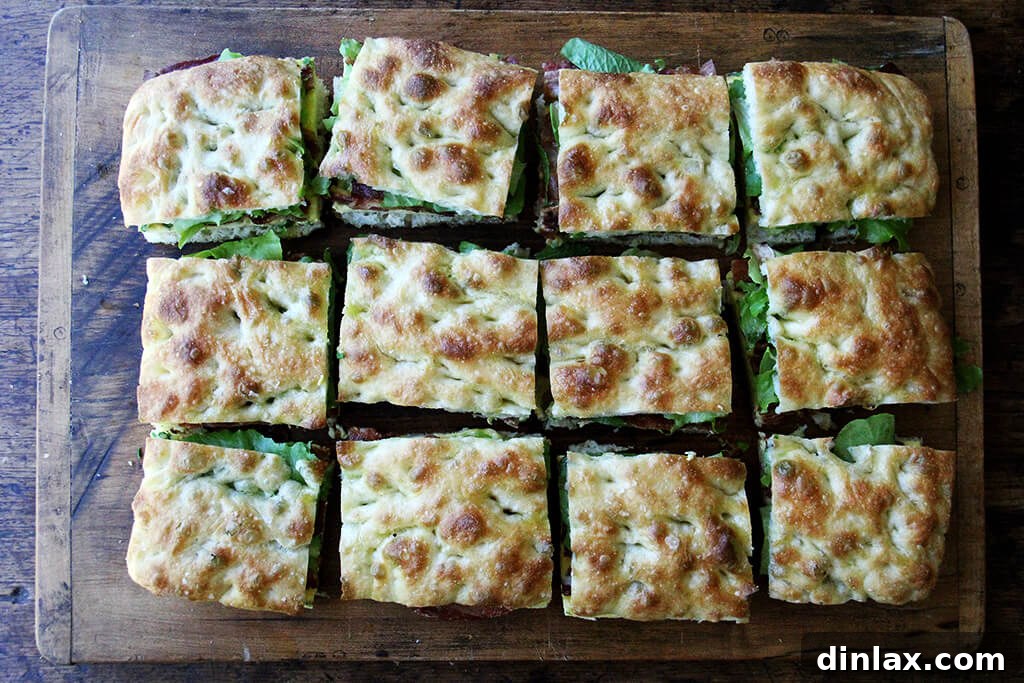
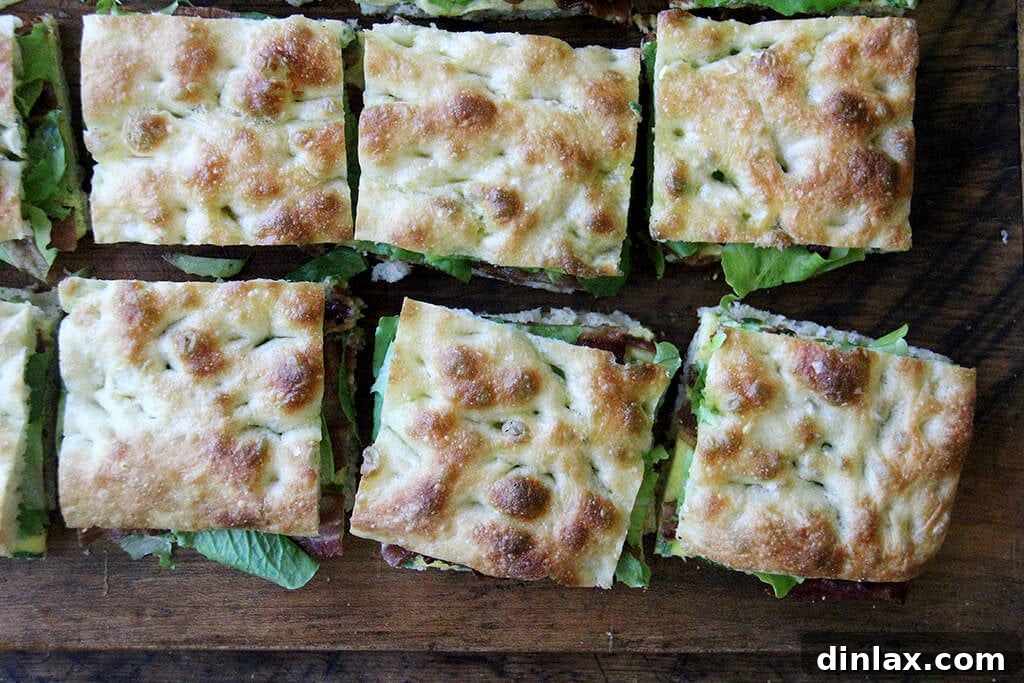
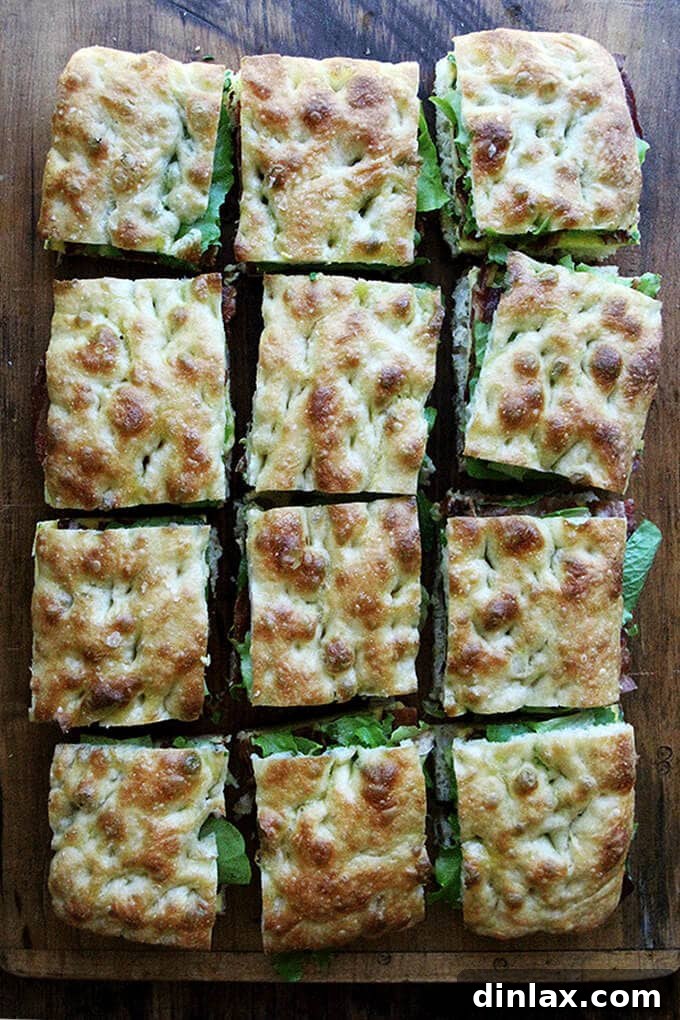
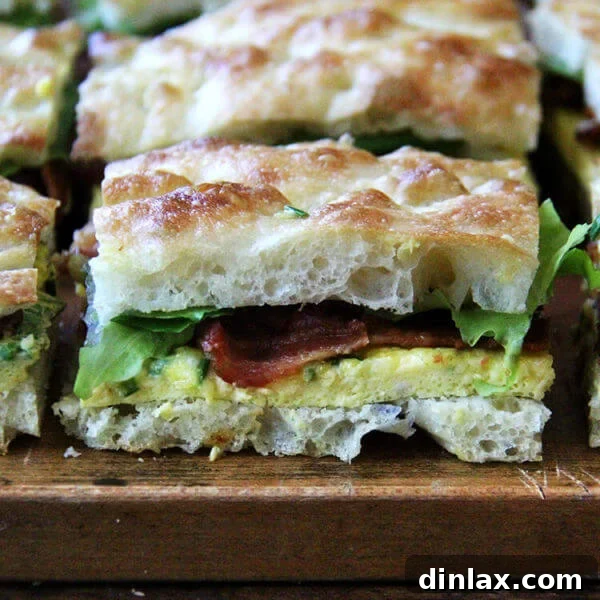
With all three glorious components prepared, it’s assembly time! Transfer the bottom half of your magnificent focaccia slab to a large cutting board or serving platter. Gently lift the baked egg slab from its pan using an offset spatula and carefully place it on top of the focaccia, trimming any excess that might overhang. Next, generously layer the crispy bacon over the eggs. For a touch of freshness and color, scatter a vibrant layer of crisp lettuce. Finally, crown your masterpiece with the top half of the focaccia. With a sharp serrated knife, slice the enormous sandwich into individual portions. A good strategy is to make two cuts lengthwise down the shorter side and three cuts across the longer side, yielding 12 perfectly sized breakfast sandwiches. Now, it’s brunch time! Call over the neighborhood and watch as this impressive slab sandwich disappears in minutes.
Print Recipe
Ultimate Sheet Pan Breakfast Slab Sandwich with Bacon, Eggs, & Cheese
Rated 4.8 out of 5 stars by 4 reviewers
- Author: Alexandra Stafford
- Total Time: 18 hours 25 minutes
- Yield: 12 sandwiches
Description
This recipe brilliantly combines sheet pan focaccia, sheet pan eggs, and sheet pan bacon into one sensational slab sandwich. Originally featured on Food52, this method is a guaranteed way to serve a memorable breakfast or brunch to a hungry crowd.
Important Notes for Success:
- Strategic Planning: For events like Father’s Day brunch, kick off your focaccia dough preparation on Saturday evening. On Sunday morning, retrieve the dough from the fridge promptly (ideally by 7 AM) to allow for its crucial second rise. Factor in approximately 4 to 5 hours from the time the dough leaves the refrigerator until the complete sandwich is ready to serve. For example, a 6 AM start could lead to a delightful breakfast by 10 or 11 AM.
- Optimized Workflow: Maximize your time by cooking the bacon while the focaccia is undergoing its final rise. Once the focaccia has baked and is cooling, move on to preparing and baking the eggs. This sequential approach ensures all components are ready at roughly the same time for quick assembly.
Ingredients
Overnight Focaccia:
- 4 cups (512 g) all-purpose flour
- 2 teaspoons kosher salt
- 2 teaspoons instant yeast
- 2 cups lukewarm water (prepared by mixing 1/2 cup boiling water with 1 1/2 cups cold water)
- 4 tablespoons olive oil
- sea salt
Egg Sandwich:
- 1.5 pounds bacon
- 12 eggs
- kosher salt and pepper to taste
- splash cream (approximately 1-2 tablespoons)
- 4 ounces grated Cheddar cheese
- 1/4 to 1/2 cups finely chopped chives
- fresh lettuce leaves
- hot sauce, mayonnaise, and other desired condiments for serving
Instructions
- Prepare the Focaccia Dough: In a generously sized mixing bowl, combine the all-purpose flour, kosher salt, and instant yeast with a whisk until thoroughly mixed. Gradually add the lukewarm water, stirring with a rubber spatula until all the water is absorbed and the ingredients form a shaggy, sticky dough ball.
- Cover the bowl tightly with a clean tea towel or plastic wrap. Place the bowl in your refrigerator and allow the dough to proof slowly overnight, or for a minimum of 8 to 10 hours. This slow fermentation process greatly enhances the flavor and texture of the focaccia.
- Morning Dough Prep and Rise: The following morning, remove the chilled focaccia dough from the refrigerator. Prepare a rimmed sheet pan by lining it with parchment paper or coating it generously with nonstick cooking spray. Pour 3 tablespoons of olive oil onto the prepared sheet pan, ensuring it covers the surface. Using two forks, gently deflate the cold dough by pulling it from the sides of the bowl towards the center. Rotate the bowl in quarter turns as you work, forming the dough into a rough ball. Carefully lift the dough onto the oiled sheet pan. Roll the dough ball gently in the olive oil to ensure it’s fully coated. Allow the dough to rest undisturbed at room temperature for 2 to 4 hours, depending on the ambient temperature of your kitchen, until it looks noticeably puffy.
- Stretch and Dimple: While the oven preheats, set an oven rack in the middle position and preheat your oven to 425°F (220°C). Drizzle the remaining tablespoon of olive oil over the surface of the risen focaccia dough. With lightly greased hands, gently press down on the dough using all ten fingertips to create dimples and encourage the dough to gently stretch outwards. Carefully pull on the ends of the dough, guiding them towards the corners of the sheet pan. If the dough resists stretching, allow it to rest for 5 minutes before continuing, repeating until it comfortably fits most of the sheet pan.
- Bake the Focaccia: After stretching, dimple the dough lightly once more. Generously sprinkle the entire surface with sea salt. Transfer the sheet pan to the preheated oven and bake for 20 to 25 minutes, or until the top is golden brown and the underside is crisp. Carefully remove the pan from the oven and transfer the hot focaccia to a wire cooling rack. Allow it to cool completely for at least one hour before attempting to slice it. This cooling time is essential for the structure to set and for easier halving.
- Slice the Focaccia Slab: To prepare the focaccia for your slab sandwich, first trim off the very outer edges; this exposes the soft interior crumb and makes halving much simpler. To halve, start by making shallow cuts through each corner. Then, using a long, sharp serrated knife, carefully run the knife horizontally through the short end until you reach the midway point, then repeat from the other short end. Keep your knife as parallel to the bread as possible for an even cut. A good tip is to hug the top layer with your knife, rather than aiming for the absolute center, to achieve a more consistent split.
- Cook the Bacon: Preheat your oven to 425°F (220°C). Arrange the bacon strips on a clean sheet pan. It’s acceptable if some pieces overlap or are layered initially, as they will shrink considerably during cooking. Bake for 10 minutes. Remove the pan from the oven, and using forks, gently spread out and separate the bacon slices. Return the pan to the oven and continue baking for another 10 to 15 minutes, or until the bacon is beautifully crispy. Transfer the crisp bacon slices to a plate lined with paper towels to absorb excess grease. If necessary, drain some of the rendered fat from the pan and return any remaining less-crisp pieces to the oven for a final quick crisping.
- Bake the Eggs: Turn off your oven and leave the door ajar to expedite cooling, as you will need the temperature to drop to approximately 300°F (150°C). Generously grease a half sheet pan (an 11×16.5-inch nonstick pan works perfectly) with butter. In a large bowl, crack all 12 eggs. Add a generous pinch of kosher salt and pepper, along with a splash of cream. Whisk vigorously until the eggs are well combined and slightly frothy. Gently fold in the finely chopped chives. Pour the egg mixture evenly into the prepared pan. Sprinkle the grated Cheddar cheese uniformly over the eggs. Bake in the 300°F oven for about 15 minutes, or until the eggs are just set and cooked through but still tender.
- Assemble the Slab Sandwich: Carefully transfer the bottom half of the cooled focaccia slab onto a large cutting board or serving platter. Once the eggs are cooked, use an offset spatula to gently loosen them from the pan, then carefully slide the entire egg slab onto the bottom focaccia layer. Trim off any excess, overhanging egg portions to create neat edges. Next, arrange the crispy bacon evenly over the eggs. Scatter a fresh layer of lettuce leaves on top of the bacon. Finally, place the top half of the focaccia bread over the fillings. To serve, cut the finished slab sandwich into 12 individual pieces (achieved by making two cuts through the shorter end and three cuts through the longer end of the slab). Serve immediately with an assortment of condiments such as hot sauce, mayonnaise, or any other favorites.
- Prep Time: 18 hours (includes focaccia proofing)
- Cook Time: 25 minutes (focaccia baking, active cooking for bacon/eggs is separate but concurrent with focaccia’s rise/cool)
- Category: Breakfast
- Method: Sheet Pan
- Cuisine: American