
Welcome to the ultimate guide for crafting the perfect homemade sourdough pizza! Forget complicated techniques and endless steps; this recipe is designed for simplicity and incredible results. Using just all-purpose or bread flour, and bypassing both autolyse and preferment stages, everything comes together in one easy mix. If you’ve ever dreamt of creating pizzeria-quality sourdough pizza in your own kitchen, your journey starts here. Get ready to awaken your sourdough starter and uncover the 5 essential secrets that will transform your pizza-making experience from good to absolutely phenomenal.

This sourdough pizza recipe is engineered to deliver a crust that’s truly remarkable: a delightfully ballooned and blistered edge that offers a satisfying crunch, coupled with a tender, pliable interior. Achieving this coveted texture in a standard home oven requires a thoughtful approach, focusing on a few critical elements. The cornerstone of success lies in using a high-hydration dough (around 75%), meticulously managing the fermentation process (long and slow is key), handling the dough with the utmost gentleness, and baking it in an intensely hot oven—ideally equipped with a Baking Steel or a quality pizza stone to maximize heat transfer.
Let’s dive deeper into each of these fundamental principles to ensure your sourdough pizza reaches its full potential:
5 Essential Secrets to Sourdough Pizza Perfection
- Embrace a High-Hydration Dough: Unlike professional pizza ovens that can soar to 900ºF and cook a pizza in under a minute, most home ovens rarely exceed 550ºF. This lower temperature means pizzas take longer to bake, increasing the risk of the dough drying out. A high-hydration dough, typically around 75% water, is crucial here. The ample moisture content prevents the crust from becoming tough and dry during the extended baking time, ensuring it remains tender and airy. For context, outdoor wood-fired pizza ovens can use much lower hydration doughs because of their extreme heat, which cooks the pizza almost instantly, locking in moisture before it can evaporate.
- Master Sufficient Fermentation: Fermentation is where the magic of sourdough truly happens. After the initial bulk fermentation (the first long, slow rise), transferring your dough to the refrigerator for at least 12 hours, and ideally up to 3 days, is a game-changer. This cold fermentation period allows the natural yeasts and bacteria in your sourdough starter to continue slowly breaking down starches, developing complex flavors that simply can’t be rushed. It also improves the dough’s structure, making it stronger and easier to handle, and enhances browning during baking, contributing to that desirable blistered crust.
- Ensure Adequate Proofing Before Baking: While cold fermentation develops flavor, bringing the dough to room temperature before baking is vital for optimal shaping and oven spring. If time allows, remove your dough from the fridge at least one to two hours before you plan to bake. Room-temperature dough is significantly more relaxed and elastic, stretching into a perfect round with ease, unlike cold, stiff dough which tends to resist shaping and retract. This relaxed state also encourages better oven spring, resulting in a lighter, airier crust.
- Handle the Dough with Minimal Touch: The beauty of sourdough pizza crust lies in its airy, open crumb structure, characterized by beautiful irregular air pockets. These air pockets are meticulously developed during the long fermentation process. When it’s time to shape your pizza, resist the urge to overwork or deflate the dough. A delicate, gentle hand is paramount. Excessive pressing, rolling, or stretching can crush these precious air bubbles, leading to a dense, tough crust. Aim for a light touch, coaxing the dough into shape rather than forcing it.
- Invest in a Baking Steel: While a pizza stone is a good start, a Baking Steel is truly transformative for home pizza making. Steel is a far superior conductor of heat compared to stone. This means it transfers heat to the base of your pizza dough much faster and more efficiently, mimicking the intense heat of a professional pizza oven floor. The rapid heat transfer promotes exceptional oven spring—the sudden expansion of the dough in a hot oven—creating those glorious, airy bubbles throughout the crust that define a truly great pizza.
Crafting Your Sourdough Pizza: A Step-by-Step Guide
Precision is key in baking, and a kitchen scale is your best friend for consistent, delicious results. For this simple yet spectacular sourdough pizza, you’ll need just four core ingredients: water, flour, salt, and your active sourdough starter. Let’s begin the journey to homemade pizza perfection:
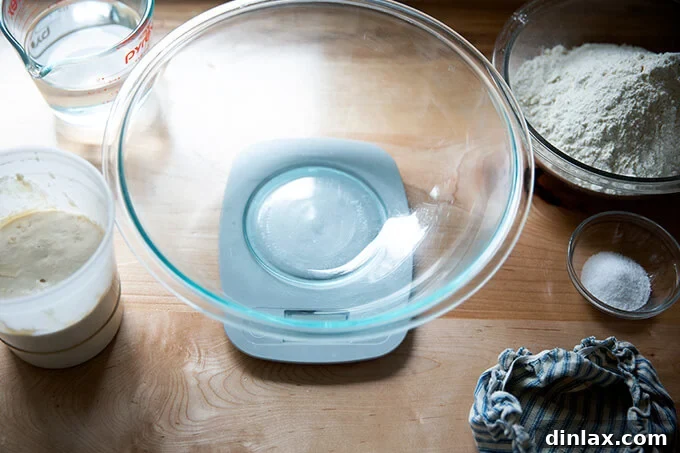
In a large mixing bowl, combine 375 grams of water, 100 grams of your active and bubbly sourdough starter, and 10 grams of fine sea salt. (If you live in a particularly humid climate, you might consider starting with slightly less water – refer to the detailed recipe notes for guidance on adjusting hydration.)
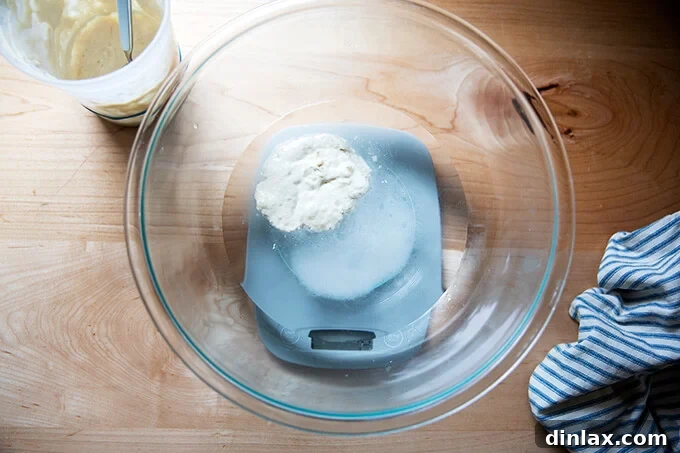
Stir these ingredients together thoroughly with a spatula until they are well combined. The mixture doesn’t need to be perfectly smooth at this stage; simply ensure the salt has dissolved and the starter is distributed.
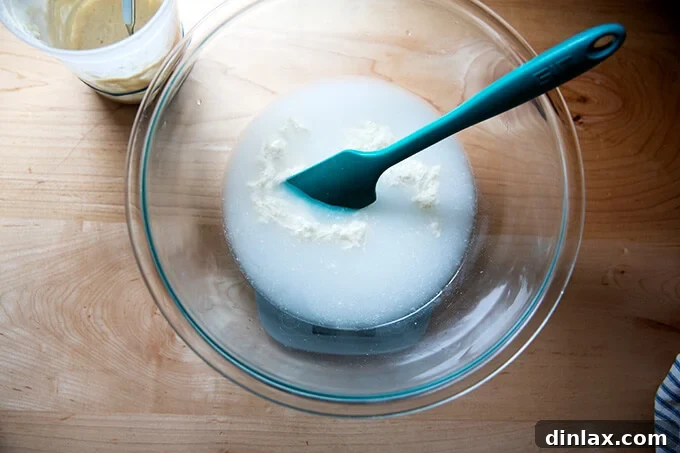
Next, add 500 grams of either all-purpose or bread flour to the wet ingredients. The type of flour will slightly impact the final texture, with bread flour providing a chewier crust due to its higher protein content, while all-purpose yields a slightly softer crumb.
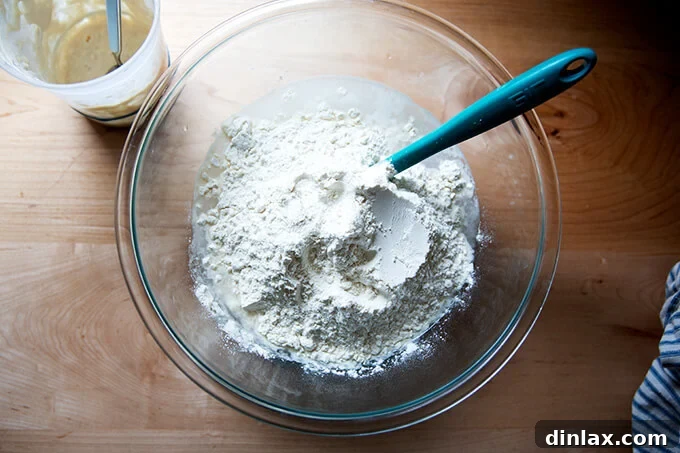
Continue stirring the mixture with your spatula until all the flour is fully incorporated and you have a shaggy, sticky dough ball. Avoid overmixing at this point; simply bring everything together. This initial mixing stage helps the flour fully hydrate and begins the gluten development process.
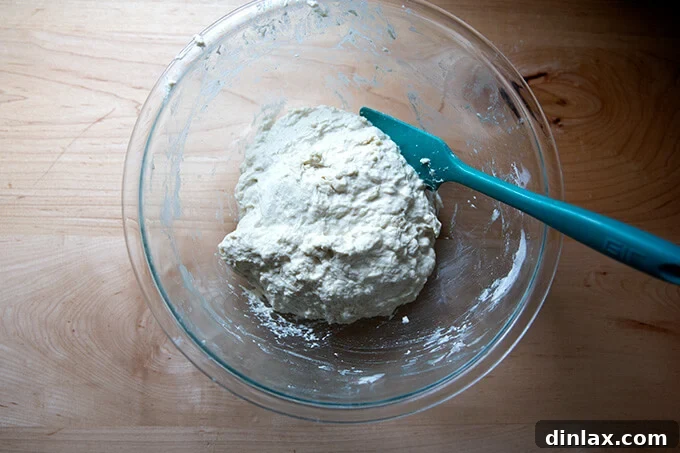
Transfer the mixed dough into a straight-sided vessel if you have one. This type of container makes it much easier to gauge the dough’s rise later on. Cover the vessel and let the dough rest for 30 minutes. Following this rest, perform a “stretch and fold” action on the dough. This involves gently pulling a section of the dough up from the side and folding it over the center, rotating the bowl a quarter turn, and repeating. Do this 8-10 times. (You can refer to the video for a visual guide on this technique.) Repeat this stretch and fold sequence 4 times, with 30-minute intervals between each session. After the final stretch and fold, cover the vessel again and allow the dough to undergo its bulk fermentation, resting for 6 to 12 hours (timing varies based on ambient temperature and starter activity, consult recipe notes for specifics) or until the dough…
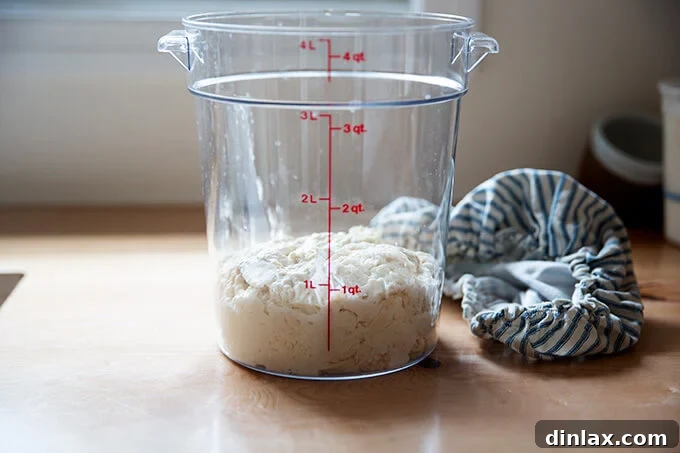
…has about doubled in volume. It’s important to note that while doubling was a traditional benchmark, more recently, many bakers, including myself, opt to end the bulk fermentation when the dough has increased by about 50% to 75% in volume. This ensures the dough retains enough strength and structure for shaping, leading to a superior crust. Rely on visual cues more than precise timing, as environmental factors significantly impact fermentation speed.
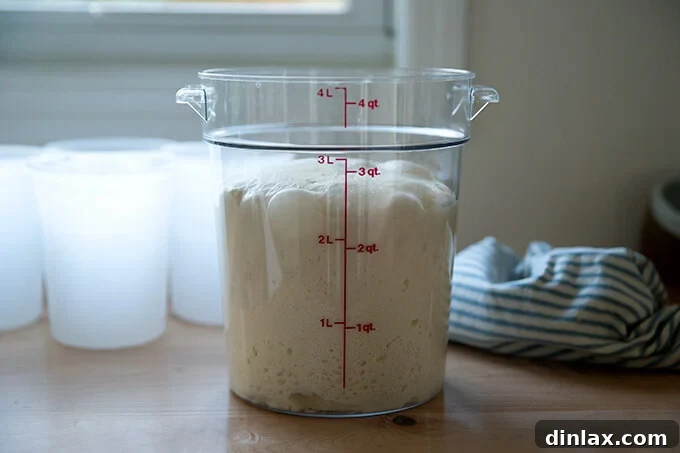
Once the bulk fermentation is complete, gently turn the dough out onto a lightly floured work surface. At this stage, the dough will still be quite sticky, so don’t hesitate to use flour as needed to prevent it from adhering to your hands and the counter. The goal is to handle it minimally to preserve the delicate air pockets.
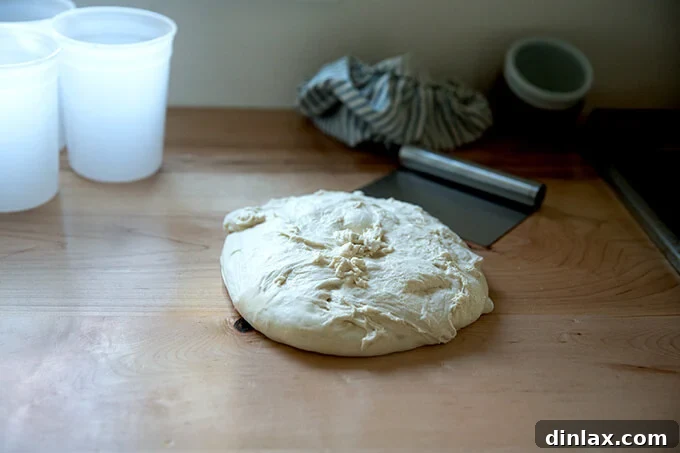
Using a bench scraper, divide the dough into four equal pieces. Again, dust with flour as necessary to manage the stickiness. Each portion will yield one individual pizza. This uniform division ensures consistent baking and portion sizes.
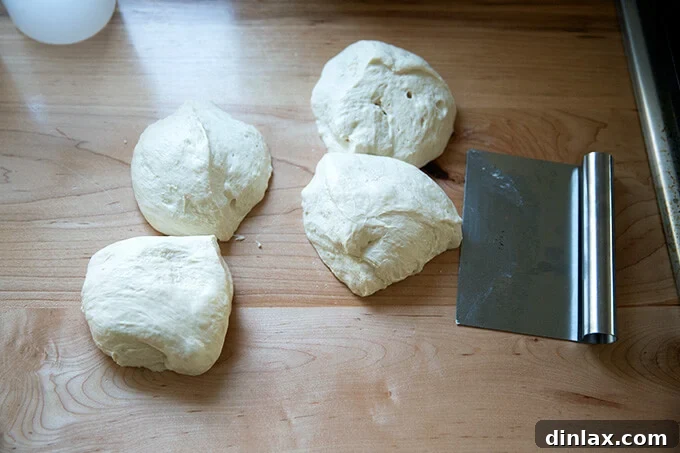
With floured hands, gently form each dough portion into a tight ball. This involves using the edges of your pinky fingers to tuck the dough underneath itself, creating surface tension. Transfer these dough balls into individual storage containers. These Kevjes Dough Storage Vessels are fantastic for this purpose, providing the perfect environment for cold fermentation. Place the covered dough balls in the refrigerator for at least 12 hours and up to 3 days. This cold fermentation step is critical for developing deeper flavors and making the dough easier to handle when shaping.
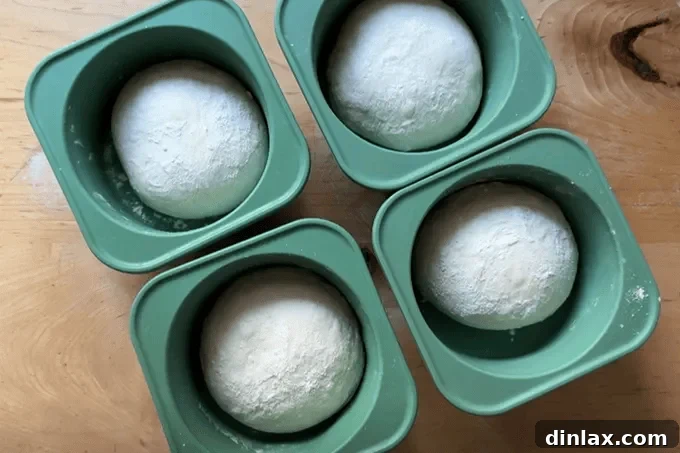
Approximately one hour before you plan to bake, remove a round (or as many as you need) of pizza dough from the refrigerator. Transfer it to a lidded vessel, like a DoughMate, or simply a 9×13-inch baking dish covered tightly with plastic wrap to prevent it from drying out. Allowing the dough to come to room temperature makes it more relaxed and pliable, essential for easy shaping. Meanwhile, if you are using a Baking Steel or pizza stone, place it in the upper third of your oven and preheat the oven to its highest setting (typically 550ºF), ideally using a convection roast function if available. Allow at least 45-60 minutes for the steel/stone to get screaming hot – this intense heat is crucial for a crisp crust and excellent oven spring.
Once the dough has adequately proofed at room temperature, it’s time to shape it. Gently stretch the dough into a round, aiming for approximately 10 inches in diameter. The key here is to be delicate, striving to preserve those precious air pockets that have formed during fermentation. Avoid aggressive handling or using a rolling pin, which can deflate the dough and lead to a dense crust. A light dusting of flour can help, but primarily use your hands to gently coax it into shape, allowing gravity to assist in the stretching.
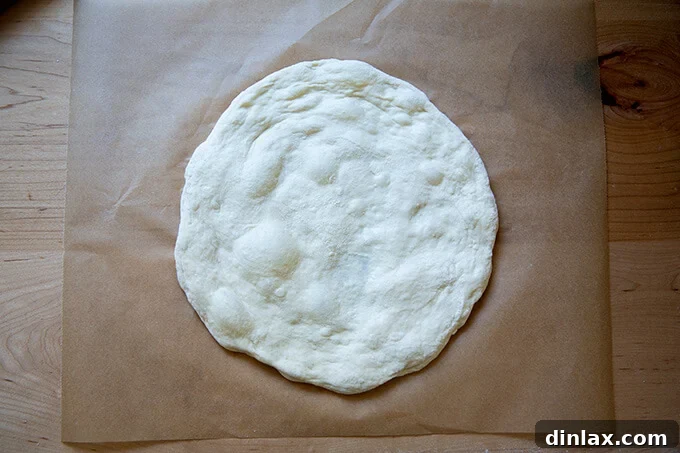
Now comes the fun part: topping your pizza! The possibilities are endless, but for a classic experience, spread a generous layer of rich tomato sauce over the stretched dough, leaving a small border for the crust. Then, scatter fresh mozzarella cheese, grated Parmesan, a drizzle of high-quality olive oil, and a pinch of sea salt. This simple combination allows the incredible flavor of your sourdough crust to shine through.
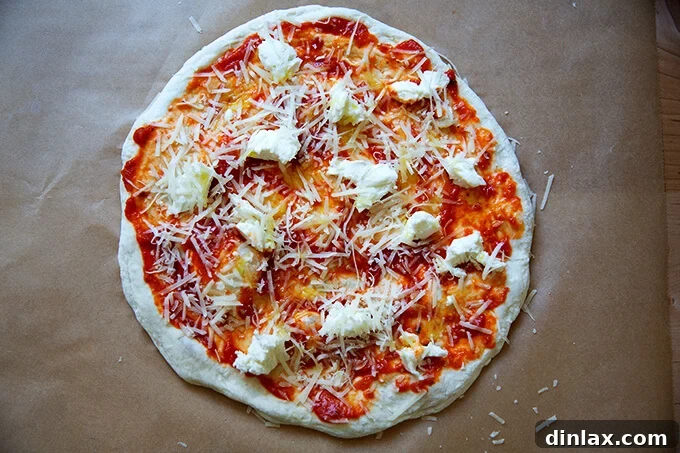
With your pizza expertly topped, it’s time for the oven. Carefully transfer the pizza, parchment paper and all, onto your preheated Baking Steel or pizza stone using a pizza peel. My personal favorite is the Epicurean Pizza Peel for its ease of use. Bake for a swift 5 to 6 minutes, or until the crust is beautifully golden brown, blistered, and the cheese is bubbling and slightly charred. The short baking time at high heat is essential for a crispy base and a light, airy crust.

Once baked to perfection, remove the pizza from the oven. Let it rest on a cutting board for a minute or two before slicing. This brief rest allows the cheese to set slightly and the crust to firm up, making for easier, cleaner cuts. Then, slice into your desired portions.

For an added touch of freshness and vibrant flavor, a sprinkle of fresh basil leaves after baking is always a delightful complement to a classic Margherita or any tomato-based pizza. The warmth of the pizza will slightly wilt the basil, releasing its aromatic oils.

This image perfectly illustrates the magic of using a Baking Steel: incredible oven spring! Notice the magnificent bubbles and open structure within the crust, a testament to the rapid heat transfer and efficient baking environment provided by the steel. This is what sets a truly great homemade pizza apart.
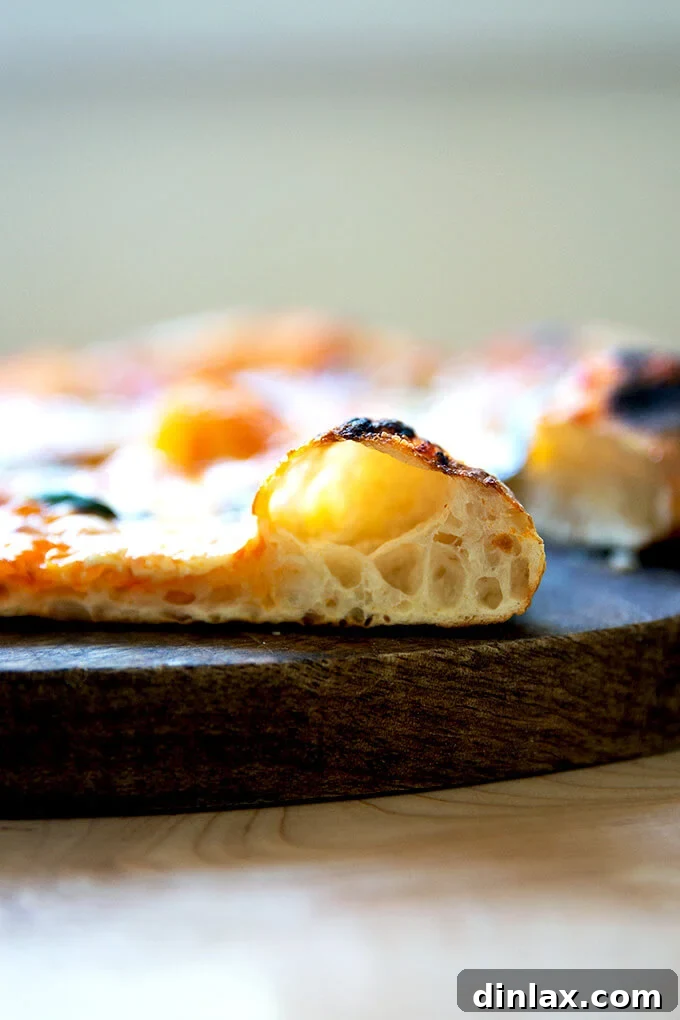
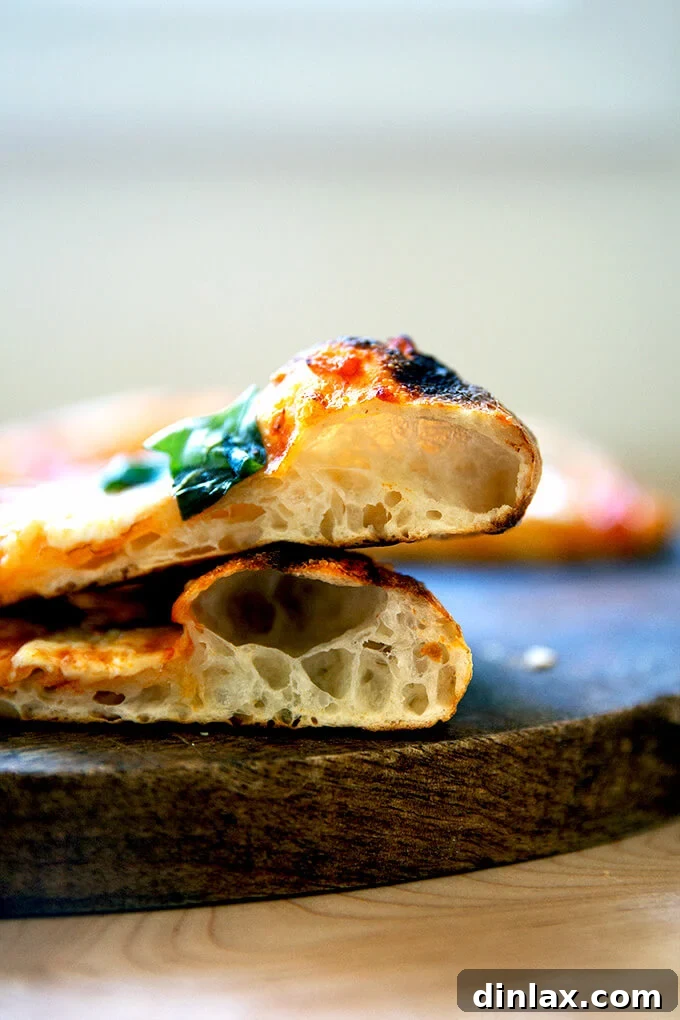
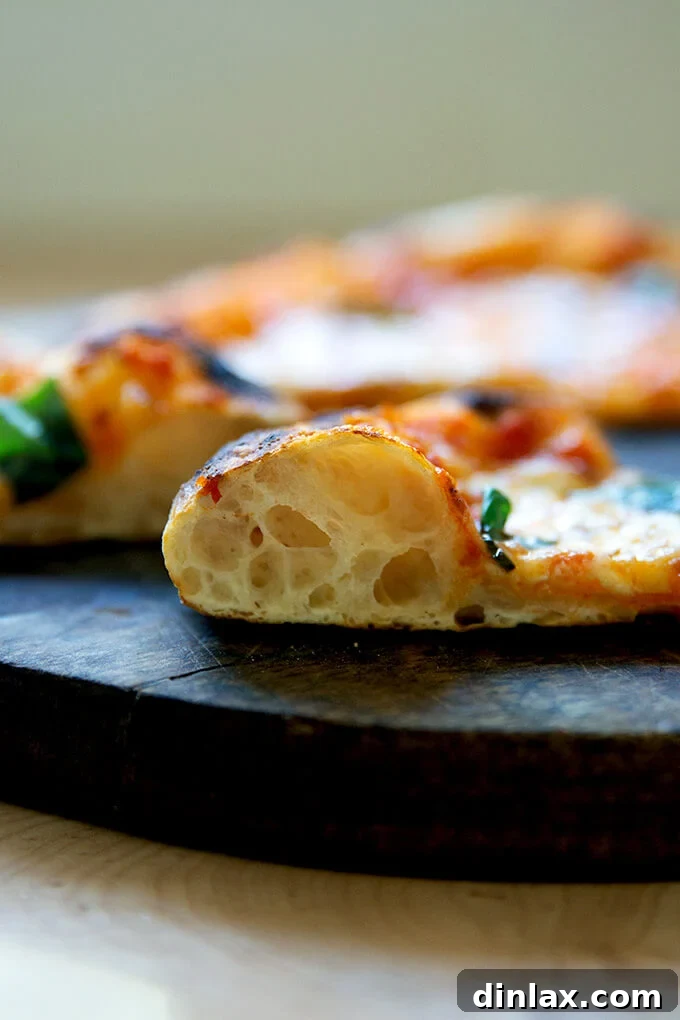
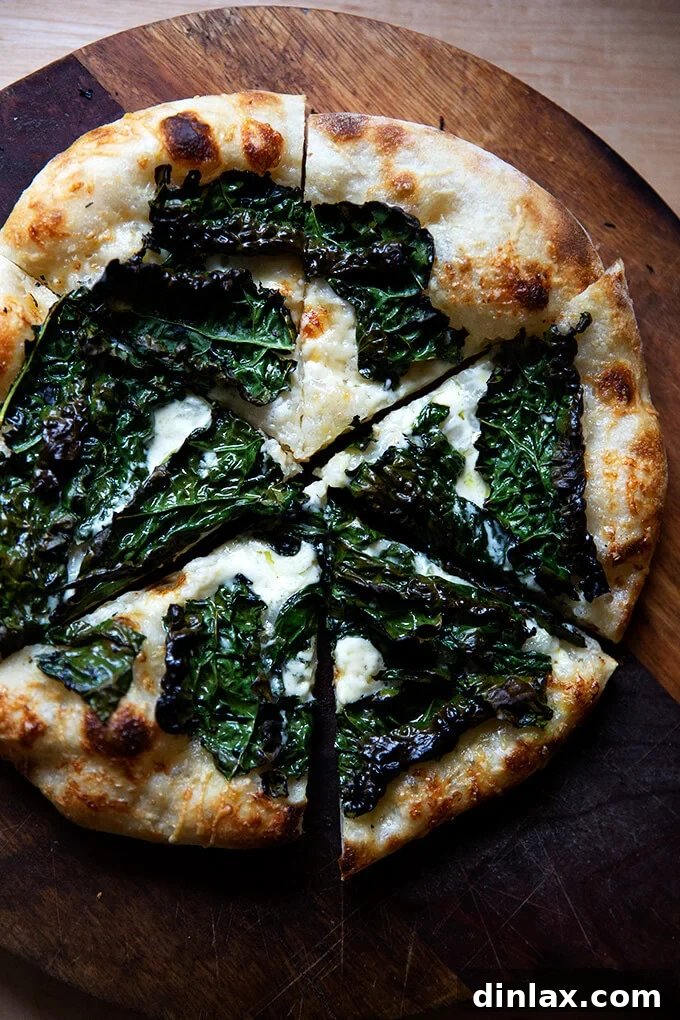
Beyond the classic Margherita, sourdough pizza offers a versatile canvas for countless topping creations. One of my personal favorites is a delightful kale and crème fraîche pizza. The rich, tangy crème fraîche provides a creamy base that beautifully complements the earthy, slightly bitter notes of sautéed kale. A sprinkle of garlic and Parmesan completes this sophisticated yet simple pie.
Another beloved option is a “naked” pizza, highlighting the crust itself, adorned simply with a spicy scallion (or ramp) oil. This minimalist approach truly celebrates the nuanced flavor and exceptional texture of the sourdough crust. The vibrant, aromatic oil, infused with chili flakes, provides a fiery kick that awakens the palate without overwhelming the delicate flavors of the dough.

For those who have truly fallen in love with pizza making, or are looking for even more creative inspiration, my cookbook, Pizza Night, is an indispensable resource. It’s packed with 52 unique pizza recipes and 52 complementary salad recipes—a perfect pairing for every week of the year—along with five simple, delightful dessert options to complete your pizza feast. Explore new flavors and elevate your pizza nights with endless possibilities!

Print

Simple Sourdough Pizza Crust: The Ultimate Guide
5 Stars 4 Stars 3 Stars 2 Stars 1 Star
4.9 from 425 reviews
Author: Alexandra Stafford
Total Time: 24 hours + 1 hour (active time approx. 30 minutes)
Yield: 4 pizzas 1x
Description
Unlock the secrets to truly exceptional homemade pizza with this easy sourdough crust recipe! Designed for home bakers, this guide teaches you how to create a crisp, airy, and deeply flavorful sourdough pizza dough using just four simple ingredients: water, flour, salt, and your active sourdough starter. No complicated autolyse or preferment steps here – everything mixes together at once, streamlining your path to pizza perfection. We’ll cover everything from managing high-hydration dough to mastering fermentation and achieving that desirable blistered crust in your home oven. Get ready to impress with your artisanal sourdough pizzas! 🍕🍕🍕
**Attention Pizza Enthusiasts**: For even more incredible pizza ideas and recipes, grab a copy of my cookbook, Pizza Night, now available wherever books are sold. It’s your ultimate guide to delicious homemade pies and perfect pairings!
What You’ll Need to Make This Recipe a Success:
- An Active Sourdough Starter. The heart of this recipe is a vibrant, active sourdough starter. For the best results, aim to use your starter approximately 4 to 6 hours after it’s been fed, when it has visibly doubled in volume and is teeming with bubbles. If you’re new to sourdough, you can easily cultivate your own starter from scratch in about a week. Alternatively, if you need a quick start, you can purchase one from reputable sources. Here are two excellent options:
- Breadtopia
- King Arthur Flour
- A Bit of Time and Patience. While the mixing process is straightforward, sourdough baking requires patience. After your starter is ready, this recipe involves an initial bulk fermentation (first rise) lasting 6 to 18 hours, followed by a crucial cold fermentation period in the fridge for at least 6 hours and potentially up to 3 days. This extended time is what develops the complex flavors and superior texture of your sourdough pizza.
Understanding Timing and Scheduling for Optimal Results:
The duration of your sourdough process, especially the bulk fermentation, is heavily influenced by environmental factors such as the time of year and the ambient temperature of your kitchen. For instance, during warm and humid summer months, the first rise for my sourdoughs typically completes within 6 to 8 hours. In contrast, during cooler winter periods, the same process might take considerably longer, often between 10 to 12 hours. It’s essential to understand that temperature significantly impacts the activity of your sourdough starter.
For this reason, it is always best to prioritize visual cues over strict adherence to time. For the bulk fermentation, you are looking for the dough to increase in volume. I now recommend aiming for a rise of 50% to 75% of the original volume, rather than a full doubling. This approach helps to prevent over-fermentation, which can weaken the dough structure. This is precisely why I strongly advocate using a straight-sided vessel for your bulk fermentation. Unlike a conventional bowl, a straight-sided container provides clear markings or allows for easier visual assessment, making it much simpler to accurately gauge the dough’s rise and know when it’s perfectly fermented.
Troubleshooting Over-Fermentation (and a helpful tip): If you find yourself in a situation where you’re concerned about your dough over-fermenting—for example, the bulk fermentation is nearing completion but it’s late, and you need to go to bed—don’t hesitate to place the vessel directly into the refrigerator. This will significantly slow down the fermentation process, allowing you to pick up exactly where you left off the following morning without compromising your dough. (A reassuring note: even if your dough rises beyond double, perhaps tripling in volume during an overnight rise, don’t despair! I’ve had this happen, and the resulting dough still retained plenty of strength and spring, producing a delicious pizza.)
Recommended Schedule for Planning Your Pizza Night: I find it ideal to mix this sourdough pizza dough in the evening. After mixing, I perform 4 stretch and folds at 30-minute intervals before I turn in for the night (if my schedule permits). I then allow the dough to complete its bulk fermentation either at cool room temperature (around 68ºF/20ºC) overnight or, especially in warmer summer months when my kitchen is warmer, I move it to the refrigerator for a longer, slower bulk fermentation. In the morning, if it completed its bulk ferment at room temperature, it’s typically ready to be portioned, shaped into balls, transferred to individual storage vessels, and stashed in the fridge for cold fermentation. If the dough underwent bulk fermentation in the fridge, I remove it in the morning to finish its rise at room temperature, then portion and refrigerate. I might use this dough that same evening, or perhaps the next day, or even up to three days later. The cold fermentation period truly deepens the flavor. In essence: If your aim is to enjoy fresh sourdough pizza over the weekend, plan to mix your dough on either Wednesday or Thursday.
Addressing Sticky Dough: Sourdough dough, especially high-hydration varieties, can be sticky. If you encounter difficulties with overly sticky dough, I highly recommend reviewing this detailed guide: Why is my sourdough so sticky? Plus fixes to 4 common sourdough mistakes and FAQs. This resource offers practical solutions and insights into common sourdough challenges.
Adjusting Water Content for Environment: The amount of water in your dough can be sensitive to environmental humidity. If you live in a humid environment or if you’re baking on a particularly humid day, it’s wise to start with a slightly reduced amount of water. For example, begin with 335 grams of water, which will bring the dough hydration down to 70%. This adjustment will still yield a wonderfully light and airy crust but will result in a dough that is considerably more manageable and less sticky to handle.
Selecting Your Flour:
- This sourdough pizza dough recipe performs beautifully with both all-purpose flour and bread flour. All-purpose flour will give you a slightly softer, more tender crust, while bread flour, with its higher protein content, will create a chewier crust with more structure. Feel free to experiment to find your preferred texture.
- If you wish to use Tipo 00 flour, a finely milled Italian flour often favored for pizza, you will likely need to adjust the water content. Tipo 00 flour absorbs less water than standard all-purpose or bread flour. Start with approximately 350 grams of water and observe your dough’s consistency, adjusting moving forward based on your results.
Can Sourdough Pizza Dough Be Frozen?
Yes, sourdough pizza dough can be frozen, offering excellent convenience for future pizza nights. However, in my experience, pizzas made from frozen dough might not achieve the exact same impressive oven spring or ballooned edge as those made from fresh, refrigerated dough. They tend to have a slightly flatter profile.
Despite this, the pizzas will still taste absolutely delicious, especially if the time spent in the freezer is relatively brief. The longer sourdough dough remains frozen, the more its delicate air cell structure can be compromised, leading to a less airy crust. I’ve found that dough frozen for about 1 week still bakes up quite well. However, after 3 weeks in the freezer, the dough typically becomes less bubbly, resulting in a slightly thinner and crisper crust rather than one with a super-airy, chewy interior.
To freeze your sourdough pizza dough: follow the recipe through step 4, or until you have portioned the dough into individual rounds and transferred them to quart containers. At this point, simply move the sealed quart containers directly to the freezer. To thaw, remove the desired number of containers and allow them to thaw slowly in the refrigerator for about 1 day, or at room temperature for approximately 8 hours. Once thawed, you can proceed with the remaining steps of the recipe as usual.
My Favorite Pizza-Making Tools for Home Bakers:
- Baking Steel: As discussed, a Baking Steel is a game-changer for achieving professional-level crusts in a home oven due to its superior heat conductivity.
- Pizza Peel: Essential for safely transferring your raw pizza into a super-hot oven and retrieving your freshly baked masterpiece. A good quality peel makes this process seamless.
- Parchment Paper: I swear by baking my pizzas directly on parchment paper when using a Baking Steel. It allows for effortless sliding of the pizza from the peel onto the intensely hot steel, preventing sticking and making the transfer foolproof.
- Cast Iron Skillet: If you don’t own a specialized Baking Steel or pizza stone, a heavy cast iron skillet can serve as an excellent alternative. Simply rub a half teaspoon of olive oil over the surface of the skillet, transfer a stretched dough round into it, top as desired, and bake in your oven at 450ºF for approximately 15 minutes, or until cooked through and golden.
- I highly recommend these Kevjes dough storage containers for individual pizza dough balls. Their design helps maintain the perfect environment for cold fermentation and prevents the dough from drying out.
Ingredients
For the Sourdough Pizza Dough:
- 375 g water (or as little as 335g for humid environments; refer to detailed notes above for guidance)
- 100 g active and bubbly sourdough starter (see notes above for activation guidance)
- 10 g fine sea salt
- 500 g all-purpose flour or bread flour (your choice will influence crust texture; see notes)
For Each Classic Margherita Pizza:
- 2 tablespoons high-quality tomato sauce (e.g., San Marzano crushed tomatoes)
- 1 to 2 oz fresh mozzarella, torn or sliced
- a generous handful of freshly grated Parmigiano Reggiano (approximately 1/4 oz)
- a light drizzle of extra-virgin olive oil
- a pinch of flaky sea salt (like Maldon)
- Fresh basil leaves, for garnish (optional)
For Each Gourmet Kale and Crème Fraîche Pizza:
- extra-virgin olive oil (for sautéing kale)
- a couple handfuls of baby or Tuscan kale, stems removed, roughly chopped
- 1 to 2 cloves garlic, minced
- Sea salt, such as Maldon, to taste
- 2 tablespoons crème fraîche (or full-fat sour cream)
- 1/4 to 1/3 cup grated Parmigiano Reggiano
- Freshly ground black pepper, to taste (optional)
For Each “Naked” Pizza with Spicy Ramp or Scallion Oil:
- 1/4 cup extra-virgin olive oil
- 1/4 cup finely minced scallions or ramps (seasonal)
- 1 teaspoon crushed red pepper flakes (adjust to heat preference)
- 1 to 2 tablespoons crème fraîche (for a touch of richness)
- a generous handful of grated Parmigiano Reggiano
- flaky sea salt, to finish
Instructions
- Prepare and Mix the Dough. In a large mixing bowl, combine the active sourdough starter, salt, and water. Stir thoroughly with a spatula until the salt is dissolved and the starter is well dispersed into the water. Next, add the 500g of flour (either all-purpose or bread flour). Continue mixing until all the flour is fully hydrated and no dry streaks remain, forming a shaggy, sticky dough. Transfer this dough to a clean, straight-sided vessel if you have one (this aids in monitoring the rise). Cover the vessel loosely with a tea towel or a reusable cloth bowl cover and let the dough rest undisturbed for 30 minutes. This initial rest, known as autolyse (though we’re mixing everything at once here), helps the flour absorb water and begins gluten development.
- Perform Stretch and Folds for Gluten Development. After the initial 30-minute rest, it’s time to build strength in your dough. Gently reach into the vessel, grab a portion of the dough from the side, and pull it up, stretching it over to the center. Rotate the vessel a quarter turn and repeat this pulling and folding motion 8 to 10 times, working your way around the dough. This action helps to develop gluten structure without intensive kneading. For a visual demonstration of this technique, please watch the accompanying video guide. Cover the dough and let it rest for another 30 minutes. Repeat this entire stretch and fold cycle three more times, for a total of four cycles, each with a 30-minute rest in between. By the 4th cycle, you will notice a significant transformation in the dough: it will be noticeably smoother, stronger, more elastic, and less sticky, indicating excellent gluten development.
- Initiate the Bulk Fermentation (First Rise). Once the stretch and folds are complete, cover the vessel with your tea towel or bowl cover. Allow the dough to undergo its bulk fermentation at a cool room temperature (ideally around 70ºF/21ºC). The duration for this phase can vary widely, anywhere from 4 to 18 hours. This variability depends on several factors: the ambient temperature of your kitchen, the specific time of year (warmer environments speed up fermentation), and the overall strength and activity of your sourdough starter. (Refer to the detailed notes above for more specific timing guidance). The goal for bulk fermentation is for the dough to increase significantly in volume. UPDATE on Volume: Historically, I’ve recommended letting the dough double in volume. While this still works, I’ve recently found that stopping the bulk fermentation when the dough has increased by approximately 50% to 75% in volume yields an even stronger, easier-to-handle dough with superior oven spring. If you’ve had success with doubling, feel free to continue, but I encourage experimenting with this slightly shorter rise. Important Note: Avoid using your oven with just the light on for bulk fermentation, as it’s often too warm and can over-ferment the dough quickly. When determining when bulk fermentation is finished, always prioritize visual cues (like the increase in volume) over strict timing. A straight-sided vessel is incredibly helpful for accurately monitoring this volume increase.
- Portion, Shape, and Cold Ferment. Gently turn the fermented dough out onto a lightly floured work surface. The dough will still be somewhat sticky, so dust your hands and the surface with flour as needed to prevent sticking. Carefully shape the dough into a rough ball. Using a bench scraper, divide the dough into 4 equal portions. Lightly sprinkle each portion with flour. With floured hands, delicately roll each portion into a tight ball. Achieve this by using the pinkie-edges of your hands to gather and pinch the dough underneath each ball, creating surface tension. Transfer each perfectly formed dough ball into an individual plastic quart container, ensuring they are covered tightly. Place these covered containers in the refrigerator for a cold fermentation period of at least 6 hours, and ideally up to 3 days. This slow, cold rest is crucial for developing deep flavor and making the dough much easier to handle. (Freezing Option: For longer storage, you can transfer these quart containers directly to the freezer for up to 1 week. To thaw, move a container from the freezer to the refrigerator for 24 hours, or allow it to thaw at room temperature for about 8 hours. Once thawed, proceed with the recipe as described.)
- Prepare for Baking (Proofing & Preheat). Approximately one hour before you intend to bake your pizzas, remove a round (or more, depending on how many pizzas you plan to make) of dough from the refrigerator. Lightly dust the dough with flour and place it on a clean, floured work surface. Allow it to sit undisturbed at room temperature for about an hour. This proofing period relaxes the dough, making it much easier to shape and promoting better oven spring. In parallel, position your Baking Steel or pizza stone in the top third of your oven. Preheat your oven to its maximum temperature setting (typically 550ºF/288ºC). If your oven has a convection roast setting, utilize it for even hotter, more efficient baking. Allow the oven to preheat for at least 45 minutes, but ideally for a full hour, to ensure your steel or stone is screaming hot. This intense heat is vital for achieving a blistered, crispy crust.
- Shape the Pizza Dough. Once the dough has proofed at room temperature, it should be relaxed and pliable. Gently stretch the dough into a round approximately 10 inches in diameter. The key is to handle the dough as minimally and delicately as possible, preserving the precious air pockets created during fermentation. Avoid using a rolling pin, which can deflate the dough. Instead, use your hands to gently pull and stretch from the center outwards, letting gravity assist. (Again, the video offers excellent guidance for shaping.) Lay a sheet of parchment paper on top of your pizza peel. Carefully transfer the shaped dough round to the parchment-lined peel. This parchment paper will make the transfer to the hot oven significantly easier and prevent sticking.
Topping and Baking Your Sourdough Pizzas
- To Create a Classic Margherita-Style Pizza: Begin by spreading 2 tablespoons of your chosen tomato sauce evenly over the surface of the stretched dough, leaving a small border for the crust. Distribute fresh mozzarella to your taste. Sprinkle a handful of grated Parmigiano Reggiano over the top. Finish with a light drizzle of olive oil and a delicate pinch of flaky sea salt. Carefully slide the pizza, parchment paper and all, directly onto the preheated Baking Steel or pizza stone in the oven using your peel. Bake the pizza for approximately 5-6 minutes, or until the crust is beautifully blistered and golden, and the cheese is melted and bubbling with slight charring. Once baked, transfer the pizza to a cutting board. If desired, scatter fresh basil leaves over the hot pizza for an aromatic finish. Slice and serve immediately. Remember to discard the parchment paper before serving.
- To Craft a Delicious Kale and Crème Fraîche Pizza: First, prepare the kale: in a small bowl, toss your chopped baby or Tuscan kale with a drizzle of olive oil and a pinch of sea salt. Spread 2 tablespoons of crème fraîche (or full-fat sour cream) over the pizza dough, again leaving a 1/2-inch border. Evenly sprinkle minced garlic and a generous handful of grated Parmigiano Reggiano. Finally, top the pizza with the seasoned kale. Carefully shimmy the pizza, complete with parchment paper, into the preheated oven. Bake for 5 – 6 minutes, or until the crust is crisp and the kale is slightly wilted and caramelized at the edges. Transfer to a cutting board, slice, and serve piping hot.
- For an Elegant “Naked” Pizza with Spicy Scallion or Ramp Oil: Begin by preparing the aromatic oil: heat 1/4 cup of olive oil in a small skillet over low heat. Add 1/4 cup of finely minced scallions (or seasonal ramps if available!) and 1 teaspoon of crushed red pepper flakes. Keep this mixture gently simmering over low heat while you assemble your pizza to infuse the oil with flavor. For the pizza base, spread 1 to 2 tablespoons of crème fraîche over the dough, maintaining a small crust border. Sprinkle a handful of grated Parmesan cheese over the crème fraîche. Transfer the pizza, still on its parchment paper, into the hot oven. Bake for 5 – 6 minutes, until the crust is perfectly blistered and golden. Remove the pizza to a cutting board. At this point, check your scallion oil; if the scallions aren’t gently sizzling, increase the heat slightly until the oil is visibly active. Spoon a few tablespoons of the hot, fragrant oil over the baked pizza (you will likely have some oil leftover). Finish with a pinch of flaky sea salt. Slice and serve immediately, enjoying the pure flavors of the sourdough crust enhanced by the spicy, aromatic oil.
- Prep Time: 24 hours (includes fermentation and proofing)
- Cook Time: 5 to 6 minutes
- Category: Pizza, Sourdough
- Method: Baking, Oven
- Cuisine: American, Italian, European