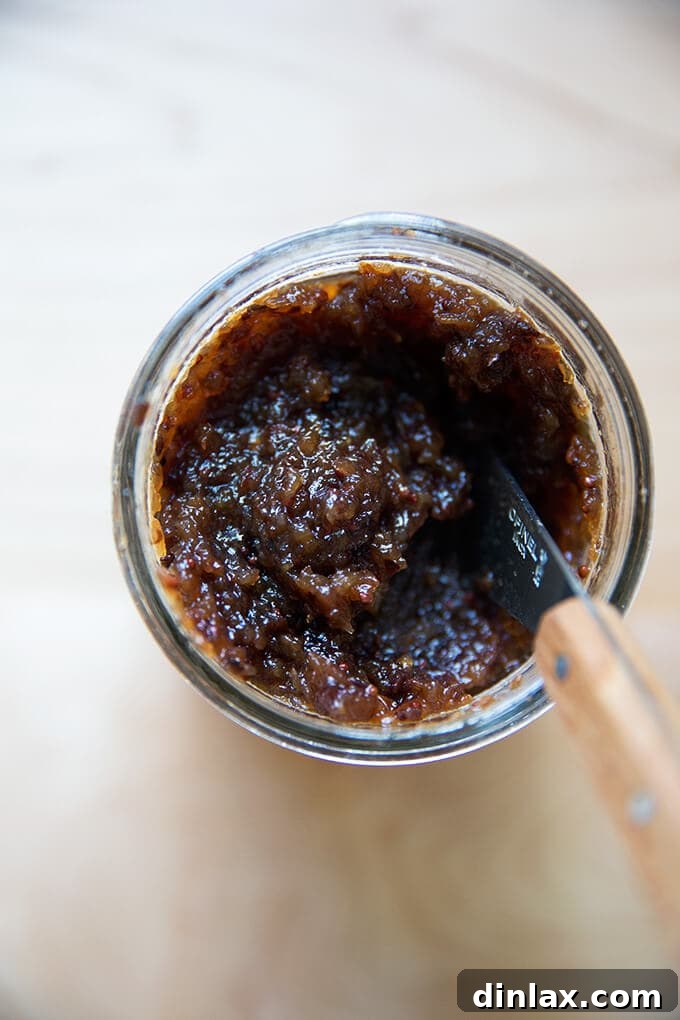
In the realm of homemade condiments, few concoctions rival the versatility and delightful complexity of a well-crafted chutney. This particular apple chutney recipe is nothing short of irresistible. It masterfully strikes that desired sweet-tart equilibrium, a hallmark of classic chutneys, thanks to the harmonious blend of sugar and vinegar. But it doesn’t stop there; a subtle yet invigorating warmth emerges from crushed red pepper flakes and freshly grated ginger, elevating it beyond the ordinary. This chutney is a true culinary chameleon, transforming a simple cracker and Cheddar into a gourmet bite, or taking your everyday grilled cheese sandwich to an unexpectedly sublime level. Prepare to discover a condiment that will redefine your pantry staples.
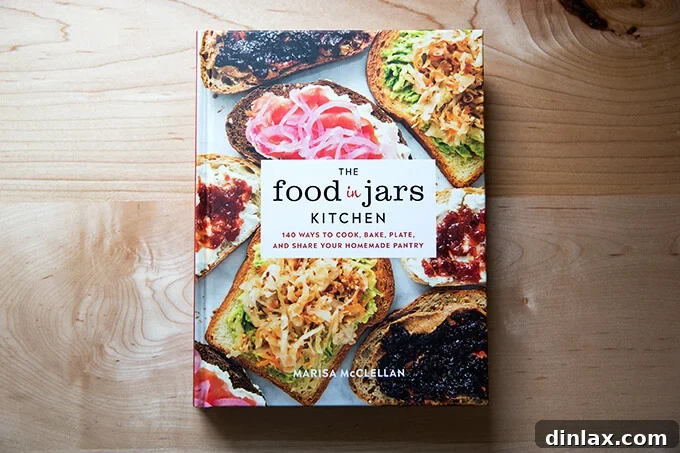
The culinary world is rich with passionate creators, and among them, Marisa McClellan shines brightly. As the acclaimed author of multiple books on canning and the creative force behind the popular website Food in Jars, Marisa has become a guiding light for home preservers everywhere. Her latest literary endeavor, The Food in Jars Kitchen, marks a fascinating evolution in her work. Unlike her previous volumes, which primarily focused on the art of canning itself, this new book shifts its attention to the delightful challenge of actually *using* the many jars of jams, chutneys, and pickles you’ve diligently put away.
Marisa’s philosophy in The Food in Jars Kitchen is ingeniously practical. She crafts recipes designed to help you integrate your treasured pantry preserves into everyday meals, eliminating the need to start every dish from scratch. Imagine the convenience of whipping up jam-lacquered chicken wings using your homemade berry jam, or baking wholesome oatmeal muffins enriched with a dollop of fruit butter. From hearty bean and rice casseroles infused with vibrant tomato salsa to innovative applications for your various chutneys, this book empowers you to transform your preserved bounty into effortless and exciting dishes. It’s a testament to making the most of your efforts in the kitchen, proving that home canning isn’t just about storage, but about unlocking endless culinary possibilities.
While the book excels at showing you how to *use* your existing jars, there’s an undeniable allure to crafting these foundational preserves yourself. And if you’re feeling adventurous, I wholeheartedly encourage you to embark on that journey. At the heart of Marisa’s book, nestled among her most cherished recipes, lies a collection of “essential preserves.” Among these ten favorites is what she aptly calls an “adaptable chutney recipe.” While I’ve experimented with it using crisp, sweet apples, Marisa assures us of its incredible flexibility, noting its success with a wide array of fruits including apricots, cherries, nectarines, peaches, pears, or plums. The magic unfolds over approximately an hour of gentle cooking, during which the chosen fruit undergoes a remarkable transformation, slowly breaking down and mellowing into a deeply colored, luxuriously jammy mass—a true testament to the alchemy of the kitchen.
There’s an undeniable charm to this adaptable chutney, a quality that makes it genuinely irresistible. Its fundamental sweet-tart character, derived from the careful balance of sugar and vinegar, is exactly what one anticipates from a premium condiment. Yet, it’s the nuanced layers that truly captivate: a subtle kick from crushed red pepper flakes intertwines with the bright, aromatic zest of freshly grated ginger, creating a symphony of flavors that dance on the palate. Interestingly, the distinct apple flavor, when used, recedes into the background, becoming almost indiscernible. The apples (or any chosen fruit) serve less as a primary flavor and more as a magnificent vehicle, carrying the rich tapestry of other ingredients. This allows the complex interplay of spices and sweetness to shine, producing a surprisingly sophisticated profile. In fact, when I taste it, my mind often conjures notes of fig, a testament to its depth and a clear explanation of why so many different fruits can flawlessly substitute in this versatile recipe.
My current favorite way to enjoy this homemade chutney is slathered generously over crisp crackers, then topped with thin slices of robust, sharp Cheddar cheese. The contrast between the chutney’s sweet heat and the cheese’s tangy creaminess is simply divine. But its pairing potential extends far beyond Cheddar. Imagine it alongside the pungent minerality of a blue cheese, the fresh tang of a chalky goat cheese, or the buttery indulgence of a creamy triple crème. Its sophisticated flavor profile makes it an exceptional addition to any cheese board, elevating the entire experience from a simple snack to a sophisticated tasting. It’s a guaranteed conversation starter and a memorable highlight for your guests.
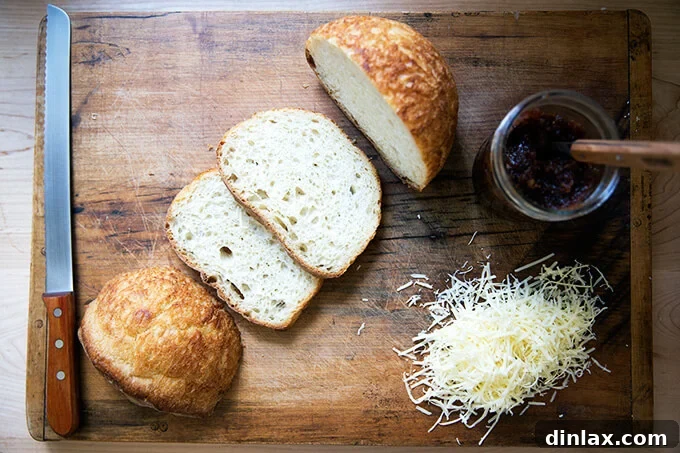
For a recent lunch, I ventured into another realm of deliciousness: a chutney-infused grilled cheese. Spreading a generous layer of this luscious apple chutney onto wholesome bread, I then topped it with finely grated Gruyère cheese before grilling it to golden perfection. The result was, to put it mildly, overwhelmingly delicious. The chutney’s vibrant flavor cut through the richness of the cheese, creating a dynamic and incredibly satisfying sandwich that I’m eager to recreate and share more about very soon. (Indeed, this particular grilled cheese was so good, it barely survived long enough for a photo, but rest assured, more details and imagery are on their way!)
Marisa McClellan’s creative spirit truly shines in her suggestions for utilizing this adaptable chutney. Beyond the obvious, she proposes incorporating it into compound butters, which can then be used to enhance everything from roasted vegetables to crusty bread. Envision delicate cheese rolls infused with its sweet and savory notes, or a succulent pork tenderloin glazed with a rich pan sauce featuring the chutney as its secret ingredient. A particular favorite from her book is the blank slate white bean spread, a recipe I prepared and thoroughly enjoyed with crisp endive spears and crunchy carrots. The chutney, in this context, proved to be an effortlessly surprising ingredient, injecting both delightful texture and an unexpected depth of flavor into what might otherwise be a straightforward bean-based dip. Its versatility truly knows no bounds, transforming simple components into extraordinary dishes.
While my immediate batches of this delightful chutney have been enjoyed fresh from the fridge, I fully intend to delve into water bath canning come next fall. The thought of gifting mini jars of this vibrant chutney, perhaps beautifully paired with a wedge of artisanal cheese, is immensely appealing. Imagine them artfully bundled together with rustic baker’s twine and adorned with a charming, festive gift tag. It’s never too early to start planning for the joy of homemade holiday gifts, spreading warmth and flavor to loved ones. (And yes, while I jest about the holidays being far off, a little advanced planning never hurts, does it?)
What is Chutney? A Culinary Journey from India to Your Table
At its heart, chutney is a thick, jam-like condiment that boasts a rich and ancient history, originating from the vibrant culinary traditions of India. The word “chutney” itself is derived from the Hindi word “chatni,” meaning “to lick,” perfectly encapsulating its role as a flavorful accompaniment designed to enhance and excite the palate. While traditionally a fresh, often spicy relish in India, the British adaptation of chutney, particularly during the colonial era, saw it transformed into a cooked, preserved condiment, gaining popularity for its sweet, tangy, and sometimes spicy profile.
This incredibly diverse condiment can be crafted from an almost endless array of fruits and vegetables, often featuring a thoughtful combination of both. Essential components typically include sugar, providing sweetness and aiding preservation; vinegar, which lends its characteristic tartness and acts as a natural preservative; and a medley of aromatic spices. These spices can range from pungent mustard seeds and warming ginger to exotic coriander, cumin, and cinnamon, each contributing to the chutney’s unique character. Chutneys are typically cooked slowly over an extended period, allowing the flavors to meld and deepen, transforming raw ingredients into a rich, complex, and intensely flavorful spread. The long cooking process, combined with the preserving qualities of sugar and vinegar, gives chutneys their distinctive sweet-tart flavor profile and extended shelf life. Depending on the spices and chilies used, chutneys can range from mildly sweet to exhilaratingly hot, offering a spectrum of tastes to suit every preference. They serve as versatile companions to a wide range of dishes, from curries and roasted meats to cheeses and sandwiches, truly embodying their role as a global culinary enhancer.
Beyond the Chutney: Exploring More Preserving Delights
As we celebrate the joy of this adaptable apple chutney, it’s worth noting the vast and rewarding world of home preserving that Marisa McClellan so expertly navigates. I recall when her previous book, Naturally Sweet Food in Jars, was released. I had eagerly intended to share her exquisite recipe for apple-date butter, a preserve I made and absolutely adored. Life, as it often does, intervened, and I find myself three years behind schedule! However, the time for deliciousness is always now, and that cherished recipe is finally making its debut: Cinnamon-Spiced Apple-Date Butter.
While both this adaptable apple chutney and the cinnamon-spiced apple-date butter inherently evoke the cozy flavors of autumn, their deliciousness transcends seasonal boundaries. I’ve decided not to wait for fall, fearing that by then, Marisa might have yet another incredible book out, setting me back even further! So, without further ado, let’s embrace these timeless, incredibly flavorful Marisa McClellan creations on this beautiful spring day:
- Adaptable Apple Chutney (detailed below)
- Cinnamon-Spiced Apple-Date Butter
- Blank Slate White Bean Spread with Adaptable Apple Chutney
Crafting Your Chutney: A Visual Guide to Culinary Simplicity
Embarking on the journey to make homemade chutney is surprisingly straightforward, and these step-by-step visuals will guide you through the process, ensuring a perfect batch every time. Let’s begin with the foundational step of preparation, ensuring all your ingredients are at hand and ready to be transformed.
Here’s the play-by-play:
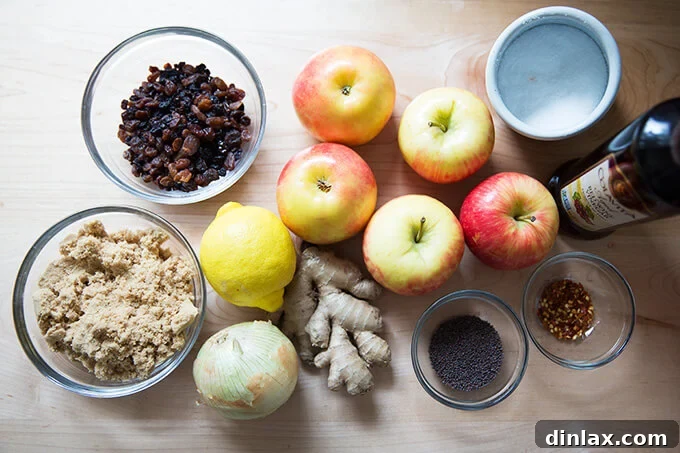
First, gather all your fresh, vibrant ingredients. Having everything prepped and measured makes the cooking process smooth and enjoyable.
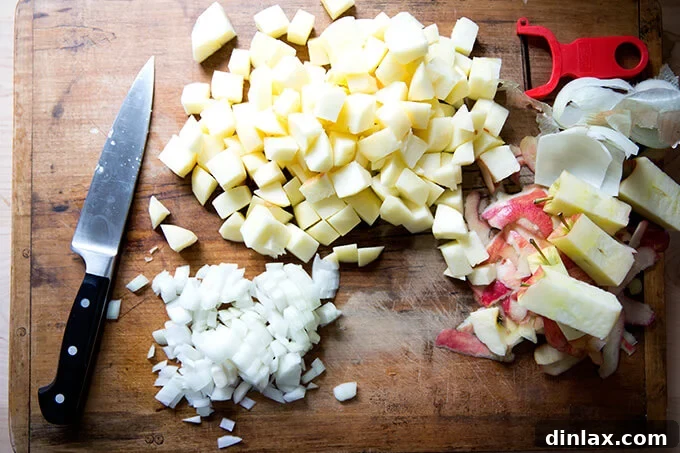
Next, meticulously peel and chop your apples and onion. Consistent sizing helps them cook evenly and break down beautifully into the chutney’s rich texture.
Now for the simplest part: combine all your prepared ingredients directly into a large pot. This “dump-and-go” method is one of the many beauties of this recipe!
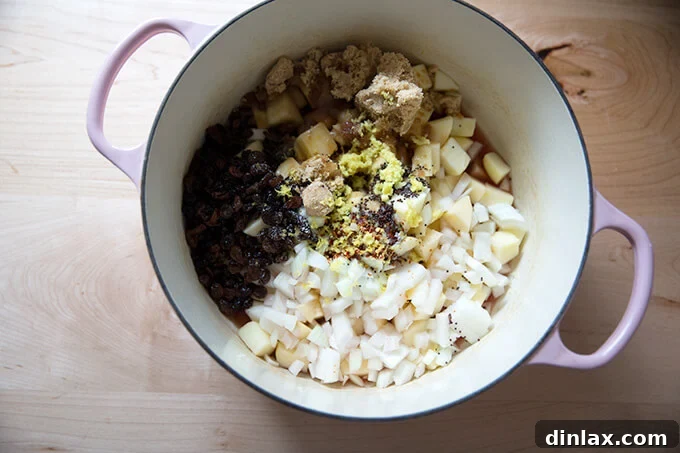
Once combined, bring the mixture to a boil, then reduce the heat to a steady simmer. This gentle cooking allows the flavors to deepen and the fruit to break down, creating that signature jammy consistency.
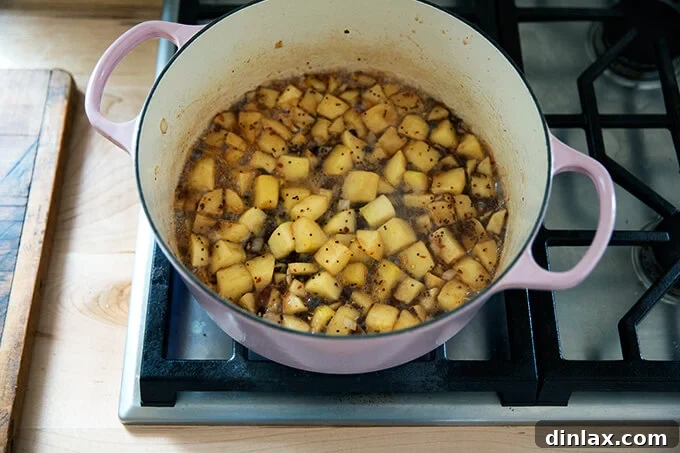
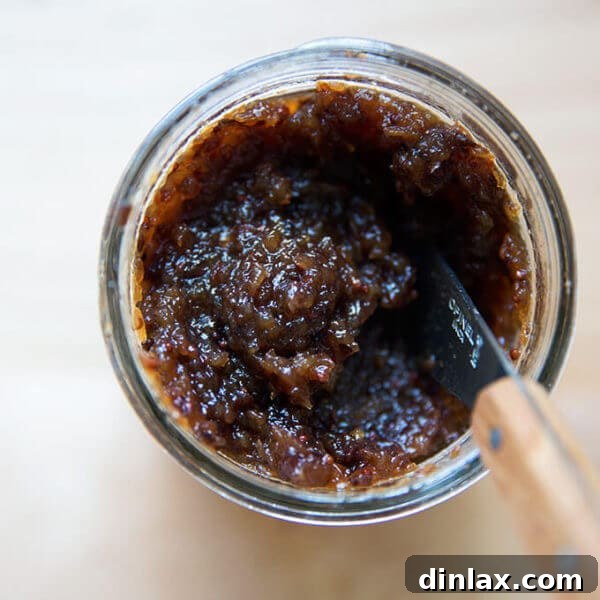
The chutney is done when it has darkened in color, thickened to a rich, jam-like consistency, and the fruit has almost entirely broken down. Its aroma will fill your kitchen, a clear sign of success!
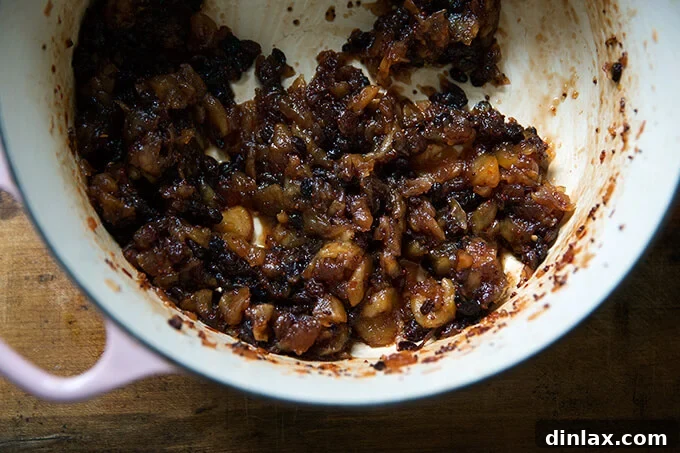
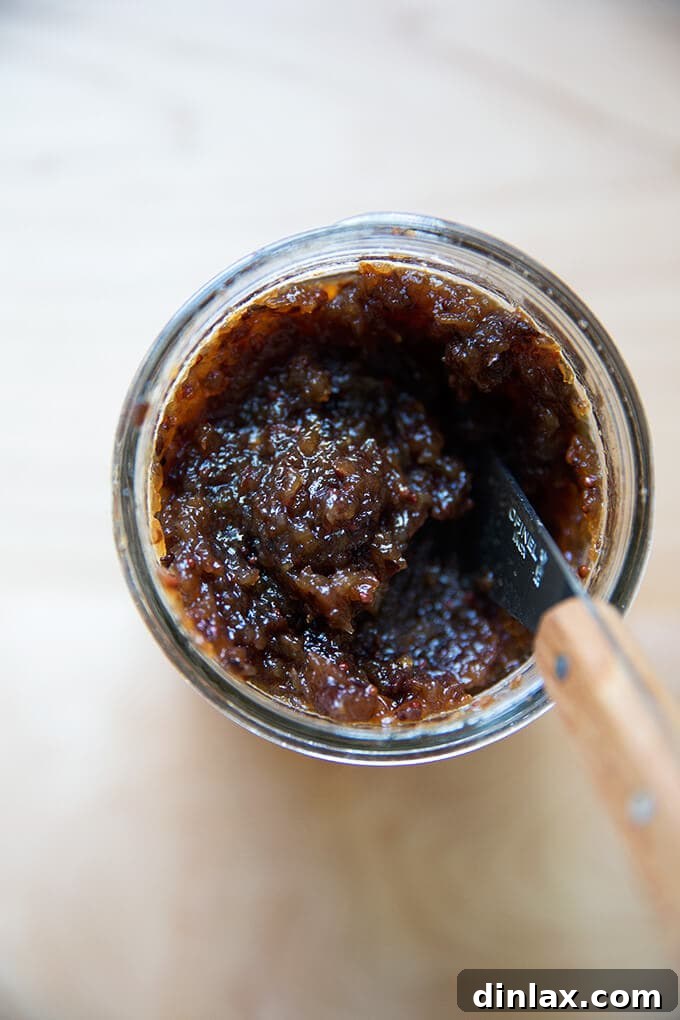
Once cooled, spoon your magnificent creation into clean jars. It’s now ready to be enjoyed or stored for future culinary adventures. The vibrant color and enticing aroma are incredibly rewarding.
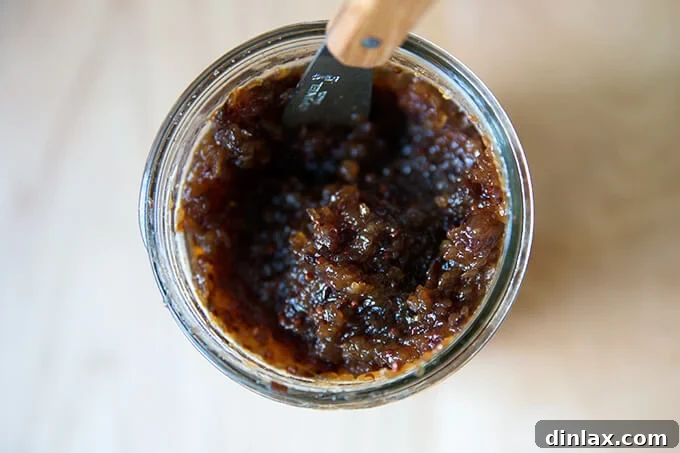
Now comes the best part: enjoying your homemade chutney! Spread it over crackers with your favorite cheese, stir it into creamy hummus or a hearty white bean dip for an instant flavor boost, or craft an unforgettable grilled cheese sandwich. (As mentioned, the grilled cheese was so incredibly delicious I didn’t manage to snap a photo, but stay tuned—a picture and more details will be added soon to truly do it justice!) The possibilities for savoring this adaptable condiment are truly endless.
And for those eager to dive deeper into the world of preserving and utilizing their homemade pantry staples, Marisa McClellan’s latest masterpiece, The Food in Jars Kitchen, is an invaluable resource.
Print
Simple Apple Chutney Recipe
5 Stars 4 Stars 3 Stars 2 Stars 1 Star
5 from 4 reviews
Author: Alexandra Stafford
Total Time: 1 hour 5 minutes
Yield: 3 cups 1x
Description
Adapted from Marisa McClellan’s The Food in Jars Kitchen, this versatile chutney recipe is perfect with apples, apricots, cherries, nectarines, peaches, pears, or plums. This recipe yields a half batch, so feel free to scale up as needed for larger quantities.
For detailed guidance on sterilizing jars and preparing a water bath for safe canning, please refer to this comprehensive post on Food in Jars.
Ingredients
- 2 lbs. apples (5 to 6 medium-sized), peeled and diced small-ish
- 1 medium yellow onion, finely diced (approximately 1 cup)
- 3/4 cup golden raisins
- 3/4 cup red wine vinegar
- 1 cup packed light brown sugar
- 1 tablespoon mustard seeds (any color works well)
- 1.5 teaspoons freshly grated ginger
- 3/4 teaspoon kosher salt, plus additional to taste
- 1/4–1/2 teaspoon crushed red pepper flakes (adjust to desired heat)
- Grated zest and juice of 1 lemon
Instructions
- Combine all the ingredients—peeled and diced apples, finely diced onion, golden raisins, red wine vinegar, light brown sugar, mustard seeds, grated ginger, kosher salt, crushed red pepper flakes, lemon zest, and lemon juice—in a large, nonreactive pot. Bring the mixture to a full boil over high heat, then reduce the heat to low and cover the pot. Allow it to cook gently for 20 minutes, giving the flavors time to begin melding. After 20 minutes, uncover the pot and increase the heat to medium, adjusting as necessary to maintain a constant, steady simmer. Continue to simmer, stirring frequently to prevent sticking, for another 20-40 minutes, or until the chutney significantly thickens, deepens in color, and the flavors have fully harmonized. Personally, I enjoy puréeing the chutney in my food processor to a coarse consistency, as I have a preference regarding the texture of cooked raisins. This step is entirely optional; feel free to omit it if you enjoy the whole raisins in your chutney.
- Once cooked, transfer the chutney to a clean jar. Store it in the refrigerator for one to two weeks, enjoying its fresh flavors.
- For longer-term storage and preservation, you can process the chutney through canning. To do this, prepare a boiling water bath and sterilize three half-pint jars. Carefully spoon the hot chutney into the prepared jars, ensuring to leave 1/2 inch (approximately 1.5 cm) of headspace from the rim. Wipe the rims clean to ensure a proper seal, then apply the lids and screw bands. Process the filled jars in the boiling water bath for 15 minutes.
- Once the processing time is complete, carefully remove the jars from the water bath and set them on a folded kitchen towel to cool undisturbed. As the jars cool, you will typically hear a “ping” sound, indicating that a vacuum seal has formed. After the jars have cooled completely (usually 12-24 hours) and you can comfortably handle them, check the seals by pressing on the center of the lid. If the lid does not flex, it is properly sealed. Sealed jars can be stored in a cool, dark pantry at room temperature for up to 1 year. Any jars that did not seal properly should be refrigerated immediately and consumed within a few weeks.
- Prep Time: 20 minutes
- Cook Time: 45 minutes
- Category: Condiment
- Method: Stovetop
- Cuisine: American/Indian