
Mastering Quick Pickling: Your Guide to Simple Pickled Peppers, Onions, and Fennel
The Unexpected Culinary Revelation: A Pizza’s Secret Ingredient
A few weeks ago, during an enchanting evening at the renowned Spoon and Whisk, I found myself captivated by Chef Ben’s culinary prowess. The kitchen buzzed with activity, as he expertly crafted an array of Italian delights: hearty calzones, savory stromboli, robust Chicago-style deep-dish pies, and my personal favorite, exquisitely ballooned and blistered Neapolitan pizzas. Each dish was a testament to his skill, but it was the final bite of the evening that truly left an indelible mark on my palate and ignited a new culinary quest.
This particular pizza, a seemingly humble thin-crust creation, was topped with classic tomato sauce, creamy mozzarella, and flavorful sausage. While delicious on its own, it possessed an extraordinary secret. As the blazing hot pizza emerged from the oven, Chef Ben deftly sprinkled it with a garnish that instantly transformed the entire experience: finely shaved pickled vegetables. This sharp, tangy mixture cut through the richness of the cheese and sausage, introducing a vibrant brightness and a tantalizing complexity that elevated an otherwise familiar combination to something truly magical. The revelation was profound; this simple addition was a game-changer.
Naturally, I was eager to uncover the recipe behind this brilliant condiment. When I inquired, Chef Ben, with a mischievous twinkle in his eye, simply responded: “Sorry, trade secret.” His reply, though denying me immediate access to his technique, only fueled my determination to replicate that extraordinary flavor experience at home. The challenge was accepted.
Unlocking the Art of Quick Pickling: A Tried-and-True Method
Undeterred by Chef Ben’s playful secrecy, I embarked on my own pickling adventure the very next day. My fridge held an assortment of vegetables just waiting for a new purpose. Drawing upon a reliable pickling recipe that has never failed me, I set out to create my own version of those dazzling pickled vegetables. This method, adapted from a fantastic pickled radish recipe by David Lebovitz, is astonishingly simple and incredibly effective.
The core of this recipe lies in its perfectly balanced pickling liquid: equal parts water and vinegar, sweetened with a touch of sugar and seasoned with a dash of salt. It’s a versatile brine that has consistently yielded delicious results with various vegetables, from earthy beets and crisp turnips to sweet carrots and peppery radishes. The beauty of this recipe is its straightforwardness and adaptability, making it an ideal choice for both novice and experienced home cooks.
Preparing the pickling liquid takes mere minutes. Simply combine the water, vinegar, sugar, and salt in a saucepan and heat until the sugar and salt are completely dissolved. This simple step creates a flavorful, acidic base that infuses your chosen vegetables with incredible tang and zest. Once the brine is ready, you pour it over your prepared vegetables, and the magic of pickling begins. It’s truly that easy!
Another remarkable feature of this recipe is its scalability. Whether you have a small handful of vegetables or a generous bounty from your garden, the recipe can be easily doubled, tripled, or halved without compromising the crucial flavor balance. This flexibility ensures that you can always make the perfect amount of pickled vegetables to suit your needs, preventing food waste and encouraging spontaneous culinary creativity. The ability to adapt to whatever you have on hand makes this a true kitchen staple, perfect for transforming surplus produce into a gourmet condiment.
Crafting the Perfect Mix: Peppers, Onions, and Fennel
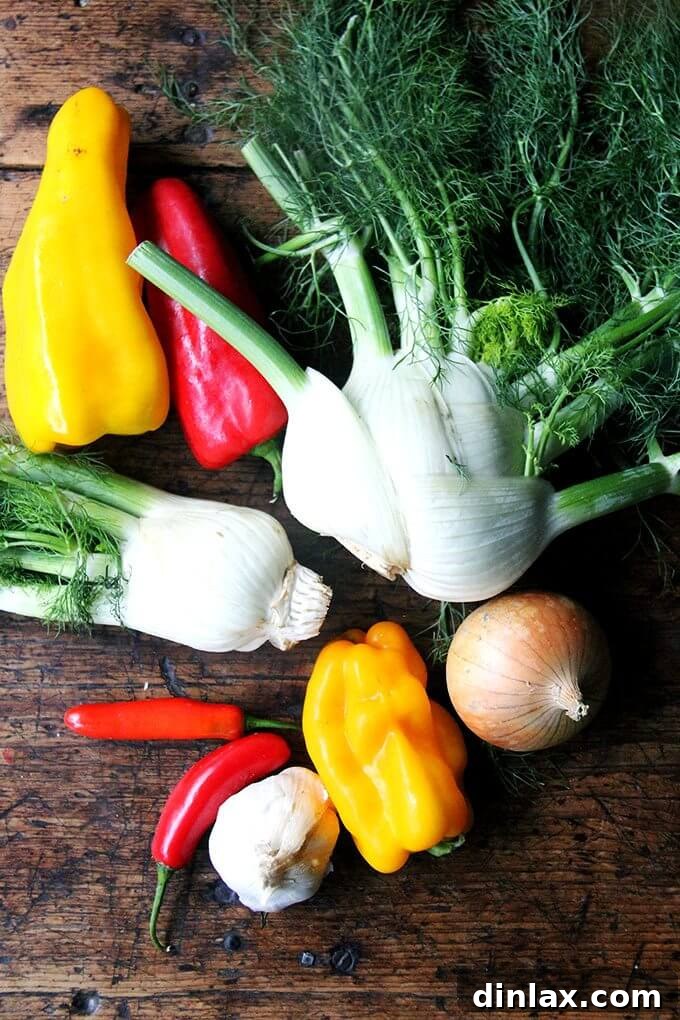
For this particular endeavor, inspired by that unforgettable pizza topping, I chose a vibrant trio of thinly sliced peppers, onions, and fennel. The bell peppers, offering a spectrum of red, orange, or yellow hues, contribute a sweet, crisp texture and beautiful color. Onions, sliced thinly, become beautifully tender and mellow in the pickling liquid, losing their raw bite while gaining an irresistible tang. And fennel, with its delicate anise notes, adds an unexpected layer of aromatic complexity and a satisfying crunch that truly elevates the mix.
To enhance the flavor profile further and introduce a subtle warmth, I also included thinly sliced garlic cloves. For those who appreciate a bit of heat, a thinly sliced hot chili pepper, cut on the bias for an appealing visual, can be added to the mix. This optional addition provides a delightful kick that complements the tangy brine beautifully, creating a more dynamic and exciting condiment.
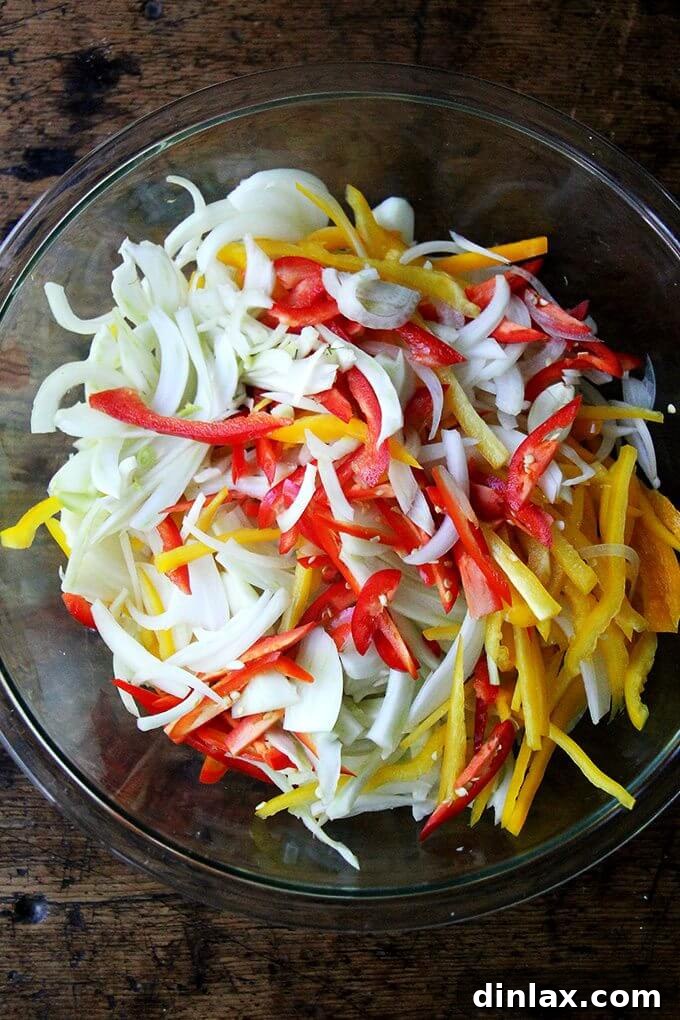
The thin slicing of the vegetables is crucial for optimal texture and flavor absorption. It ensures that each piece quickly soaks up the pickling liquid, resulting in a perfectly tender-crisp bite and an even distribution of flavor throughout the mixture. This attention to detail in preparation contributes significantly to the overall success and deliciousness of your homemade pickled vegetables.
Beyond the Pizza: Endless Culinary Applications
Since mastering this simple pickling technique, these homemade pickled vegetables have become an indispensable staple in my kitchen, proving their versatility far beyond their initial inspiration. While they are, indeed, phenomenal sprinkled generously over a freshly baked pizza—just as Chef Ben intended—their uses extend to countless other culinary creations.
- Sandwich & Wrap Enhancer: I frequently tuck generous spoonfuls of this tangy mix into various sandwiches and wraps. The sharp, bright flavors cut through rich meats and cheeses, adding a refreshing counterpoint that transforms an ordinary sandwich into something extraordinary. Imagine them in a classic turkey club, a savory ham and Swiss, or even a vegetarian grilled vegetable wrap.
- Melted Cheese Toast & Grilled Cheese: For a quick and utterly satisfying snack or light meal, spreading these pickled vegetables atop melty cheese toast is a revelation. The acidity of the pickles perfectly balances the richness of the cheese, creating a harmonious burst of flavor and texture. They’re also an incredible addition to a gourmet grilled cheese sandwich.
- Grilled Meats & Sausages: Picture these vibrant pickles alongside a sizzling grilled bratwurst or a juicy hot dog. Their crisp texture and piquant taste provide a fantastic contrast to the smoky, savory flavors of grilled meats, elevating a simple barbecue staple into a more refined dish. They would also be outstanding paired with grilled chicken or pork chops.
- Philly Cheesesteak-Style Sandwiches: Taking inspiration from classic American comfort food, these pickled vegetables would be absolutely fabulous nestled within a Philly cheesesteak-style sandwich. Their brightness would cut through the richness of the steak and cheese, adding a delightful tang that you won’t find in traditional versions.
- Salad Topping: Add a burst of flavor and texture to any green salad or grain bowl. The pickled vegetables bring a welcome crunch and acidity that enlivens fresh greens and other ingredients.
- Tacos & Burrito Bowls: Elevate your Mexican-inspired dishes with a spoonful of these tangy pickles. They offer a refreshing counterpoint to spicy meats and creamy sauces, adding complexity to tacos, burritos, or even nachos.
- Charcuterie Boards & Appetizers: These colorful pickled vegetables make a stunning and delicious addition to any charcuterie or cheese board. Their vibrant appearance and bold flavor perfectly complement a variety of cured meats, cheeses, and crackers, offering a refreshing palate cleanser.
- Garnish for Soups & Stews: A small dollop can add a bright, acidic finish to hearty soups and stews, providing a fresh contrast to rich, slow-cooked flavors.
The possibilities are truly endless, limited only by your imagination. Keep a jar of these simple pickled vegetables on hand, and you’ll find yourself reaching for them to add a fresh, vibrant twist to almost any meal.
Simple Pickled Peppers, Onions and Fennel
Rated 5 out of 5 stars based on 3 reviews.
Print Recipe
Description
This is an incredibly versatile and simple quick pickling recipe, serving as an excellent guide for preserving a variety of vegetables. You can easily adjust the quantities of fennel, peppers, onions, and other ingredients to suit your preference or what you have on hand. The pickling liquid recipe, adapted from David Lebovitz’s pickled radish recipe, is truly foolproof and has proven successful with numerous vegetables, including carrots, turnips, and beets. It’s quick, easy, and consistently delicious. While I never process the jars for long-term pantry storage, these pickled vegetables keep remarkably well, seemingly indefinitely, when stored in the refrigerator, maintaining their crispness and vibrant flavor for weeks.
Ingredients
- 2 cups water
- 2 cups cider vinegar
- 1 tablespoon + 1 teaspoon sugar
- 1 tablespoon + 1 teaspoon kosher salt
- 2 to 3 red, orange, or yellow bell peppers, seeded and thinly sliced
- 1 to 2 bulbs fennel, thinly sliced
- 1 onion, peeled and thinly sliced
- 2 cloves garlic, peeled and thinly sliced
- 1 hot chili pepper, thinly sliced on the bias, optional (for a subtle kick)
Instructions
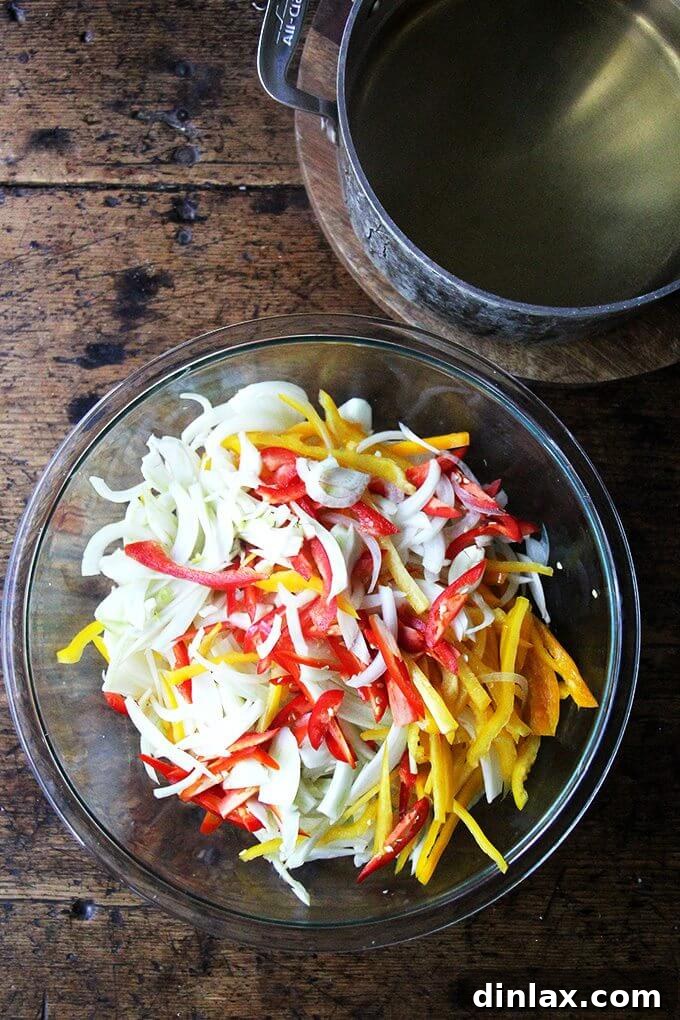
- Prepare the Brine: In a large, non-reactive saucepan (such as stainless steel or enamel-coated cast iron, which won’t react with the vinegar’s acidity), combine the water, cider vinegar, sugar, and kosher salt. Bring the mixture to a boil over medium-high heat, stirring occasionally, until both the sugar and salt are completely dissolved into the liquid. This process creates a perfectly balanced pickling solution.
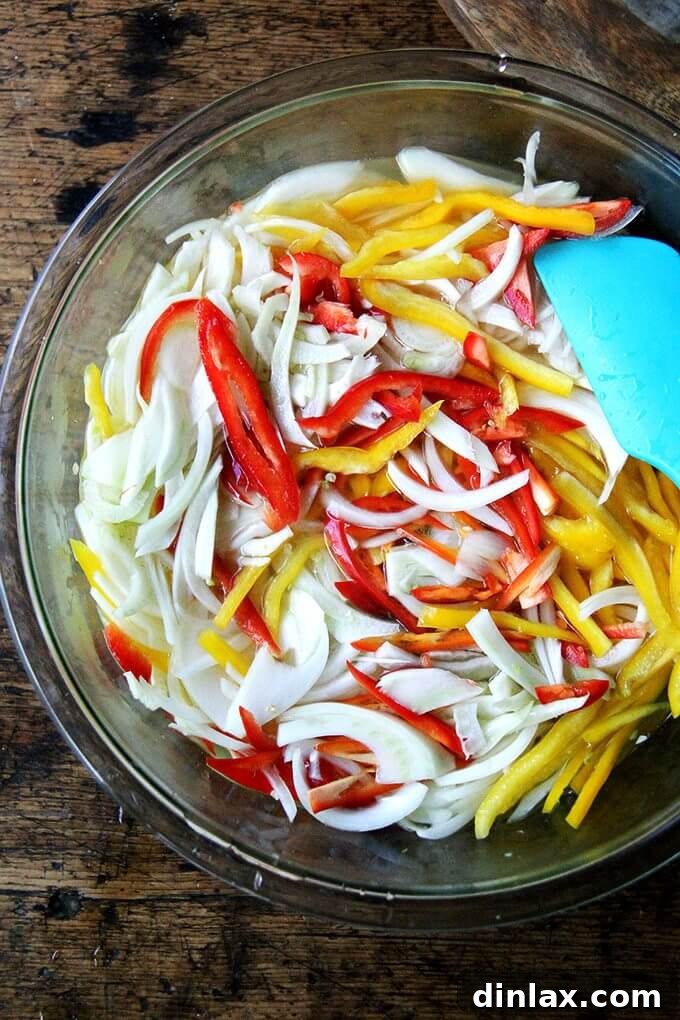
- Combine Vegetables and Brine: While the brine is heating, meticulously prepare your vegetables. Place the thinly sliced bell peppers, fennel, onion, garlic, and the optional chili pepper (if using) into a large, heat-proof bowl. Once the pickling liquid has reached a boil and the solids are dissolved, carefully pour the hot liquid directly over the prepared vegetables in the bowl. Use a spatula or spoon to gently press the vegetables down, ensuring they are fully submerged in the hot brine. This helps them absorb the flavors evenly and quickly begin the pickling process.
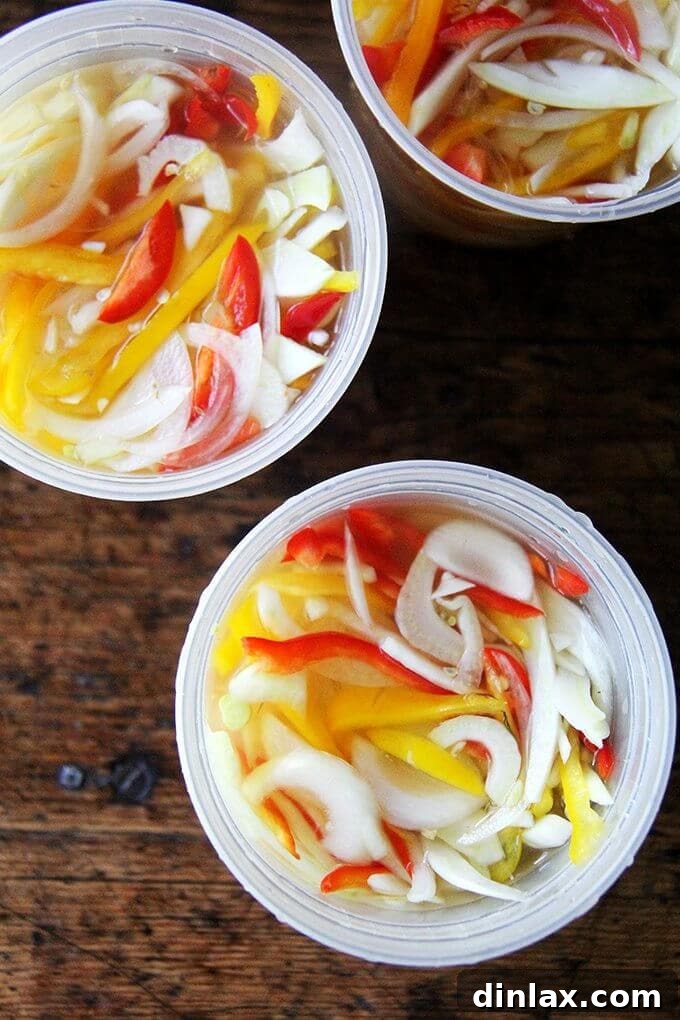
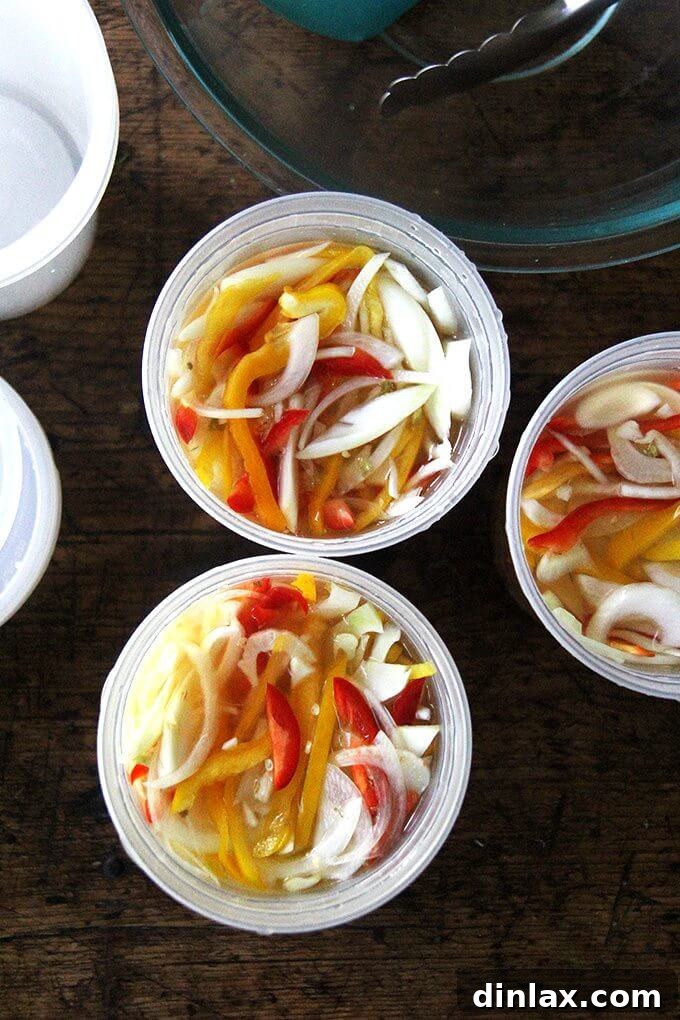
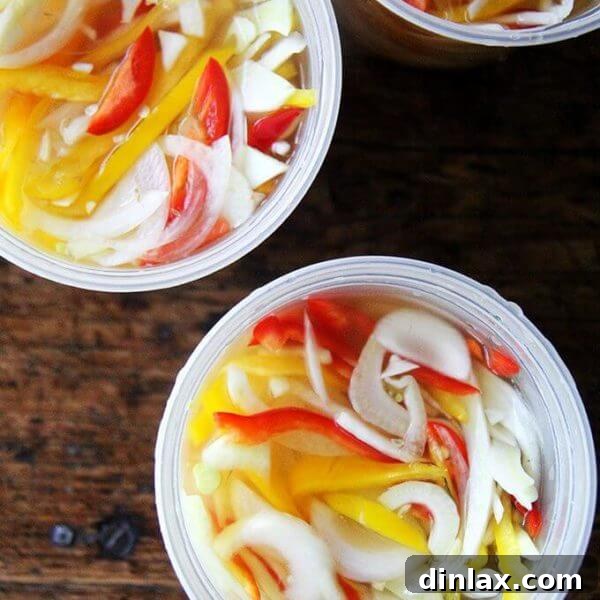
- Cool and Store: Allow the vegetables and liquid to cool naturally to room temperature within the bowl. Once cooled, carefully transfer the pickled vegetables and their liquid into clean storage containers. Glass canning jars are an excellent choice for their airtight seal and aesthetic appeal, though sturdy deli containers also work very well. Once transferred, seal the containers and refrigerate. These simple pickled vegetables do not require canning for preservation and will maintain their freshness, crispness, and vibrant flavor for several weeks, if not longer, when properly stored in the refrigerator.