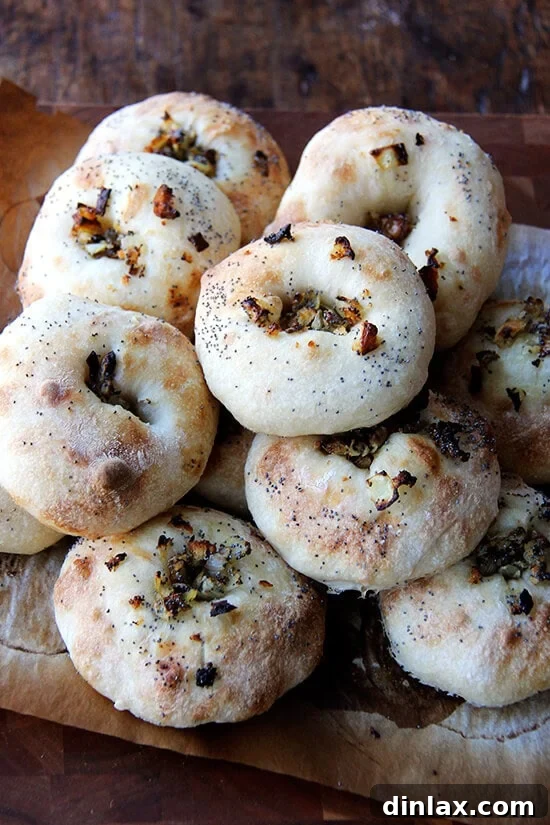
Welcome to the delightful world of homemade bialys! Often compared to bagels, bialys offer a unique texture and flavor that is wonderfully distinct and, perhaps best of all, far simpler to achieve in your home kitchen. This comprehensive guide will walk you through crafting light, airy, and utterly delicious bialys using an effortless no-knead, overnight method, ensuring a truly rewarding baking experience with minimal effort.
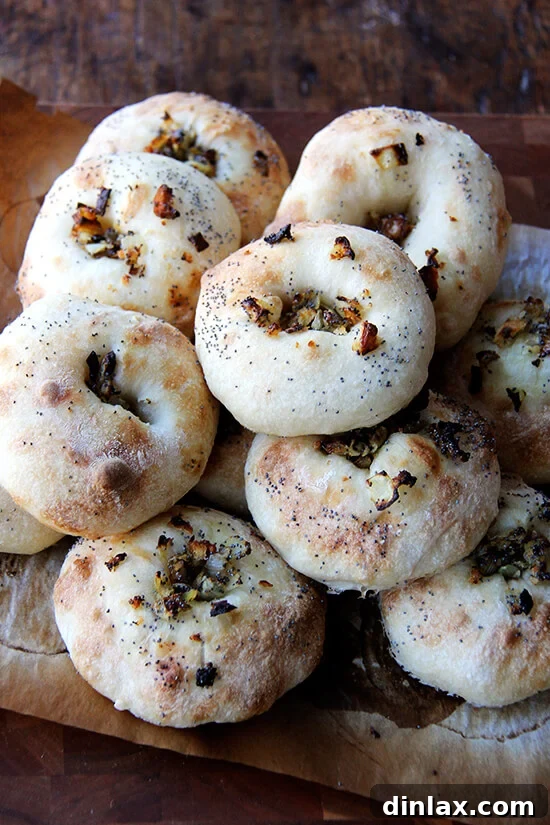
Discovering the Delight of Homemade Bialys: A No-Knead, Overnight Recipe
A bialy, known in its native Poland as bialski, is a traditional bread roll originating from Bialystok. What sets it apart is its unique form: a flattened, round bread with a depressed center, typically filled with a savory mixture of sautéed onions, fragrant poppy seeds, and fresh breadcrumbs. While many liken it to a bagel due to its round shape and chewy exterior, a true bialy is a distinct culinary creation. Unlike bagels, bialys are never boiled; instead, they are baked directly, resulting in a lighter, airier texture more akin to a rustic roll than the dense chewiness of a bagel. This crucial difference makes them significantly less intimidating to bake at home.
The History and Heritage of Bialys
The bialy’s roots run deep in the Jewish communities of Bialystok, Poland, where it became a staple food. Bakers would craft these rolls, often topping them with whatever simple ingredients were available – usually caramelized onions and poppy seeds – before baking them in wood-fired ovens. As Jewish immigrants moved to other parts of the world, particularly New York City, they brought their cherished culinary traditions with them, and the bialy found a new home. Today, bialys remain a beloved item in bakeries, especially in areas with a rich Jewish heritage, celebrated for their comforting flavor and satisfying texture. Learning to make them at home connects you to this rich history, allowing you to share a piece of culinary heritage with your family and friends.
The Simplicity of the No-Knead, Overnight Method
This particular bialy recipe draws inspiration from a wonderful individual named Len, who generously shared his “bagels and bialys” expertise, originally from a local community college class. I’ve taken his foundation and adapted it to incorporate Jim Lahey’s revolutionary No-Knead Bread method. This adaptation is a game-changer for home bakers. By significantly reducing the amount of yeast and extending the dough’s proofing time overnight, we unlock several incredible benefits:
- Enhanced Flavor: The long, slow fermentation allows the yeast to work its magic over an extended period, developing complex, nuanced flavors in the dough that simply can’t be achieved with a quick rise.
- Superior Texture: This method naturally builds gluten structure without the need for intense kneading. The result is an incredibly light and airy crumb with beautiful, irregular air pockets, making each bite wonderfully tender.
- Effortless Preparation: No heavy-duty stand mixer, no tedious hand-kneading. Simply mix the ingredients together in a bowl, cover, and let time do the work. It’s truly a minimal-effort, maximum-reward approach to baking.
- Perfect for Brunch Planning: Imagine waking up to freshly baked bialys! Preparing the dough the night before means you can enjoy warm, homemade bread for a leisurely weekend brunch or a special breakfast gathering without any morning rush.
The beauty of this recipe lies in its forgiving nature and incredible results. Whether you’re a seasoned baker or just starting, you’ll find immense satisfaction in creating these exceptional bialys. Below, you’ll find a detailed, step-by-step guide to bring this tradition to your kitchen.
How to Bake Perfect No-Knead Bialys: A Step-by-Step Pictorial Guide
Embark on your bialy-making journey with these easy-to-follow instructions. The key to success is patience, allowing the dough to slowly develop its incredible flavor and texture.
Phase 1: Preparing the No-Knead Dough (Overnight Rise)
Step 1: Mix the Dough and Begin the Long Rise.
In a large bowl, whisk together the flour, salt, and instant yeast. Add the water and stir with a sturdy wooden spoon or a dough whisk until all the flour is fully incorporated and no dry spots remain. The dough will be quite wet and sticky, which is perfectly normal for a no-knead recipe. A brief, gentle knead with your hands for about 30 seconds ensures everything is thoroughly mixed.
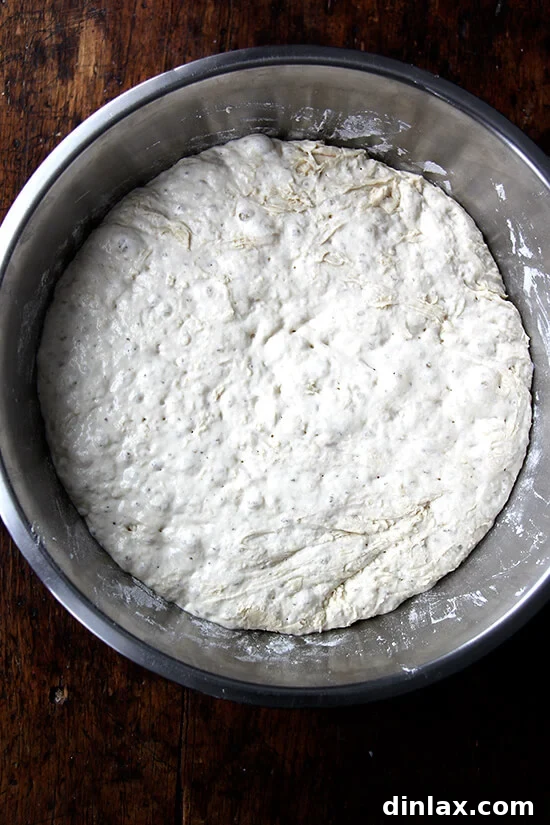
Cover the bowl tightly with plastic wrap to prevent the dough from drying out. Let the dough rest and ferment at room temperature (ideally between 68-72°F or 20-22°C) for at least 12 hours, and up to 18 hours. During this time, the dough will significantly increase in volume, become bubbly, and develop a rich, complex aroma. This long rise is where all the magic happens!
Phase 2: Shaping and Preparing the Filling
Step 2: Turn Out and Portion the Dough.
Once the dough has completed its overnight rise, it will be light and airy. Generously flour your work surface, then carefully scrape the dough out of the bowl onto the floured surface. Avoid punching it down too aggressively; you want to preserve as much of the air as possible.
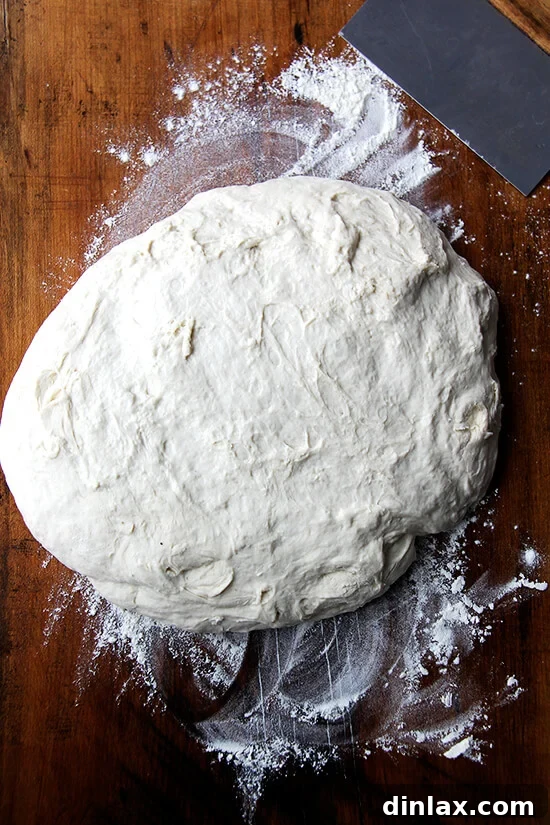
Using a bench scraper or a sharp knife, portion the dough into roughly 18 equal pieces, each weighing approximately 90 grams. Even sizing helps ensure even baking.
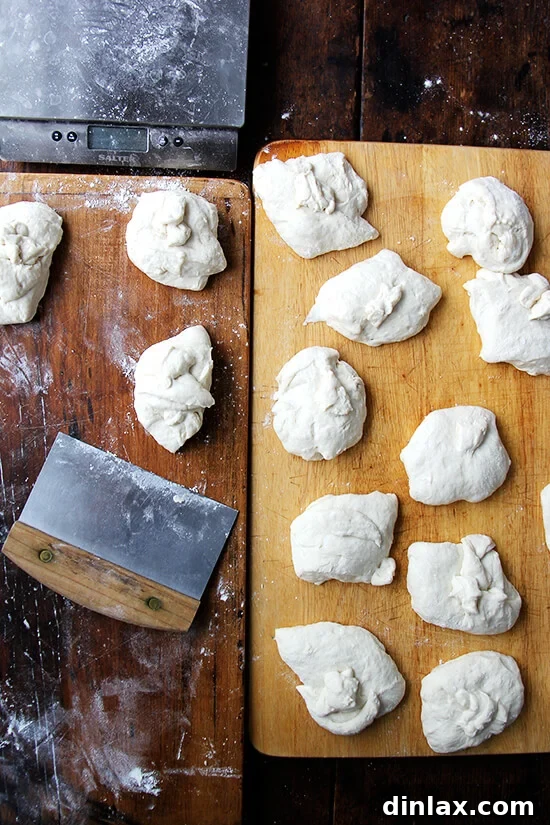
Step 3: Ball the Dough and Let Rest.
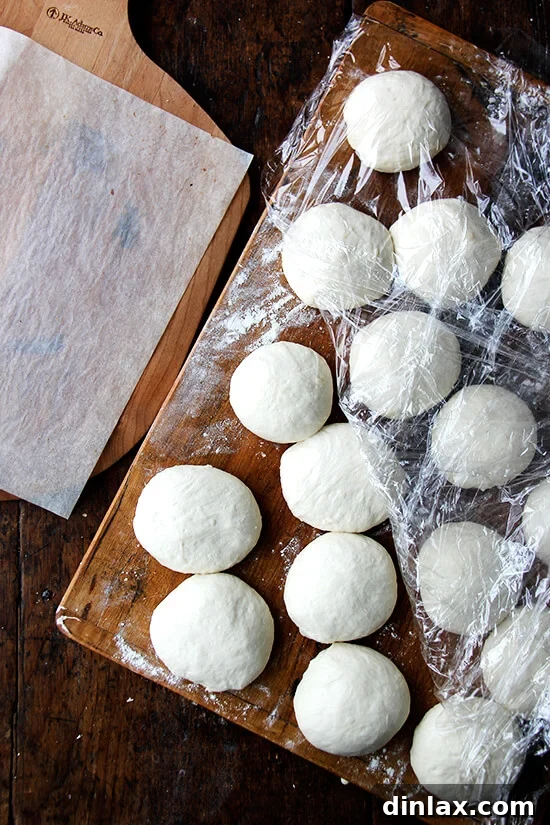
Working with lightly floured hands, gently shape each dough portion into a tight ball. This can be done by tucking the edges underneath and rolling the dough against the work surface with a cupped hand until a smooth, round surface forms on top.
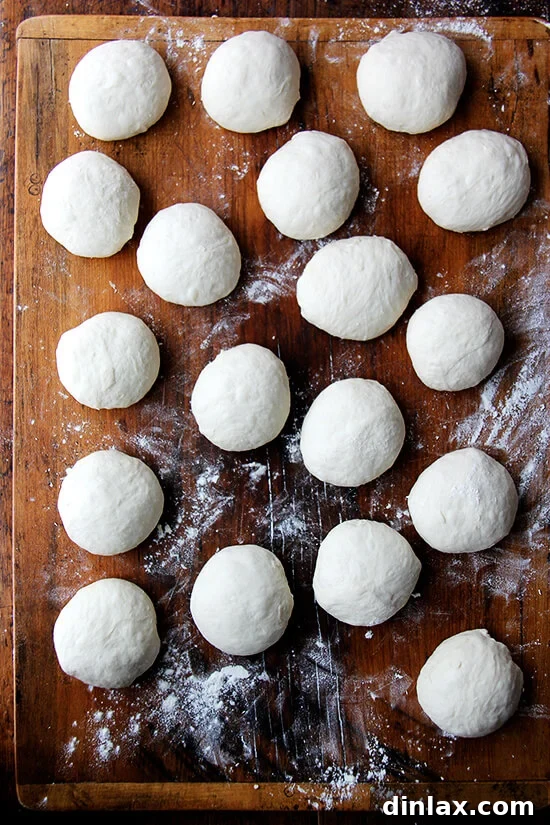
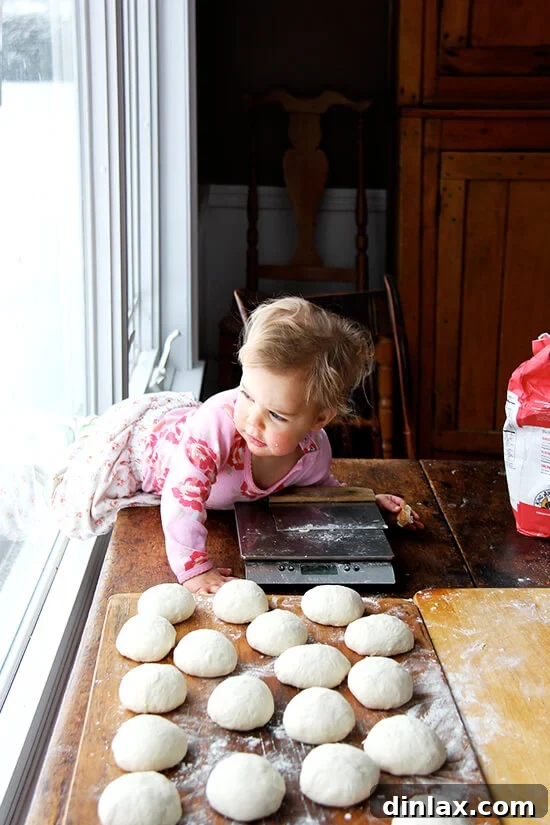
Place the balled dough pieces back on the floured surface, allowing some space between them. Cover them loosely with plastic wrap or a clean kitchen towel to prevent them from drying out. Let them rest for approximately 45 minutes. This resting period allows the gluten to relax, making the dough much easier to shape in the next step.
Step 4: Prepare the Irresistible Onion-Poppy Seed Filling.
While your dough balls are resting, it’s the perfect time to prepare the signature bialy filling.
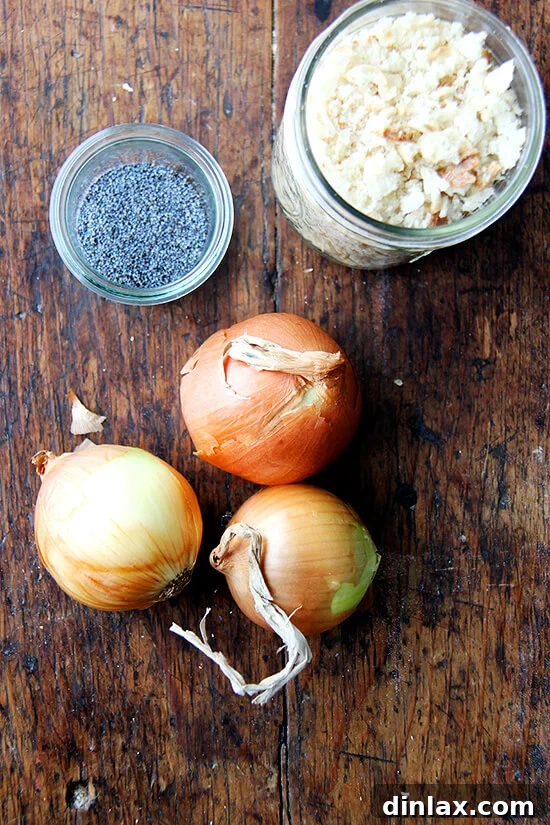
Heat olive oil or a neutral oil in a skillet over medium-low heat. Add the diced onions and a pinch of kosher salt. Sauté slowly, stirring occasionally, until the onions become translucent and soft. The key here is patience; slow cooking brings out the natural sweetness of the onions. Be careful not to brown them too much, as they will continue to cook and potentially burn in the hot oven. A slight golden hue is perfect.
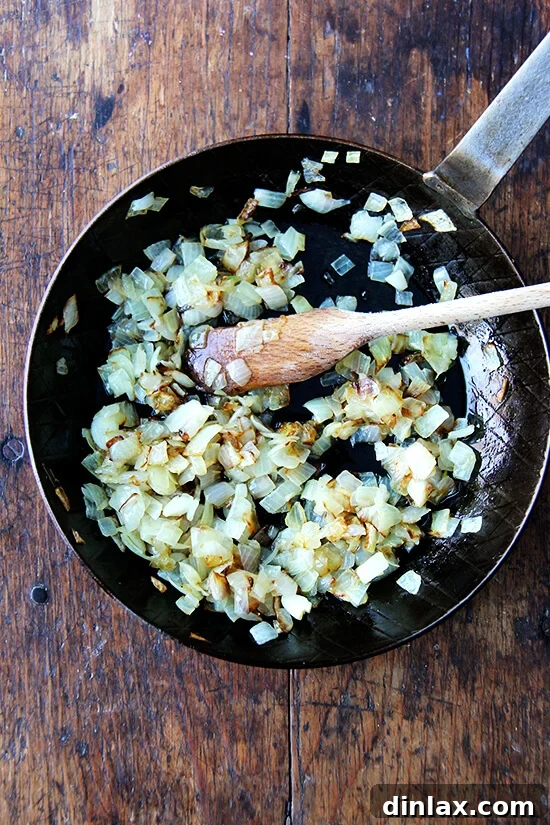
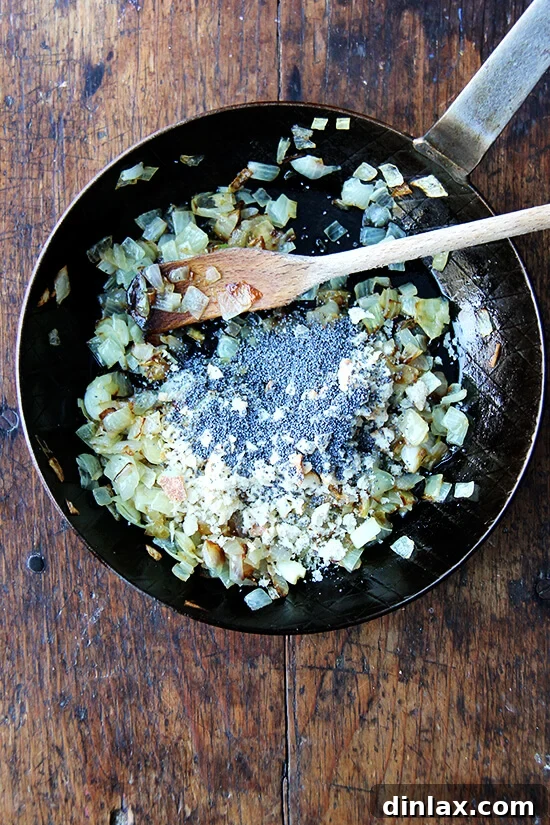
Once the onions are cooked, remove the skillet from the heat. Stir in the fresh breadcrumbs and poppy seeds until well combined. This mixture is not just a topping; its flavor will permeate the entire bialy during baking, creating a truly irresistible experience. Set the filling aside to cool slightly.
Phase 3: Shaping, Filling, and Baking
Step 5: Shape the Bialys.
Place a baking stone or Baking Steel in your oven if you have one; this will help achieve a crisp crust. Preheat your oven to 450ºF (232°C) for a stone/steel, or 500ºF (260°C) if baking directly on a baking sheet.
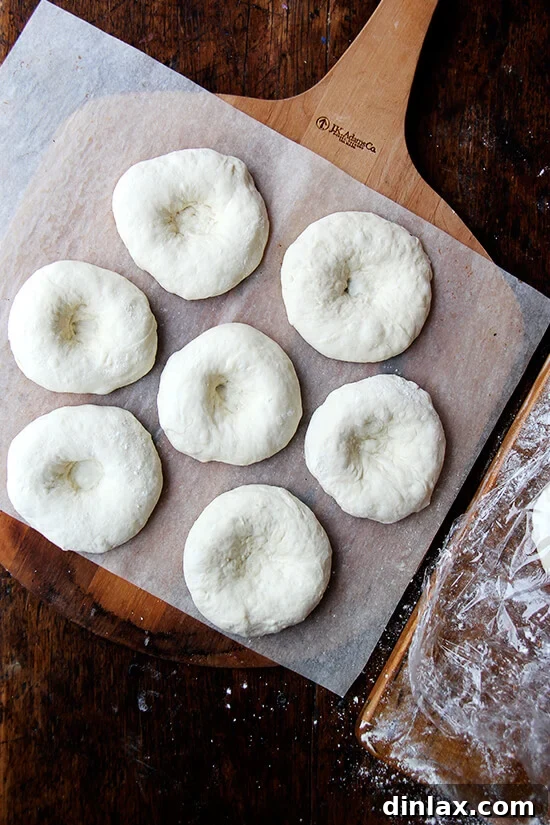
Now, it’s time to shape your bialys into their distinctive form. Take one dough ball. Using your thumbs, gently press down in the very center of the dough, leaving a raised rim around the edge. Then, carefully lift the dough and use your thumbs to gently stretch the center outwards, aiming for a paper-thin center while maintaining the raised, “ballooned” rim. The goal is a 5-inch round with a clearly defined well. This might take a little practice, but don’t worry if your first few aren’t perfect; they will still taste amazing!
Step 6: Fill and Prepare for Baking.
As you shape each bialy, place it on a parchment-lined baking peel or directly onto a parchment-lined baking sheet. Once you have five or six shaped bialys on your peel/sheet, brush the raised rim of each lightly with water. This helps create a slightly crispier edge and allows for better adhesion if you choose to sprinkle additional poppy seeds.
Spoon a generous amount of the prepared onion-poppy seed filling into the depressed center of each bialy. Don’t be shy with the filling; it’s a critical component of the bialy’s flavor profile.
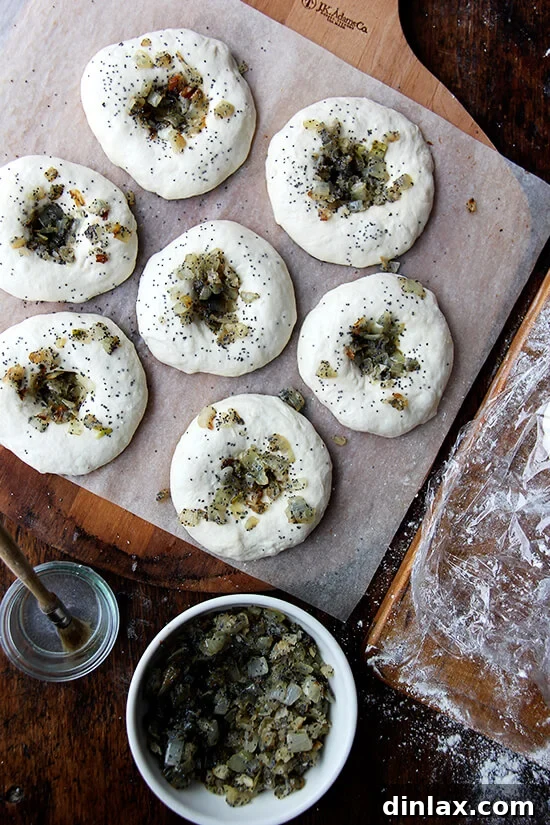
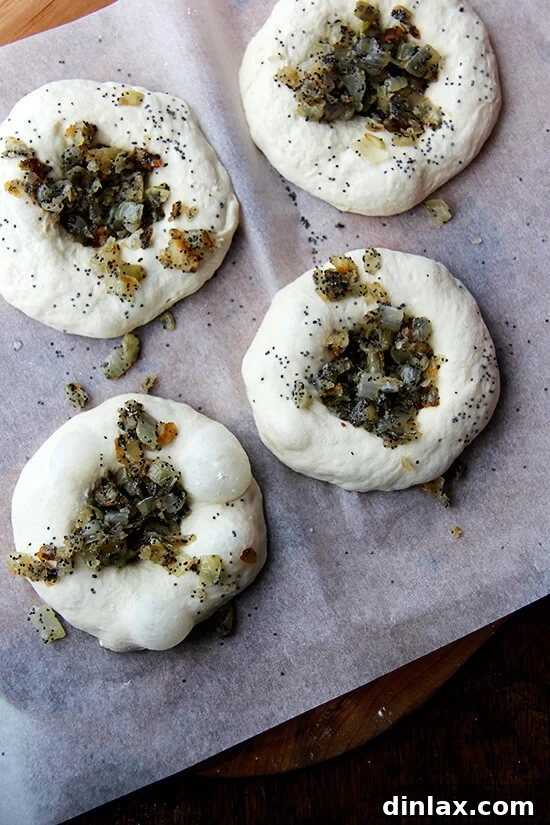
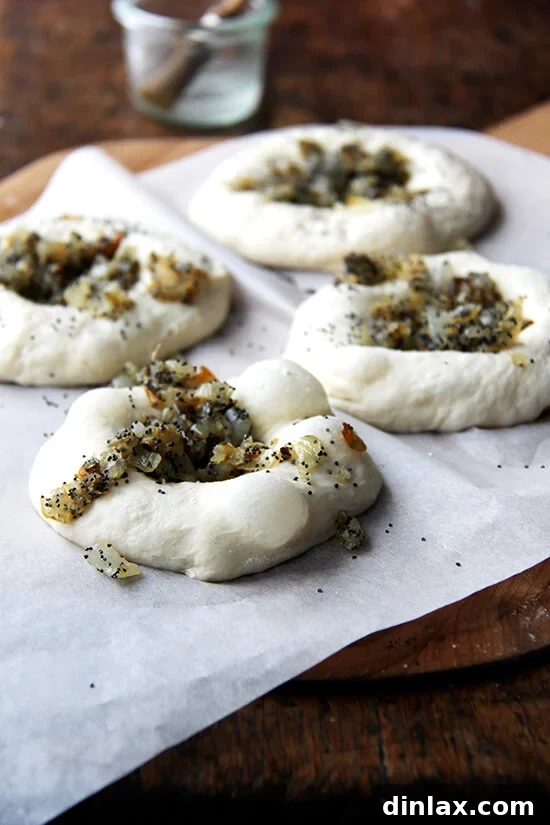
Step 7: Bake to Golden Perfection.
Carefully transfer the parchment with the bialys onto your preheated Baking Steel, pizza stone, or hot baking sheet in the oven. Bake for 8 to 12 minutes, or until the bialys are beautifully golden brown, and the filling is fragrant and slightly caramelized. Baking times can vary based on your oven and baking surface, so keep a close eye on them.
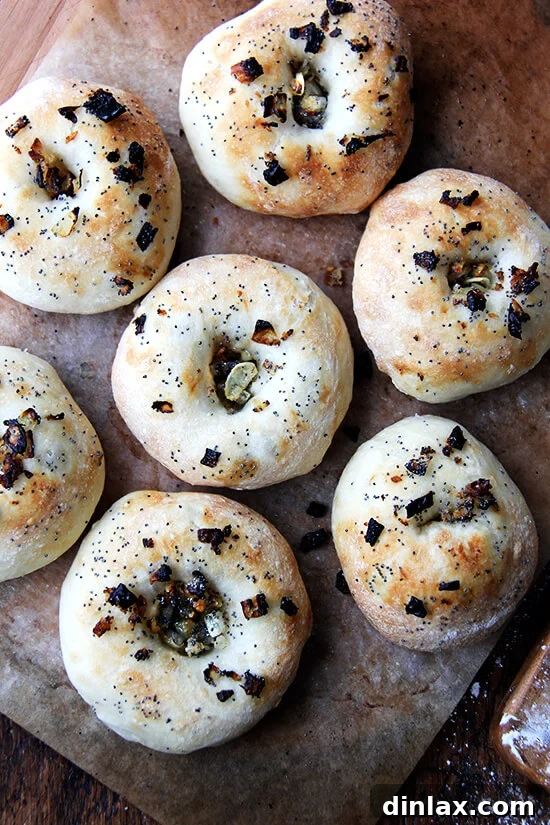
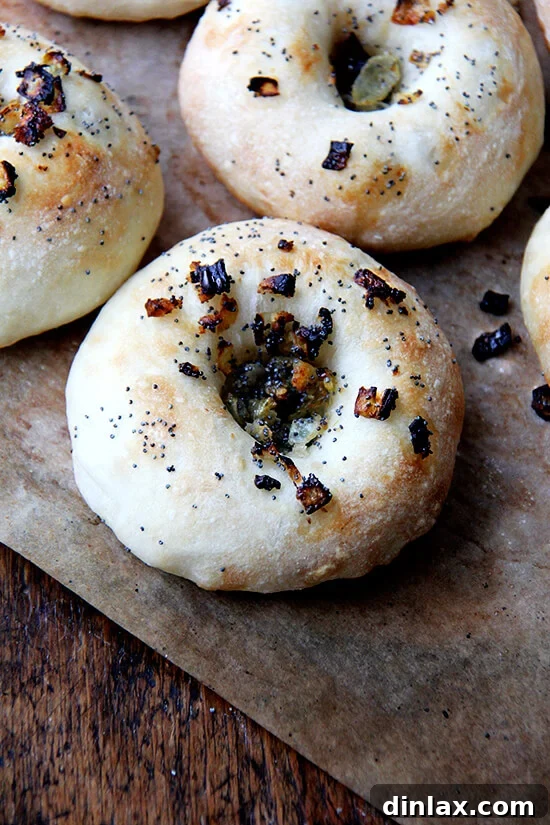
Once baked, remove the bialys from the oven and transfer them to a wire rack to cool slightly. Repeat the baking process with the remaining dough balls. The aroma filling your kitchen will be absolutely divine!
Serving Suggestions & Enjoyment
Freshly baked bialys are a versatile delight, delicious whether enjoyed warm from the oven or cooled to room temperature. Here are a few ways to savor them:
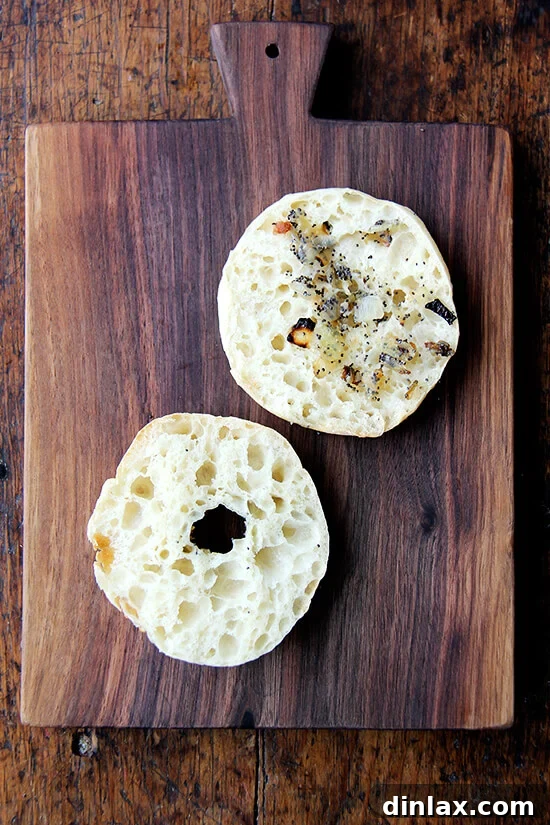
For a classic breakfast or brunch, halve them and spread with softened butter or rich cream cheese. Elevate the experience with an array of toppings:
- Smoked Salmon (Gravlax) & Cream Cheese: A luxurious combination, complete with capers, thinly sliced red onion, and fresh chives for a taste reminiscent of a high-end bagel spread. The savory depth of the bialy complements the lox beautifully.

- Savory Egg Sandwich: For a hearty meal, toast bialy halves under the broiler. Cover one half with a slice of sharp cheddar cheese and melt it. Once out of the oven, slide a perfectly fried egg onto the uncheesed half and finish with a healthy squirt of Sriracha for a spicy kick. This creates an incredibly satisfying and flavorful open-faced sandwich.

Consider pairing them with a hot cup of coffee, a glass of freshly squeezed orange juice, or even a savory soup for a light lunch. The possibilities are truly endless!
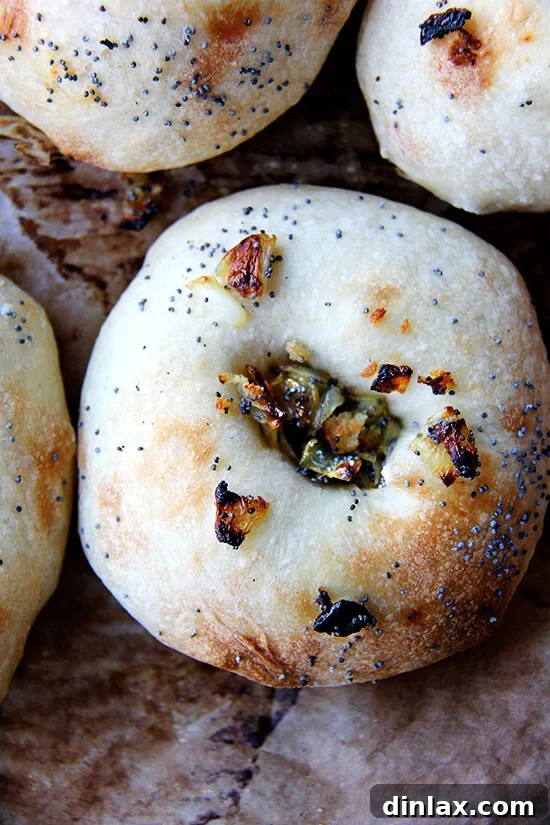
Storage and Reheating Tips
Bialys are best enjoyed fresh, but they can be stored and reheated. To keep them fresh for longer, place cooled bialys in an airtight container or a large zip-top bag at room temperature for up to 2-3 days. For longer storage, you can freeze them for up to a month. To reheat, simply toast them in a toaster oven or a regular oven at 350°F (175°C) for a few minutes until warmed through and slightly crispy.
Print Recipe
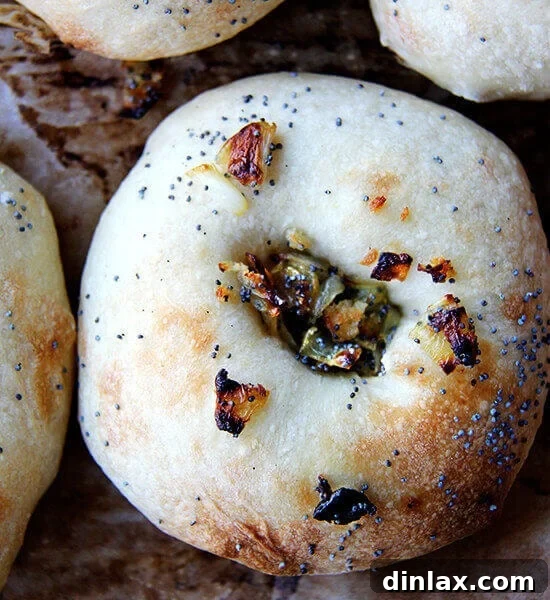
How to Make Bialys: A Step-by-Step Guide
5 Stars
4 Stars
3 Stars
2 Stars
1 Star
4.9 from 19 reviews
- Author: Alexandra Stafford
Total Time: 13 hours 22 minutes
Yield: 18 bialys 1x
Description
Bialys are often likened to bagels, but they are so much simpler to make. This post outlines how to make a simple and delicious bialy at home using a no-knead, overnight method.
Recipe Notes:
This recipe is slightly adapted from Paul Krebs of Schenectady County Community College, with the method adapted from Jim Lahey’s renowned no-knead technique. For optimal results, Krebs recommends using a high-protein flour. For both Lahey’s dough and these bialys, I personally prefer Tipo 00 flour for its fine texture and excellent gluten development. As always, SAF instant yeast is my go-to choice for its reliability and consistency.
Optional Same-Day Method: While the no-knead, long, slow rise method is highly recommended for superior flavor and texture, you can opt for a quicker, same-day preparation if time is of the essence. To do so, increase the instant yeast to 2 teaspoons and decrease the water to 2¾ cups. Knead the dough by hand or in a stand mixer until it becomes smooth and elastic, approximately 8-10 minutes. Let the dough rise in a warm place for about two hours, or until doubled in size, then proceed with the shaping and baking instructions as outlined in the recipe.
Ingredients
For the Bialys:
- 1000 g (7.5 cups) bread, all-purpose, or Tipo 00 flour (see notes above for recommendations)
- 20 g (5 teaspoons) kosher salt
- 4 g (1 teaspoon) instant yeast* (see notes above for quick method yeast adjustment)
- 3 cups (680 g) water** (see notes above for quick method water adjustment)
For the Filling:
- 2 tablespoons olive oil or a neutral oil (such as grapeseed or canola)
- 2 small onions, finely diced
- Kosher salt, to taste
- ¼ cup fresh breadcrumbs
- 1 tablespoon poppy seeds, plus extra for sprinkling on the rims (optional)
Instructions
- In a large mixing bowl, whisk together the flour, kosher salt, and instant yeast until well combined. Gradually add the water, stirring with a sturdy wooden spoon or your hands until all of the flour is thoroughly incorporated and a shaggy, sticky dough forms. Ensure there are no dry pockets of flour remaining.
- Cover the bowl tightly with plastic wrap or a damp kitchen towel. Let the dough rest and rise at room temperature for a minimum of 12 hours, and ideally up to 18 hours. The dough should become noticeably larger, very bubbly, and light. Once risen, gently remove the plastic wrap and turn the dough out onto a lightly floured work surface, being careful not to deflate it too much. Using a bench scraper or knife, portion the dough into 18 pieces, each weighing approximately 90 grams.
- With lightly floured hands, gently shape each dough portion into a smooth, round ball. Place the balls on the floured surface, leaving space between them. Cover the dough balls loosely with plastic wrap or a clean kitchen towel and let them rest for 45 minutes. This resting period allows the gluten to relax, making shaping easier.
- While the dough rests, preheat your oven. If you have a baking stone or Baking Steel, place it in the oven and preheat to 450ºF (232°C). If you are baking on a regular baking sheet, preheat your oven to 500ºF (260°C).
- Prepare the savory filling: Heat the olive oil (or neutral oil) in a medium skillet over medium-low heat. Add the finely diced onions and a pinch of kosher salt. Sauté slowly, stirring occasionally, until the onions are translucent and tender, with just a hint of golden color. Avoid over-browning them, as they will darken further in the oven. Remove from heat, then stir in the fresh breadcrumbs and 1 tablespoon of poppy seeds until well combined. Set the filling aside to cool slightly.
- Now, shape your bialys: Take one dough ball and gently flatten it slightly. Using your thumbs, press down firmly in the center of the dough to create a thin well, leaving a distinct raised rim (about 1/2 to 3/4 inch wide) around the edge. Continue to gently stretch the center of the dough, making it paper-thin, until you have a round about 5 inches in diameter with a pronounced, airy rim. Don’t worry if the shape isn’t perfectly uniform – homemade charm is part of the appeal!
- After shaping each bialy, carefully place it on a sheet of parchment paper laid on a pizza peel or directly onto a baking sheet. Arrange 4-6 bialys per sheet, ensuring they have enough space. Lightly brush the raised rim of each shaped bialy with a little water. If desired, sprinkle a few extra poppy seeds over the rims. Spoon a generous amount of the prepared onion-poppy seed filling into the thin center of each bialy.
- Carefully slide the parchment paper with the filled bialys onto the preheated baking stone/steel or into the oven on the hot baking sheet. Bake for 8 to 12 minutes, or until the bialys are puffed, the rims are beautifully golden brown, and the filling is aromatic and lightly caramelized. Cooking times may vary, so observe carefully. When lightly golden, use the peel to remove the parchment with the baked bialys from the oven. Transfer them to a wire rack to cool slightly and repeat the baking process with the remaining dough balls. Serve warm or at room temperature, and enjoy!
- Prep Time: 25 minutes
- Cook Time: 12 minutes