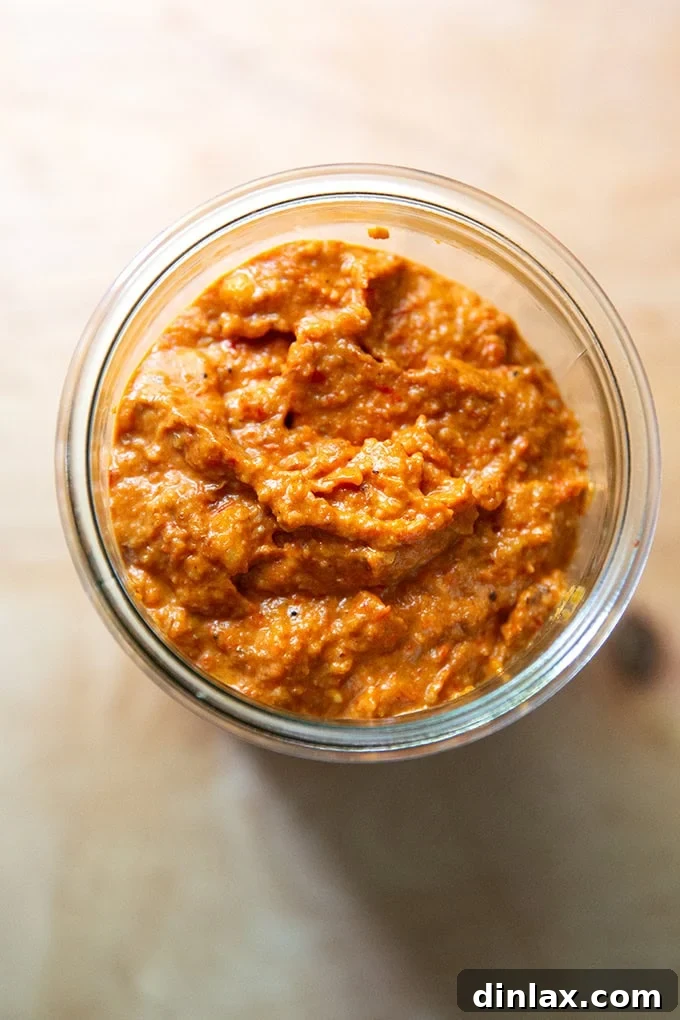
Easiest Homemade Romesco Sauce: A No-Peel Method for Unforgettable Flavor
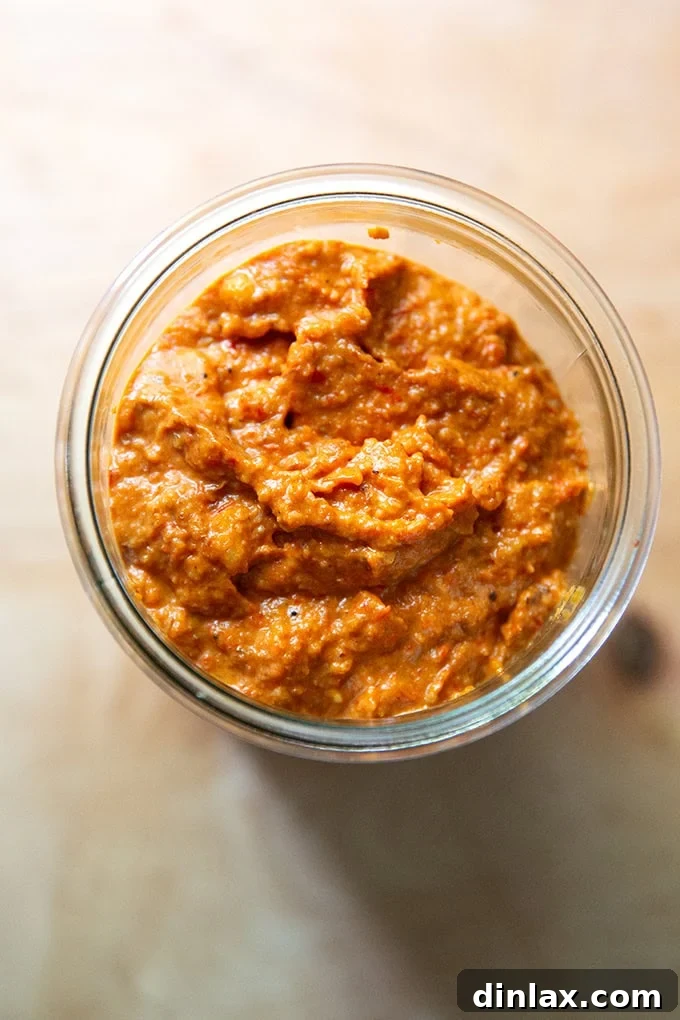
Prepare to elevate your culinary experience with this incredibly flavorful, homemade romesco sauce that comes together in mere minutes. What makes this recipe truly revolutionary is its ingenious, no-fuss approach: you don’t need to painstakingly peel the peppers! Instead, they are roasted alongside ripe tomatoes and fragrant garlic, then simply puréed with high-quality olive oil, a touch of vinegar, crunchy almonds, and a blend of aromatic spices. The result is a smoky, vibrant, and utterly addictive romesco that you’ll want to generously spread on just about everything imaginable. This method not only saves precious time but also locks in an exceptional depth of flavor that will impress even the most discerning palates.
Discover the Magic of Effortless Romesco
For years, the idea of making authentic romesco sauce from scratch often felt like a daunting task, primarily due to the traditional step of roasting and then peeling bell peppers. This extra effort, while yielding delicious results, frequently deterred home cooks from attempting this Spanish culinary gem. However, a groundbreaking approach has emerged, promising the same rich, smoky, and bright flavors without the tedious prep work. This simplified method makes homemade romesco accessible to everyone, ensuring you can enjoy this versatile sauce whenever a craving strikes.
What is Romesco Sauce? A Taste of Spanish Tradition
Originating from the Tarragona region of Catalonia, Spain, Romesco is a robust and savory sauce traditionally made by fishermen to accompany their freshly caught seafood. Its distinctive flavor profile comes from a harmonious blend of roasted nuts (typically almonds, sometimes hazelnuts), garlic, olive oil, and, crucially, roasted tomatoes and ñora peppers or bell peppers. Historically, a piece of stale bread was often incorporated to thicken the sauce and add body. Romesco is celebrated for its deep, complex taste—a perfect balance of smoky, sweet, tangy, and savory notes, with a wonderfully coarse texture that makes it incredibly satisfying. It’s more than just a sauce; it’s a culinary tradition that has stood the test of time, cherished for its ability to transform simple ingredients into something extraordinary.
The Genius Behind This Simplified Romesco Recipe
A few months ago, a discovery in Joe Yonan’s insightful book, Mastering the Art of Plant-Based Cooking, completely transformed my perspective on making romesco sauce. His recipe introduced a brilliant shortcut: combine all the core ingredients—peppers, tomatoes, unpeeled garlic, and almonds—on a single sheet pan, roast them together, and then purée them with smoked paprika, vinegar, and olive oil. This straightforward technique immediately caught my attention, promising to eliminate the most time-consuming step in traditional romesco preparation. The idea of skipping the pepper peeling seemed almost too good to be true, yet the results were nothing short of astounding.
Why Roasting Unpeeled Peppers Changes Everything
The conventional method for romesco often dictates roasting peppers until their skins blister, then carefully peeling them off—a task that is both messy and time-consuming. Joe Yonan’s approach completely bypasses this, instructing us to roast the peppers unpeeled. I was initially skeptical, but the ease with which this sauce came together and the vibrant flavors it produced quickly converted me. Roasting the peppers with their skins on not only saves significant prep time but also contributes a slightly more rustic texture and an additional layer of roasted depth to the sauce. Furthermore, the unpeeled cloves of garlic, after just 15 minutes in a hot oven, become incredibly soft and flavorful, slipping effortlessly from their skins, adding another layer of simplicity to the process. The resulting sauce was smoky, bright, subtly sweet, and boasted the most delightful texture, largely thanks to a generous inclusion of almonds.
Evolving the Method: Perfecting the Almond Toast and Bread Omission
Since first discovering this brilliant method, I’ve had the pleasure of making this romesco sauce countless times. Through this repeated experimentation, I’ve fine-tuned the process in two subtle but significant ways to achieve an even more consistently perfect result. First, while Joe’s original recipe called for roasting the almonds directly on the sheet pan with the vegetables, I found that on occasion, they could become a little too toasted, sometimes even verging on burnt, especially when aiming for a good char on the peppers and tomatoes. To mitigate this, I now gently toast the raw almonds in a small skillet on the stovetop over low heat while the other ingredients roast in the oven. This independent toasting allows for precise control, ensuring the almonds develop a beautiful golden hue and a deep, nutty flavor without over-browning. This minor adjustment is just as simple as the original method, yet it guarantees perfectly toasted almonds every time, while also allowing me to get a more desirable char on the peppers and tomatoes in the oven.
The second refinement involves the omission of bread cubes. On one occasion, finding myself without stale bread, I proceeded with the recipe regardless, curious to see if its absence would be noticeable. To my surprise, I could not detect any difference in the finished sauce. I believe this is largely due to the substantial contribution of the toasted almonds, which provide ample body, texture, and rich flavor, making the bread cubes redundant in this particular iteration. While stale bread is a traditional component in romesco, adding bulk and a subtle thickening, this recipe proves it can be omitted without compromising the sauce’s integrity or deliciousness. Should you wish to include bread for a more traditional take, specific instructions are provided within the recipe card, allowing for flexibility based on your preference and pantry availability.
Essential Ingredients for Your Perfect Romesco
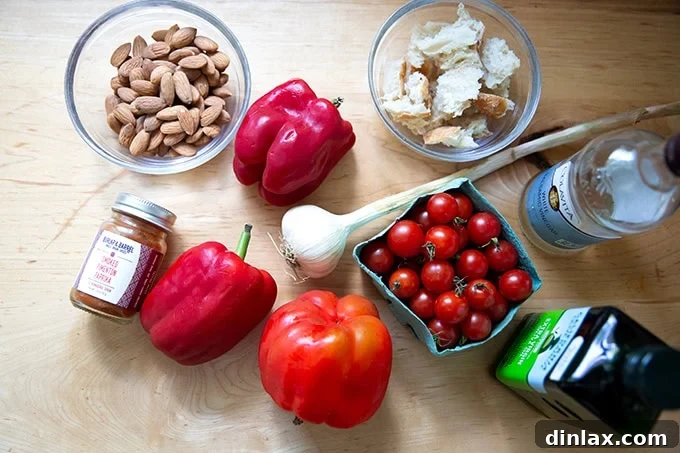
The beauty of this romesco sauce lies in its simplicity and the quality of its core ingredients. Each component plays a vital role in building the sauce’s complex flavor profile. Gathering these items fresh and understanding their contribution will ensure your homemade romesco is nothing short of spectacular.
Choosing Your Peppers and Tomatoes
- Bell Peppers: For this recipe, large bell peppers are ideal. While traditional romesco often uses specific Spanish ñora peppers, common bell peppers (red, yellow, or orange for sweetness and color) provide an excellent foundation. The roasting process mellows their flavor and brings out their natural sugars, adding depth without the need for peeling.
- Tomatoes: Cherry tomatoes work wonderfully here, bursting with concentrated flavor when roasted. Alternatively, two large, ripe tomatoes can be used. The acidity and juiciness of the tomatoes balance the richness of the nuts and oil, contributing to the sauce’s bright character.
The Role of Garlic, Almonds, and Olive Oil
- Garlic: Six unpeeled, lightly smashed garlic cloves are included in the roast. Roasting the garlic in its skin sweetens and softens it, making it incredibly easy to peel after cooking and imparting a less pungent, more nuanced garlic flavor to the sauce.
- Raw Almonds: These are the backbone of romesco, providing essential body, texture, and a rich, nutty flavor. Toasting them separately on the stovetop ensures they achieve perfect golden brownness and maximum flavor without the risk of burning, which can sometimes happen when roasted directly with wetter vegetables.
- Extra-Virgin Olive Oil: As a key component of the Mediterranean diet, olive oil is paramount. A generous amount of good quality extra-virgin olive oil is crucial for both roasting the vegetables and blending into the final sauce. It provides a luxurious mouthfeel and binds all the flavors together.
Spices and Seasoning: Smoked Paprika and Vinegar
- Smoked Paprika: This spice is non-negotiable for authentic romesco flavor. It introduces a deep, smoky aroma and taste that complements the roasted vegetables beautifully, giving the sauce its signature complexity.
- Vinegar: White balsamic vinegar is recommended for its milder acidity, which brightens the sauce without overpowering it. While sherry vinegar is traditional, it can be quite assertive; if using, start with a smaller amount and adjust to taste. Vinegar provides the essential tang that cuts through the richness and rounds out the flavor profile.
- Kosher Salt: Essential for seasoning at every stage. Be mindful of the type of salt you use, as different salts have varying levels of salinity by volume. Diamond Crystal kosher salt is specified for consistency.
- Optional Heat: For those who enjoy a kick, a touch of cayenne pepper can be added to personal preference.
Step-by-Step Guide to Making No-Peel Romesco Sauce
Creating this easy romesco sauce is a straightforward process, broken down into a few simple steps. Follow these instructions closely for a perfectly balanced and flavorful condiment that you’ll want to make again and again.
Preparing Your Ingredients for Roasting
- Preheat your oven to a blazing 500ºF (260ºC). This high temperature is key to achieving a good char on the vegetables quickly, intensifying their flavors.
- While the oven heats, place your raw almonds in a small, dry skillet. Set the skillet on your stovetop over low heat. Gently toast the almonds, shaking the pan occasionally, until they are fragrant and lightly golden. This process typically takes about 5-7 minutes. Once toasted, remove them from the heat and set aside to cool.
- On a large sheet pan, combine the chunks of bell peppers, cherry (or large chopped) tomatoes, and the unpeeled, lightly smashed garlic cloves. Drizzle generously with ¼ cup of extra-virgin olive oil and sprinkle with 1 ½ teaspoons of kosher salt (using Diamond Crystal kosher salt, adjust if using a different type—see notes in the recipe card below). Toss all the ingredients thoroughly to ensure they are evenly coated.
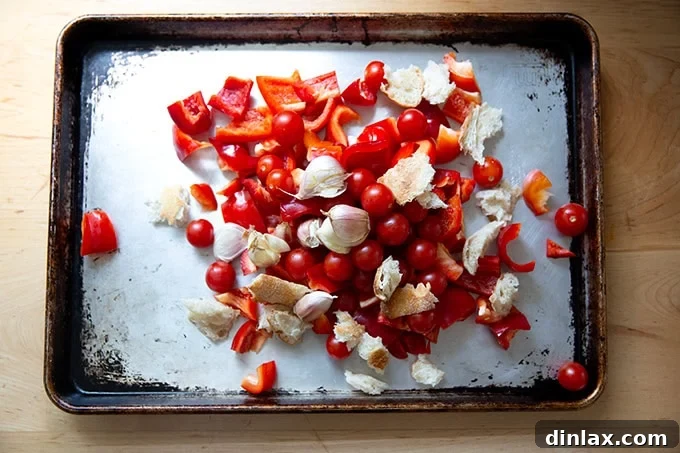
Roasting for Maximum Flavor
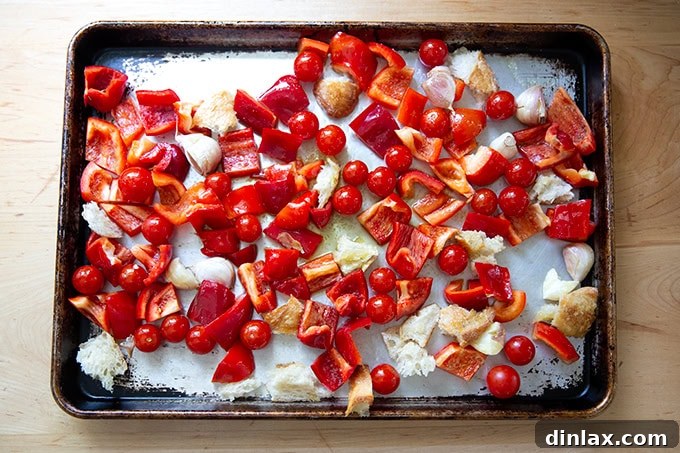
Once the ingredients are prepped and coated:
- Place the sheet pan into the preheated 500ºF oven. Roast for 15 minutes, making sure to stir the vegetables halfway through the cooking time to ensure even browning. The vegetables should be tender and beautifully browned, with some charred spots. For an even deeper char and flavor, you may extend the roasting time to 20 minutes total.
- Once roasted, carefully remove the sheet pan from the oven and allow the contents to cool slightly.
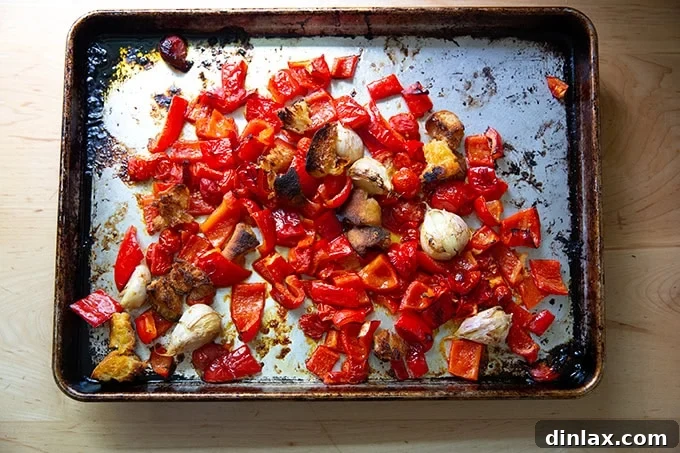
Blending to Perfection
Now, it’s time to transform your roasted vegetables into a luscious sauce:
- Carefully extract the roasted garlic cloves from the sheet pan. Their skins will have softened significantly and should slip off with ease. Discard the skins.
- Transfer all the roasted vegetables (peppers, tomatoes, and peeled garlic) from the sheet pan into a food processor or a high-speed blender. Add the toasted almonds, 2 teaspoons of smoked paprika, another 1 ½ teaspoons of kosher salt (Diamond Crystal), ⅓ cup of extra-virgin olive oil, and 3 tablespoons of white balsamic vinegar.
- Purée the mixture until it is mostly smooth but still retains a pleasingly coarse or slightly chunky texture. Avoid over-blending, as a little texture adds to the rustic charm of romesco.
- Taste the sauce and adjust seasonings as needed. This is a crucial step! You might find it benefits from more salt (I often add an extra ½ teaspoon of kosher salt) or another tablespoon of vinegar to achieve your desired balance of savory and tangy notes.
- Once perfectly seasoned, your homemade romesco sauce is ready! Drizzle with a little extra olive oil before serving to enhance its richness and aroma.
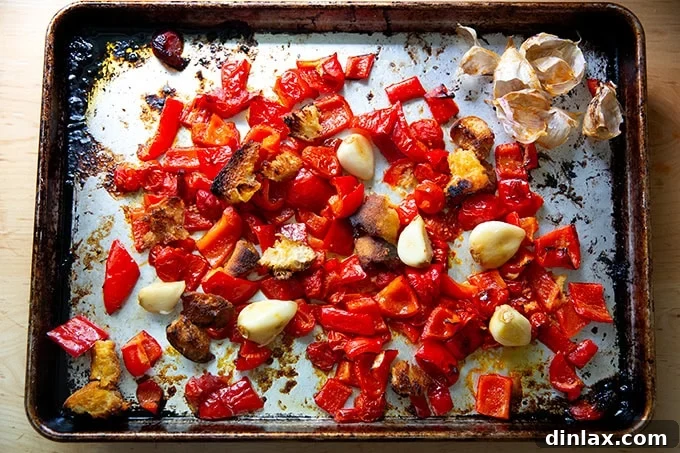
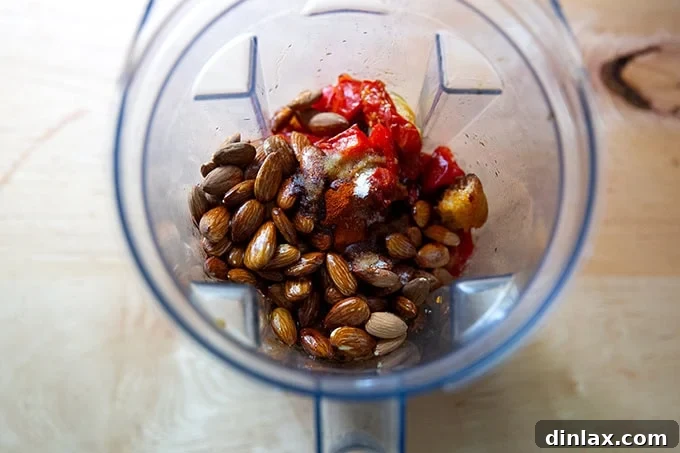
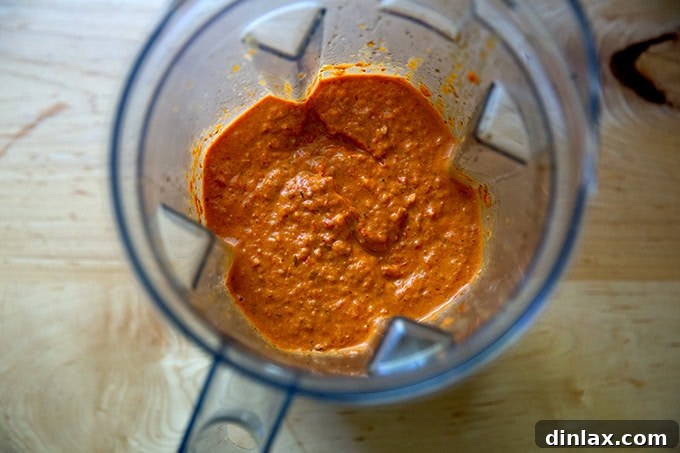
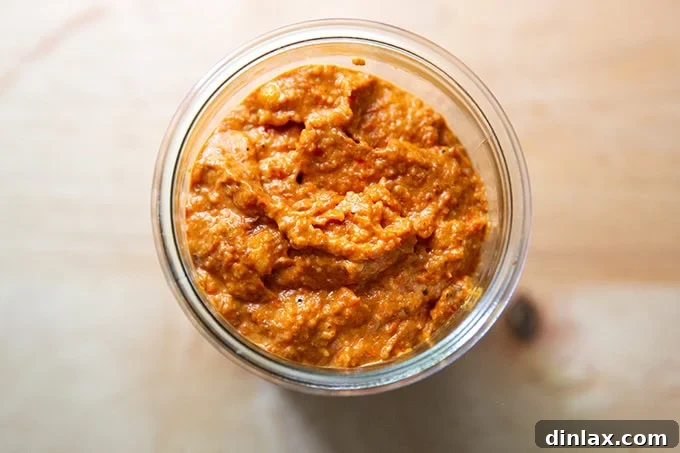
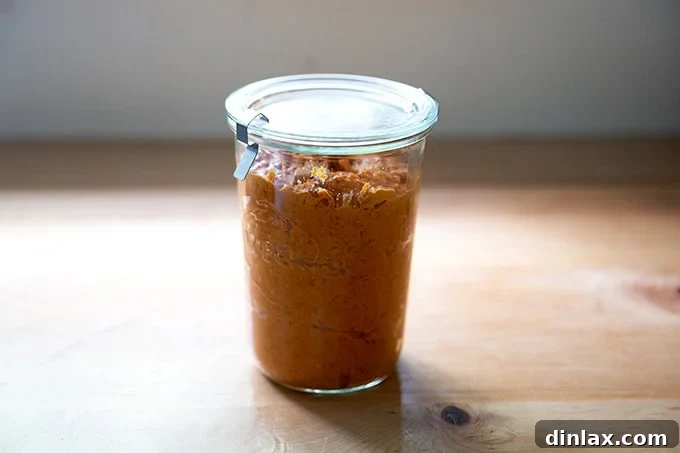
Transfer the finished romesco sauce to a clean glass jar. It can be stored in the refrigerator for up to two weeks, making it an excellent make-ahead condiment for various meals throughout the week.
Unlock the Versatility: How to Serve Your Homemade Romesco
The true beauty of this easy romesco sauce lies in its incredible versatility. Its smoky, rich, and tangy profile makes it a fantastic accompaniment to a wide array of dishes, transforming everyday meals into something special. Once you’ve made a batch, you’ll find endless ways to incorporate it into your cooking.
A Perfect Dip for Fresh and Blanched Vegetables
One of the simplest and most satisfying ways to enjoy romesco is as a vibrant dip. It pairs beautifully with an assortment of raw or lightly blanched vegetables. Imagine crisp carrot sticks, crunchy snap peas, colorful bell pepper strips, or peppery radishes, all scooped through a generous dollop of this flavorful sauce. It’s an ideal appetizer for entertaining or a healthy snack that packs a punch of flavor. The earthy notes of the vegetables find a perfect counterpart in the rich, smoky depth of the romesco, creating a delightful harmony of textures and tastes.
Charred Broccolini with Romesco: A Match Made in Heaven
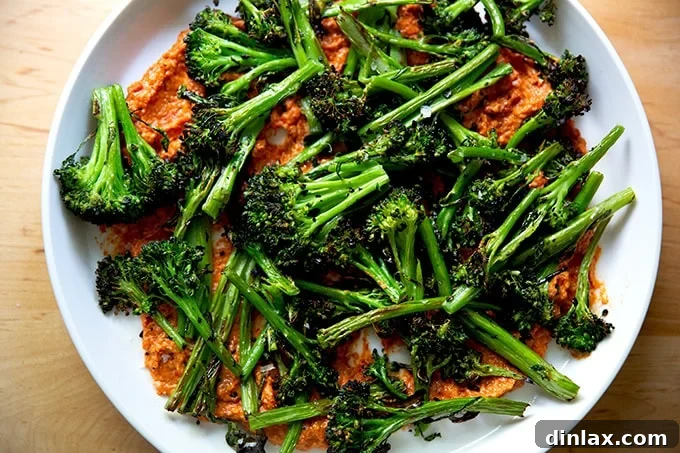
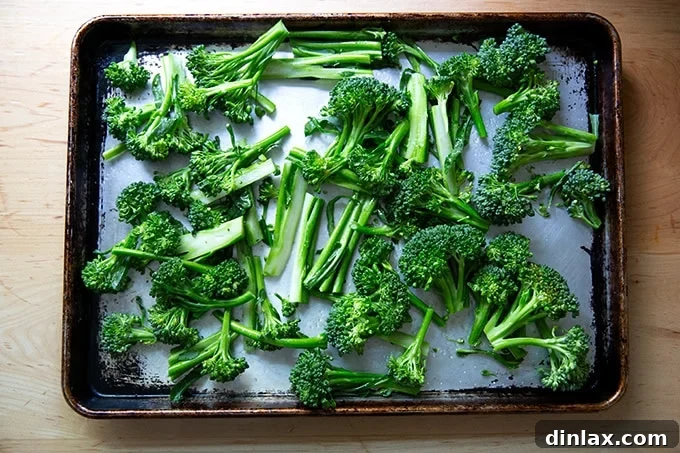
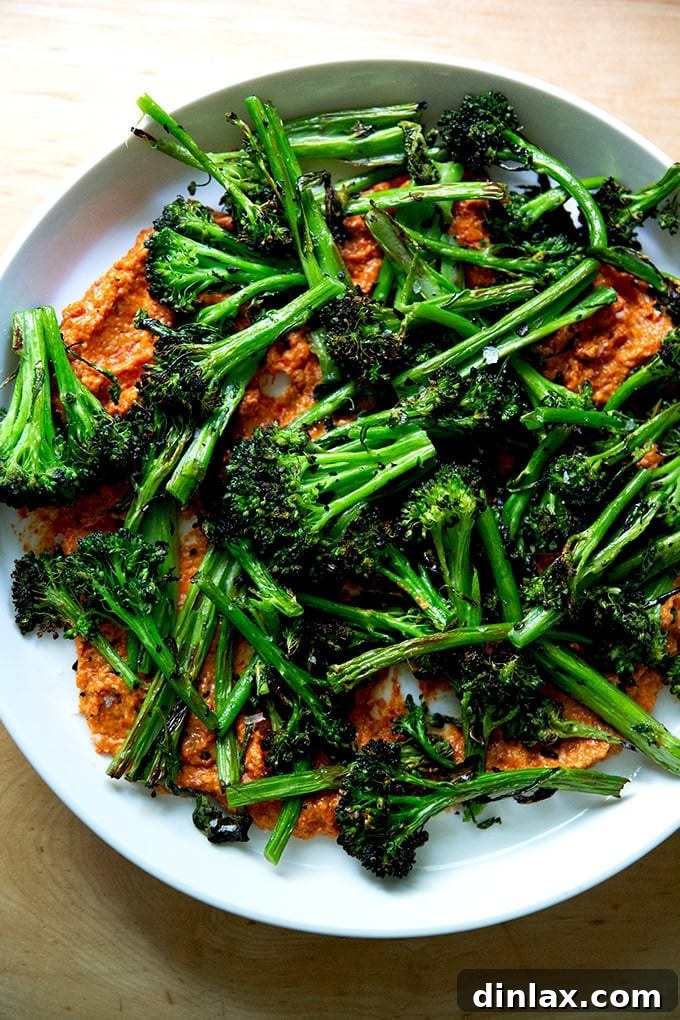
My absolute favorite way to savor this romesco is by spreading it generously across a platter and then artfully tumbling charred vegetables over the top. Broiled broccolini, with its tender stalks and crispy, slightly bitter florets, creates a truly unforgettable combination when paired with the robust flavors of the romesco. Here’s how to prepare this exquisite side dish:
- Take one pound of fresh broccolini and chop it into manageable pieces.
- Place the chopped broccolini on a sheet pan. Drizzle with 2 tablespoons of extra-virgin olive oil and season with 1 teaspoon of kosher salt (Diamond Crystal). Toss everything together thoroughly to ensure the broccolini is evenly coated. Spread the broccolini into a single, even layer on the pan.
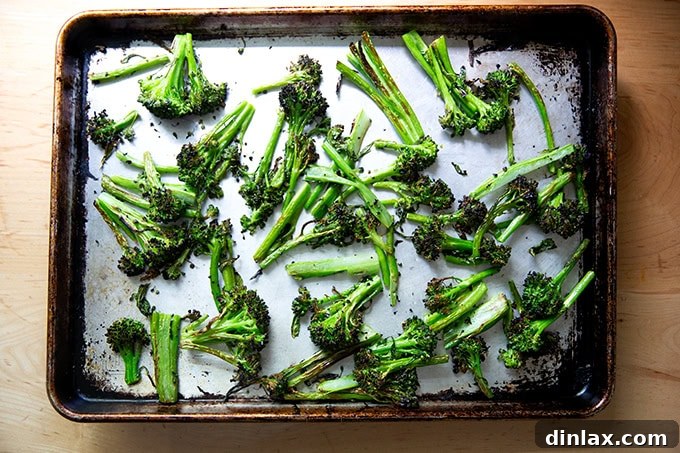
- Broil in your oven for 5 to 6 minutes, keeping a close eye on it and checking every two minutes. You want the broccolini to be nicely charred to your liking – some slight blackening adds to the flavor.
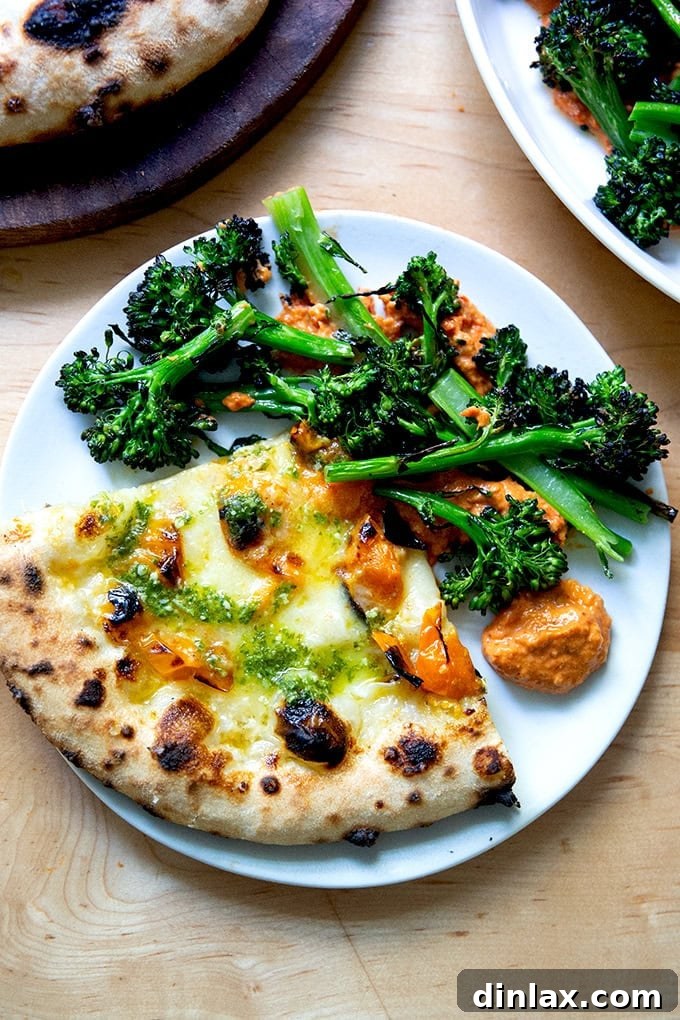
- Once cooked, arrange the broccolini over a bed of romesco sauce spread on a serving platter. For an extra touch of richness, drizzle with a little more olive oil and, if desired, sprinkle with a pinch of flaky sea salt. This has become my go-to side dish for pizza nights, proving that simple pairings can often be the most rewarding.
Beyond Vegetables: Creative Uses for Romesco
Don’t limit romesco to just vegetables! Its robust flavor profile makes it an excellent accompaniment to a variety of proteins and other dishes:
- Grilled Meats and Fish: Spoon it over grilled chicken, pork tenderloin, or flaky white fish for an instant burst of Mediterranean flavor.
- Sandwiches and Wraps: Use it as a vibrant spread instead of mayonnaise or mustard to add a gourmet touch to your sandwiches and wraps.
- Pasta Sauce: Toss it with your favorite pasta for a quick and flavorful vegetarian meal. A sprinkle of fresh basil or parsley would complete the dish.
- Eggs: A dollop of romesco alongside scrambled eggs or a frittata makes for a sophisticated breakfast or brunch.
- Pizza Base: For a unique pizza experience, spread romesco as the base sauce instead of traditional tomato sauce, then add your favorite toppings.
The possibilities are truly endless once you have a jar of this incredible homemade romesco in your refrigerator. Its smoky, nutty, and tangy notes are sure to inspire countless delicious meals.
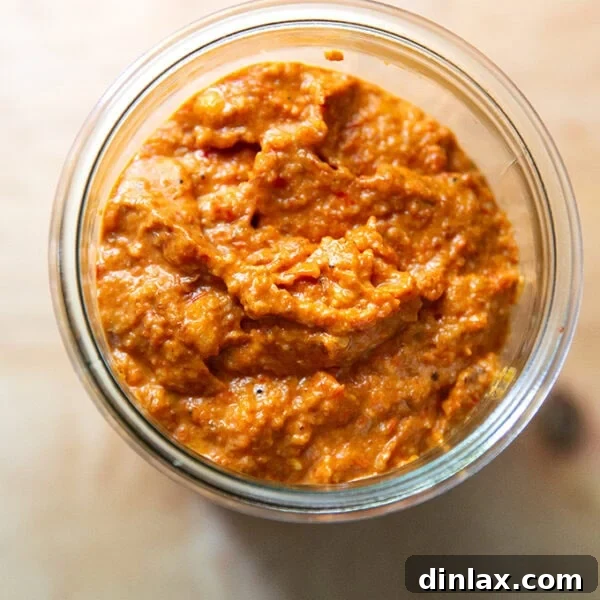
Easiest Homemade Romesco Sauce (No-Peel Peppers!)
★★★★★ 4.9 from 11 reviews
- Author: Alexandra Stafford
- Total Time: 30 minutes
- Yield: 3 cups (approximately)
- Diet: Vegan
Description
Source: Joe Yonan’s Mastering the Art of Plant-Based Cooking
Notes for Success:
The original recipe suggests roasting everything—peppers, tomatoes, bread cubes, garlic, and almonds—at 500ºF for 15 minutes. This method is effective, and I’ve successfully made it this way many times. However, on a few occasions, I found it less forgiving; sometimes, the almonds or bread cubes became too toasted.
I’ve discovered that toasting the almonds in a skillet on the stovetop over low heat while the other ingredients roast is just as simple and allows for better control. This method enables me to achieve a more desirable char on the peppers and tomatoes in the oven. I often roast the vegetables for 20 minutes total.
Additionally, I now typically omit the bread cubes. This is partly because I found the bread often chars excessively during the 15-minute roast. More importantly, I don’t believe the bread adds a significant contribution to the sauce’s flavor or texture. I cannot discern a difference between a romesco made with toasted bread and one without, as the almonds provide ample body, texture, and flavor. If you prefer to include bread cubes, which is traditional for romesco, feel free to do so. To the sheet pan of vegetables, add:
- 1 cup lightly packed (56 g) bread cubes
A Few More Notes:
Vinegar: Sherry vinegar is traditional, but it can be quite strong. If you choose to use it, I recommend starting with 1 tablespoon and then supplementing with a milder vinegar for the remaining few tablespoons.
Salt: I use Diamond Crystal kosher salt. If you are using Morton kosher salt or fine sea salt, you will need approximately half the amount by volume.
Heat: For a touch of spice, add ½ teaspoon of cayenne pepper, or adjust to your taste.
To make the charred broccolini: Place 1 pound of chopped broccolini on a sheet pan. Toss with 2 tablespoons of extra-virgin olive oil and 1 teaspoon of kosher salt (Diamond Crystal). Spread into an even layer. Broil for 5 to 6 minutes, checking every two minutes, until charred to your preference. Drizzle with a little extra olive oil and season with a pinch of flaky sea salt if desired.
Ingredients
- 1 cup (142 g) raw almonds
- 3 large bell peppers (1.25 lbs), cut into 2-inch chunks
- 8 ounces cherry tomatoes or 2 large tomatoes
- 6 garlic cloves, unpeeled and lightly smashed
- ¼ cup extra-virgin olive oil, plus 1/3 cup for blending
- Kosher salt or fine sea salt (see notes above for type/amount)
- 2 teaspoons smoked paprika
- 3 to 4 tablespoons white balsamic vinegar, plus more to taste (see notes above)
Instructions
- Preheat the oven to 500ºF (260ºC).
- Place the almonds in a small skillet and set on the stovetop over low heat. Toast gently, stirring occasionally, until fragrant and lightly golden, about 5-7 minutes. Remove from heat and set aside to cool.
- On a sheet pan, toss together the chopped bell peppers, tomatoes, and unpeeled garlic cloves with ¼ cup olive oil and 1 ½ teaspoons kosher salt (Diamond Crystal). Roast for 15 minutes, stirring halfway, or until the mixture browns in spots. For deeper char, you may roast for 20 minutes total. Let cool slightly.
- Extract the garlic cloves and peel them. Then, transfer the contents of the sheet pan (peppers, tomatoes, peeled garlic) to a food processor or blender. Add the smoked paprika, toasted almonds, another 1 ½ teaspoons kosher salt (Diamond Crystal), ⅓ cup extra-virgin olive oil, and 3 tablespoons of vinegar. Purée until mostly smooth with a lightly coarse texture. Taste and season with more salt and/or vinegar if needed (I often add another ½ teaspoon of kosher salt and another tablespoon of vinegar).
- Drizzle with a little extra olive oil before serving. Store any leftover romesco in an airtight jar in the refrigerator for up to two weeks.
- Prep Time: 10 minutes
- Cook Time: 20 minutes
- Category: Condiment
- Method: Oven, Blender
- Cuisine: American, Spanish