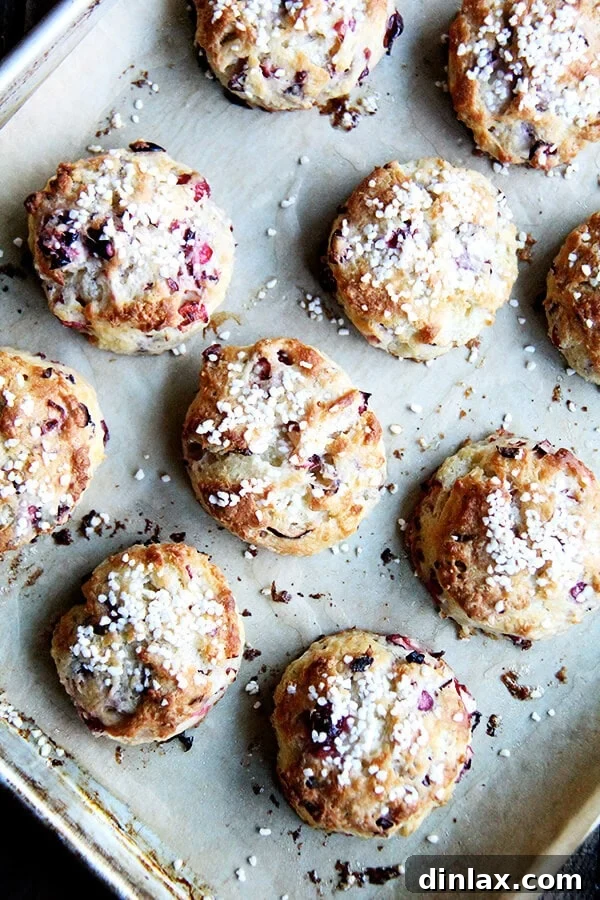
There’s an undeniable magic that sweeps through the kitchen during the winter months, especially when the scent of warm, freshly baked goods fills the air. Imagine waking up to a snowy morning, a gentle glow outside your window, and the comforting aroma of something truly special baking in the oven. That’s the feeling these Buttermilk Cranberry-Orange Scones evoke. They are the epitome of buttery, flaky perfection, infused with vibrant cranberries and bright orange zest, making them an ideal treat to brighten any winter day or festive holiday gathering.
Far more than just a breakfast item, these “snow” scones, named for their delightful pearl sugar topping, offer a moment of pure culinary bliss. While pearl sugar lends a beautifully elegant and frosty finish, a sprinkle of turbinado sugar offers an equally charming, slightly crunchy crust that many find even more appealing to the palate. The beauty of this recipe extends beyond its delicious taste and festive appearance; the scone dough is incredibly versatile and freezes wonderfully, allowing you to prepare ahead and enjoy warm, fresh scones whenever the craving strikes, with minimal effort on baking day.
The Secret to Scone Perfection: A Time-Tested Recipe
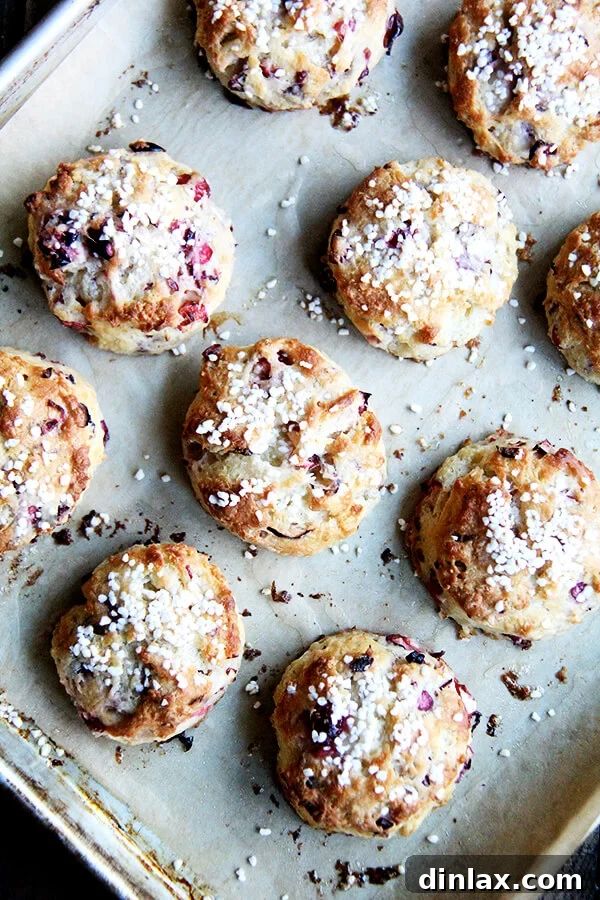
When you discover a recipe that consistently delivers outstanding results, why deviate? Our journey to the perfect cranberry-orange scone begins with a phenomenal base: the buttermilk scone recipe from the renowned Tartine Bakery. Having been made countless times, this recipe stands as a testament to its excellence, consistently producing scones that are wonderfully tender, rich with butter, perfectly balanced in sweetness, and delicately salted. The irresistible sugar-topped crust is the crowning glory, adding a delightful crunch to every bite.
Originally, this cherished recipe, found in the Tartine Bakery Cookbook, features classic variations like currants or blueberries. For this festive iteration, we’ve thoughtfully swapped these fruits for fresh, vibrant cranberries and exchanged lemon zest for the bright, aromatic essence of orange zest. The final touch, a generous sprinkling of Swedish pearl sugar just before baking, transforms these delicious treats into stunning, “snow-dusted” masterpieces. The outcome? Scones that are not only visually captivating but also profoundly flavorful and utterly delicious!
Crafting Your Buttermilk Cranberry-Orange Scones: A Step-by-Step Guide
Making these beautiful cranberry-orange scones is a rewarding process, and breaking it down into simple steps ensures success even for novice bakers. The key lies in careful preparation and gentle handling of the dough.
Prepare Your Fruit: The Cranberry Burst
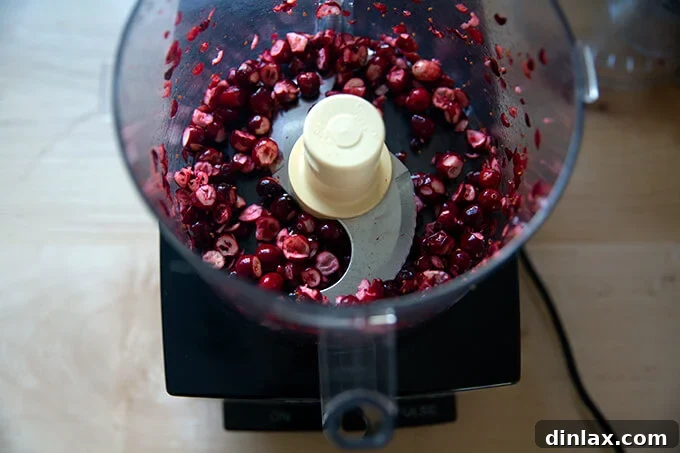
The first step in achieving that perfect balance of tartness and sweetness is preparing your fresh cranberries. In this recipe, you’ll take one cup of fresh cranberries and pulse them briefly in a food processor. The goal is to coarsely chop them, not to turn them into a puree. About 10 quick, one-second pulses should be sufficient to break them down into small, even pieces. This ensures they are well-distributed throughout the dough, providing a delightful burst of flavor in every bite without making the scones too wet.
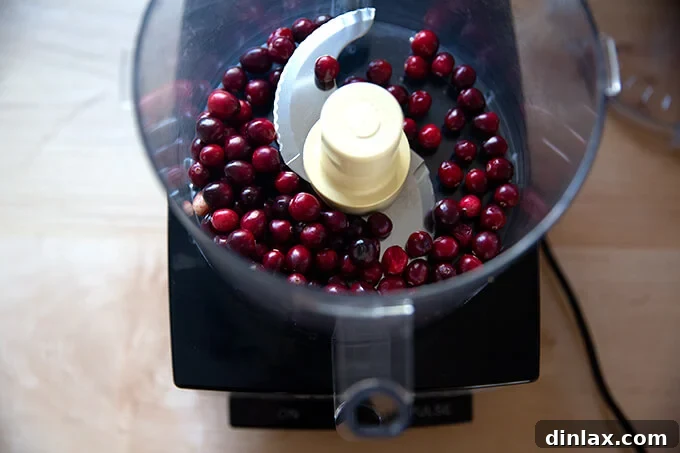
Observe the image below to ensure your cranberries are coarsely chopped, retaining some texture rather than becoming finely minced. This texture is crucial for the scone’s overall mouthfeel.
Gathering Your Ingredients for Optimal Results
Once your cranberries are prepped, it’s time to assemble the rest of your ingredients. Having everything measured out and ready before you start mixing, a practice known as “mise en place,” is key to a smooth baking process and prevents any last-minute scrambling. Ensure your butter and buttermilk are cold; this is a critical detail for achieving those desirable flaky layers in your scones. Cold butter creates pockets of steam during baking, which separate the dough into distinct, tender layers.
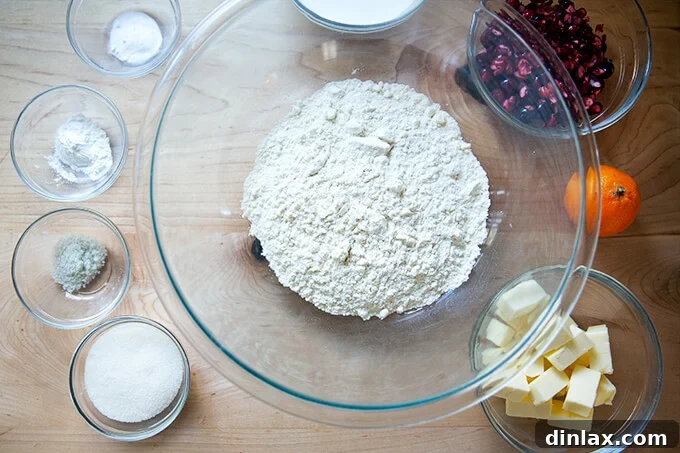
Mixing the Dough: Gentle Hands for Tender Scones
Combine your dry ingredients, then carefully cut in the cold, cubed butter until the mixture resembles coarse meal with some pea-sized pieces of butter remaining. This is where the magic of flakiness begins. Next, add the buttermilk and the prepped cranberries. Mix gently with a wooden spoon or spatula until the dough just comes together. Overmixing is the enemy of tender scones, as it develops the gluten too much, leading to a tough texture. If the dough feels a little dry, a tiny bit more buttermilk can be added, but exercise caution.
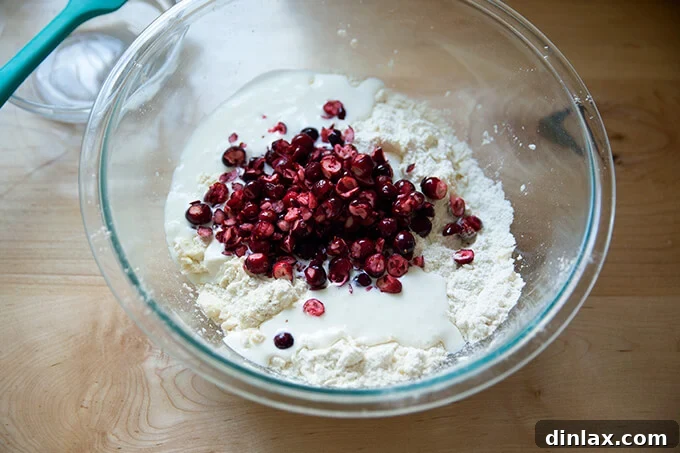
Once the cranberries are incorporated and the dough is just cohesive, it should look something like this, a vibrant mixture ready for shaping.
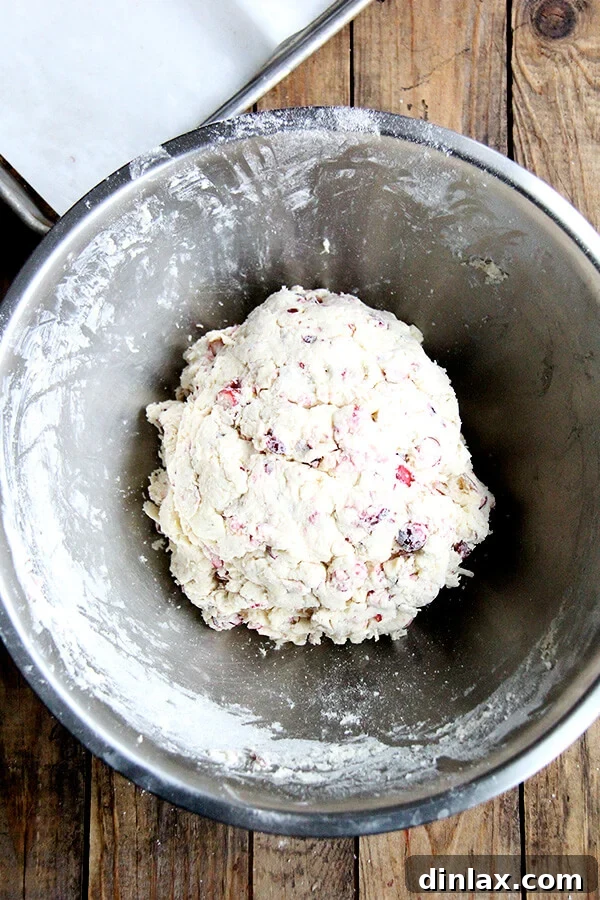
Shaping and Cutting: Your Scones, Your Style
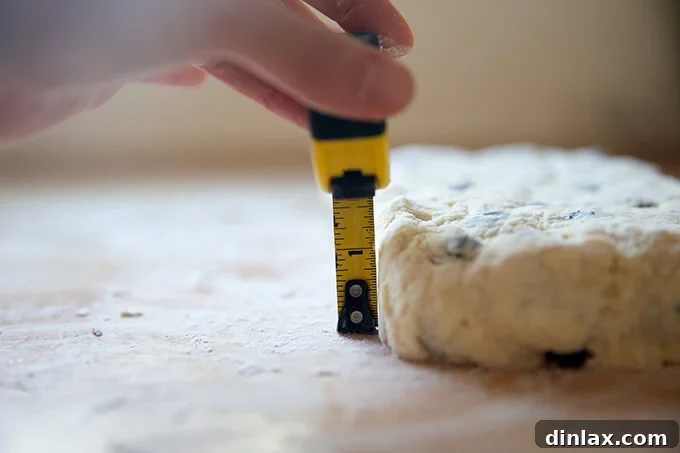
Lightly flour your work surface and turn the dough out. With gentle hands, pat the dough into a rectangle, approximately 9×5 inches and about 1.5 inches thick. The thickness is important for achieving beautifully tall, impressive scones.
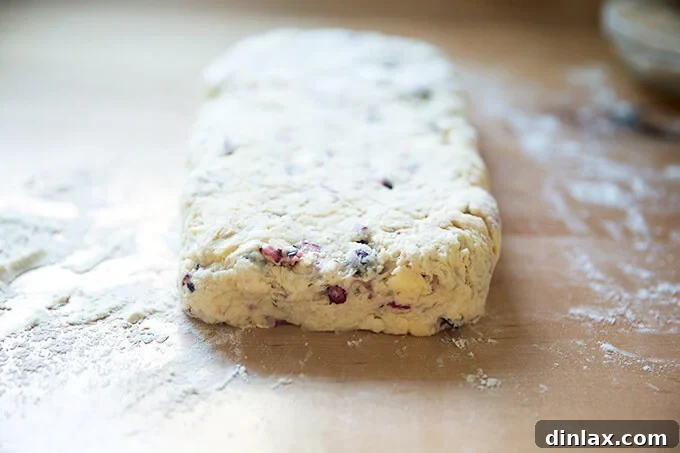
A visual guide to the ideal thickness of your scone dough:
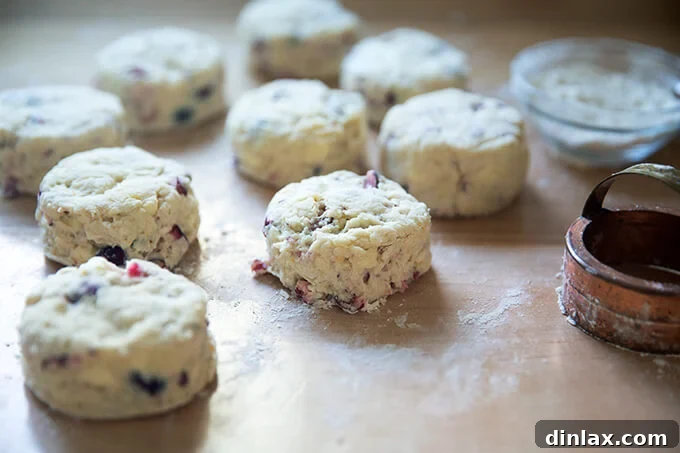
Now comes the fun part: cutting your scones! While round cutters are classic, feel free to get creative with triangles or rectangles. Whatever shape you choose, aim for uniform pieces to ensure even baking. Gather any dough scraps, gently re-pat them together (avoid overworking!), and cut out more scones until all the dough is portioned.
The Finishing Touch: Sugar and Butter
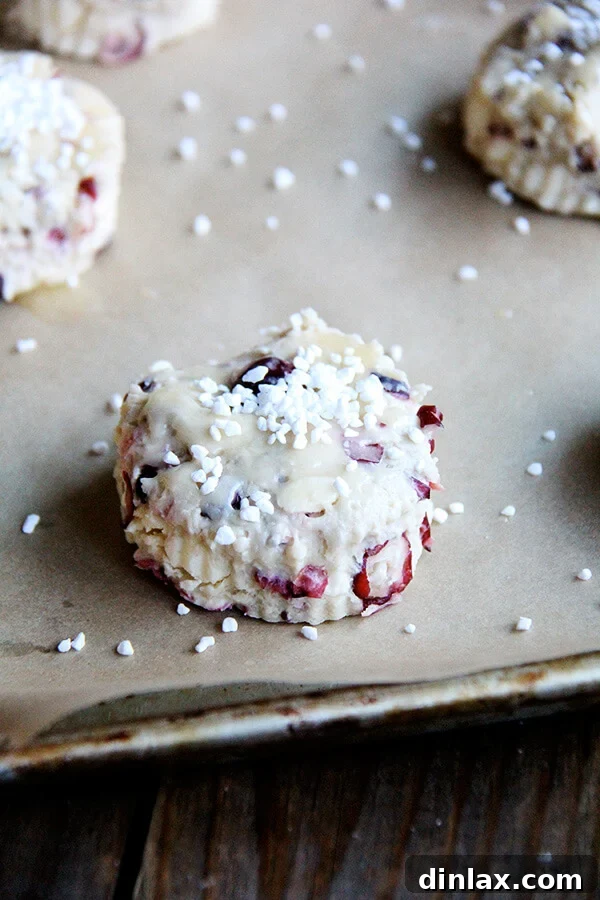
Once your scones are shaped and arranged on a parchment-lined baking sheet, brush their tops with melted butter. This not only promotes a beautiful golden-brown crust but also helps the sugar adhere. Then, generously sprinkle with your sugar of choice: turbinado sugar for a delicious crunch and lovely caramelization, or pearl sugar for that distinctive “snow” effect, creating an eye-catching, festive presentation.
Baking for Golden Perfection
To ensure your scones bake evenly and their bottoms don’t brown too quickly, a simple trick is to place your baking sheet on another rimmed baking sheet. This creates a buffer that prevents direct heat from scorching the underside of the scones. Bake until the tops are beautifully golden brown, indicating they are cooked through and ready to be enjoyed.
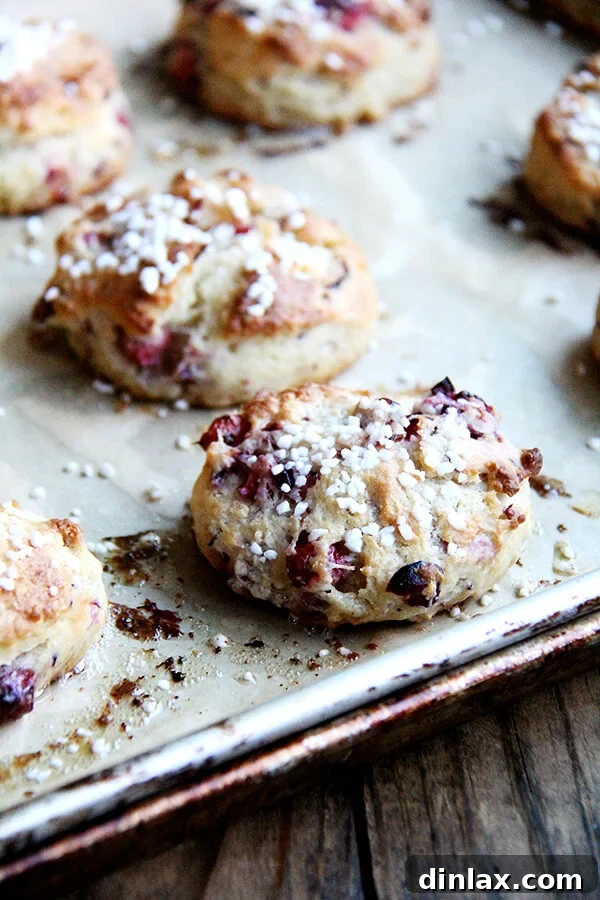
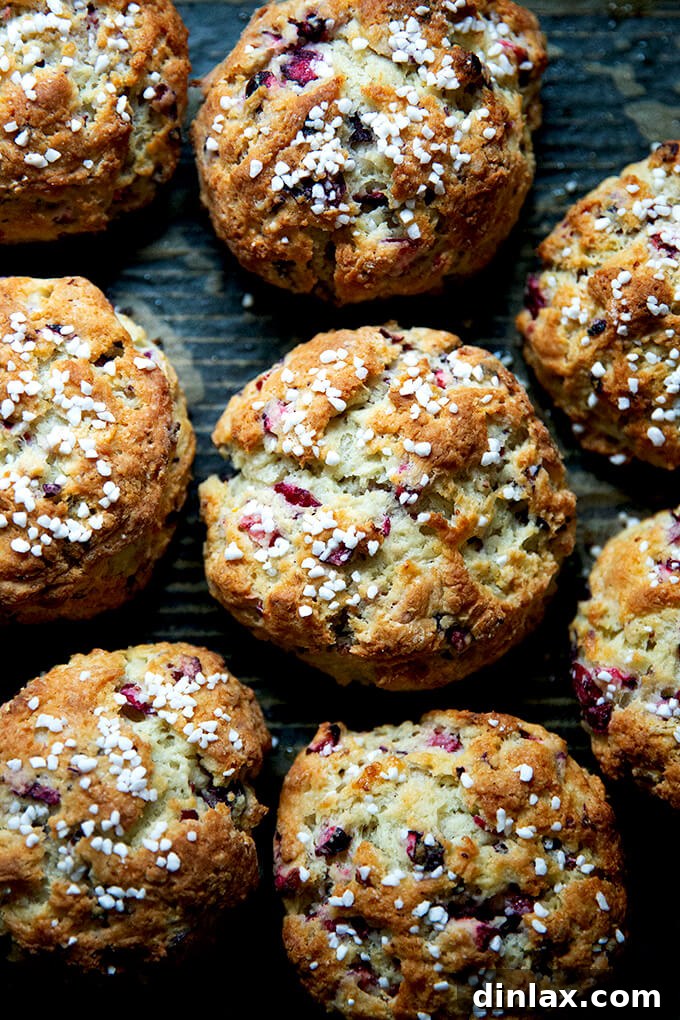
Admire the beautiful texture and color of your freshly baked cranberry-orange scones, a testament to your baking prowess.
The Sugar Debate: Pearl vs. Turbinado
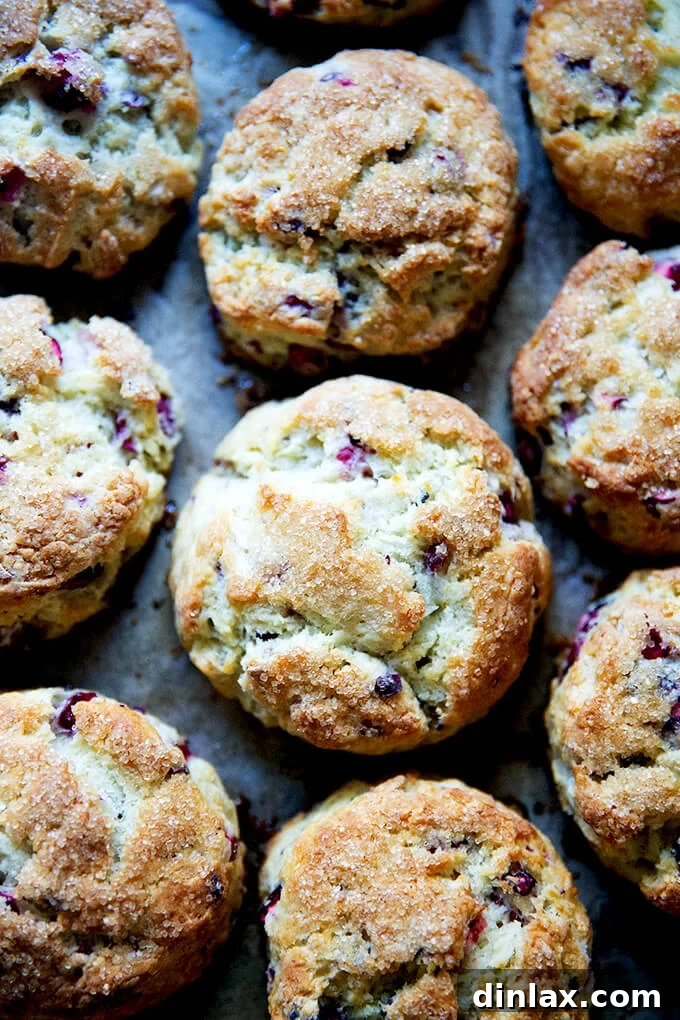
While pearl sugar undoubtedly creates a stunning “snowy” effect, many, including myself, find that turbinado sugar delivers a superior flavor and texture. Its larger crystals caramelize beautifully, forming a subtly crunchy, golden crust that adds another layer of deliciousness to each scone. Both options are visually appealing, so the choice ultimately comes down to personal preference for taste and texture.
Tips for Scone Success
- Keep Ingredients Cold: Cold butter and buttermilk are paramount. They prevent the butter from melting into the flour too quickly, creating steam pockets that lead to flaky layers.
- Don’t Overmix or Overwork: Handle the dough as little as possible. Overmixing develops gluten, which results in tough, dense scones. Mix just until the ingredients are combined.
- Chill the Dough: If time allows, chilling the cut scones for 20-30 minutes before baking can further firm up the butter, leading to even flakier results.
- Hot Oven is Key: Scones benefit from a hot oven (400°F) to achieve a quick rise and golden crust.
- Digital Scale for Accuracy: For best and most consistent results, always measure your ingredients by weight using a digital scale.
Make Ahead and Freezing Instructions
One of the most appealing aspects of this scone recipe is its excellent make-ahead potential. You can prepare the dough and freeze the unbaked scones, allowing you to enjoy warm, freshly baked treats with minimal effort whenever you desire.
- To Freeze: After you’ve shaped and cut your scones, place them on a parchment-lined baking sheet and transfer them to the freezer. Freeze until they are completely solid, which typically takes a few hours.
- Once frozen solid, transfer the unbaked scones to an airtight freezer bag or container. This prevents freezer burn and keeps them fresh for up to 1-2 months.
- To Bake from Frozen: When you’re ready to bake, there’s no need to thaw the scones. Simply arrange them on a prepared baking sheet, brush with melted butter, and sprinkle with your chosen sugar.
- Bake directly from frozen as directed in the recipe. They generally won’t take much longer to bake than fresh scones, but keep an eye on them around the 20-minute mark to ensure they achieve a beautiful golden brown color and are cooked through.
Homemade Buttermilk in a Pinch
No buttermilk on hand? No problem! You can easily make your own substitute at home:
- Place 1 tablespoon of white vinegar or lemon juice in a liquid measuring cup.
- Fill the cup with regular milk (2% or whole milk works best) until it reaches the 1-cup line.
- Stir gently and let the mixture sit for five minutes. The milk will curdle slightly, becoming a perfect substitute for buttermilk in this recipe.
Serving Suggestions for Your Delicious Scones
These Buttermilk Cranberry-Orange Scones are delightful on their own, but they truly shine when served with simple accompaniments. A dollop of clotted cream, a smear of good quality fruit jam (especially raspberry or apricot), or even just a pat of softened butter are classic choices. Pair them with a warm cup of coffee, a robust black tea, or even a glass of sparkling cider for a luxurious breakfast, an elegant brunch, or a comforting afternoon tea. They are particularly wonderful during the holidays, making a stunning addition to any festive table.
Print
Buttery Buttermilk Cranberry-Orange Scones
5 Stars 4 Stars 3 Stars 2 Stars 1 Star
4.9 from 14 reviews
Author: Alexandra Stafford
Total Time: 50 minutes
Yield: 8 to 9 large scones 1x
Description
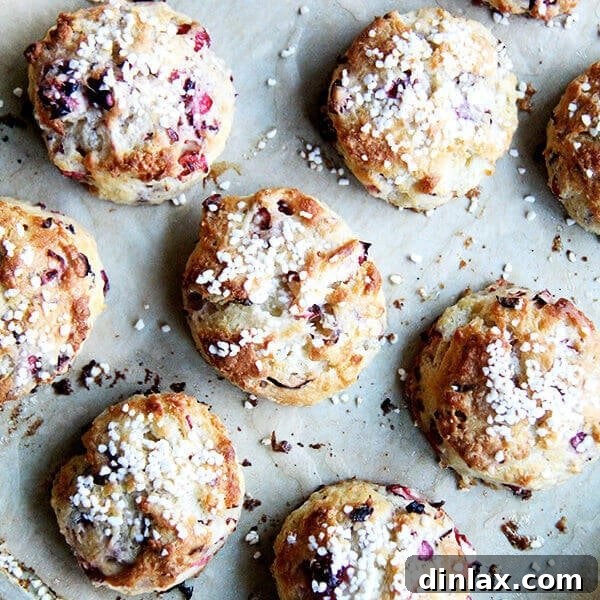
Buttery, flaky, and wonderfully festive — these buttermilk cranberry-orange scones are a perfect way to brighten any winter morning or holiday celebration. The addition of pearl sugar creates a beautiful “snowy” finish, though turbinado sugar offers a delicious, slightly crunchier crust. Inspired by the acclaimed Tartine Bakery recipe, this version incorporates fresh cranberries and bright orange zest for a delightful flavor profile. The dough can also be easily frozen, allowing for convenient make-ahead baking.
Adapted from Tartine’s classic and delicious recipes for blueberry scones and currant scones.
For consistent and best baking results, measuring ingredients by weight with a digital scale is highly recommended.
Sugar Choices: While pearl sugar creates a beautiful, snow-like appearance, it can sometimes be difficult to source. I often order it online. As mentioned in the article, turbinado sugar offers a slightly tastier and crunchier crust, providing a wonderful textural contrast. Either option will result in beautiful scones!
Freezing Prepared Dough: To enjoy fresh scones anytime, freeze them unbaked. Arrange the cut scones on a sheet pan and freeze until completely solid. Then, transfer them to an airtight container or freezer bag for storage. When you’re ready to bake, simply place the frozen scones on a prepared baking sheet, brush with melted butter, and sprinkle with sugar. Bake directly from frozen – no thawing needed! The baking time should remain similar to fresh scones, but keep a watchful eye on them from the 20-minute mark to ensure perfect golden-brown tops.
Making Your Own Buttermilk Substitute: If you don’t have buttermilk, a quick and easy substitute can be made at home:
- Pour 1 tablespoon of white vinegar or fresh lemon juice into a liquid measuring cup.
- Fill the remainder of the cup with milk (whole milk or 2% is ideal) until it reaches the 1-cup mark.
- Stir gently and let the mixture sit for approximately five minutes. It will slightly curdle, creating a perfect homemade buttermilk for your recipe. Use as directed.
Ingredients
- 1 cup (102 g) fresh cranberries
- 2 3/8 cups (304 g) all-purpose flour
- 1.5 teaspoons (5 g) baking powder
- 0.5 teaspoon (3 g) baking soda
- 1/4 cup (55 g) granulated sugar
- 1 teaspoon (6 g) fine sea salt
- 1 teaspoon (5ml) grated orange zest, optional (but highly recommended!)
- 1/2 cup plus 1 tablespoon (130 g) cold, unsalted butter, cut into ½-inch cubes
- 1 cup (240 g) cold buttermilk, plus more as needed
- 1.5 tablespoons melted unsalted butter, for brushing
- Sugar for sprinkling: choose between pearl sugar for a festive look or turbinado sugar for a delightful crunchier crust (see notes above for details)
Instructions
- Prepare Oven and Cranberries: Preheat your oven to 400ºF (200°C). Line a rimmed baking sheet with parchment paper. In a food processor, briefly pulse the fresh cranberries about ten 1-second pulses. The goal is to coarsely chop them, not create a paste. Refer to the photos in the article for the ideal size.
- Mix Dry Ingredients and Butter: In a large bowl, whisk together the all-purpose flour, baking powder, baking soda, granulated sugar, salt, and orange zest (if using). Add the cold, cubed butter and use a pastry blender or the back of a fork to cut the butter into the dry ingredients until the mixture resembles coarse meal with some pea-sized lumps of butter remaining.
- Combine Wet and Dry: Pour in the cold buttermilk and add the coarsely chopped cranberries. Using a wooden spoon or spatula, gently mix until the dough just comes together. Avoid overmixing. If the dough appears too dry, add an additional tablespoon (or a bit more, if necessary) of buttermilk, mixing until cohesive. If needed, a very gentle kneading by hand can help it form a unified dough.
- Shape and Cut Scones: Lightly dust your clean work surface with flour. Turn the dough out onto the floured surface and gently pat it into a rectangle approximately 9×5 inches and about 1½ inches thick. Using a 2.5-inch biscuit cutter or any desired round cutter, cut out about 8 individual scones. Gather the dough scraps, gently pat them together (do not overwork), and cut out any remaining scones. Transfer the shaped scones to your prepared baking sheet. (For best results, I recommend chilling the scones for 20 minutes at this point. Alternatively, you can freeze them unbaked for later use – refer to the notes above for freezing instructions.) Brush the tops of the scones with melted butter and generously sprinkle with your chosen sugar (pearl or turbinado). Chef’s Note: For an easier and quicker approach, you can also cut the dough into triangles or squares.
- Bake Scones: To prevent the bottoms from browning too quickly, place your prepared baking sheet on top of another empty rimmed baking sheet. If your oven bakes evenly, a single sheet pan is fine. Bake for about 20 minutes, or until the tops of the scones are beautifully golden brown and cooked through. Remove from the oven, let them cool briefly on the sheet pan, then serve warm with butter, jam, or clotted cream on the side. Enjoy!
- Prep Time: 30 minutes
- Cook Time: 20 minutes
- Category: Breakfast, Dessert, Holiday
- Method: Baking, Oven
- Cuisine: American, British