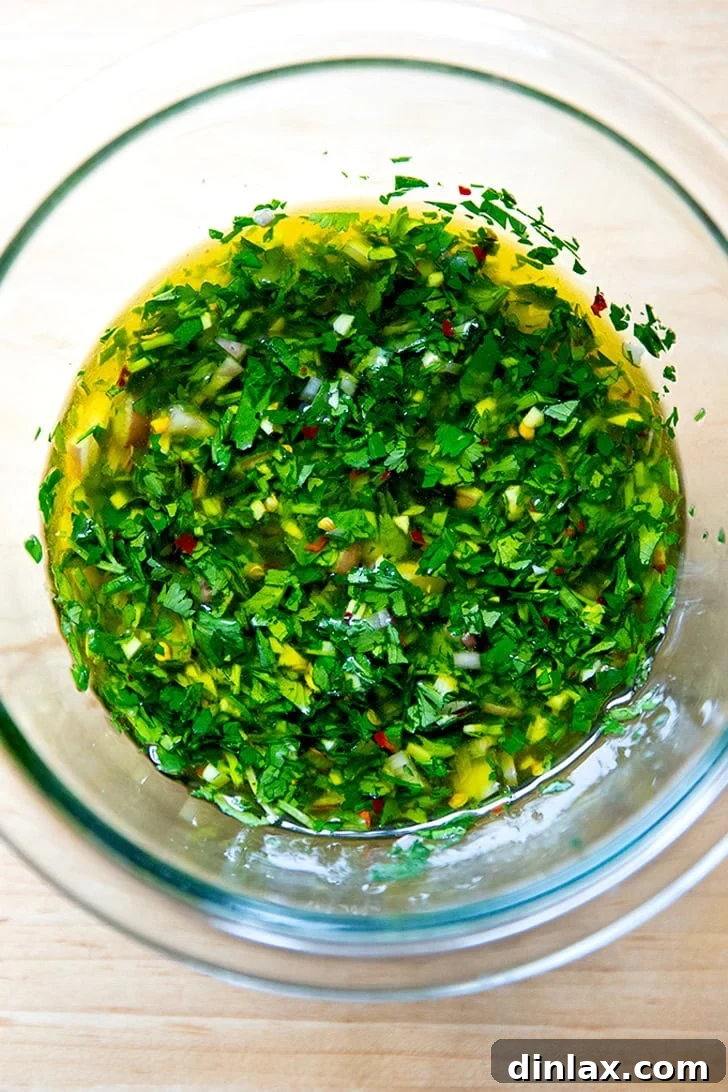
Vibrant, fresh, and bursting with herby flavor, chimichurri is an essential uncooked sauce originating from the heart of Argentina and Uruguay. This verdant condiment is famously served alongside succulent grilled meats, delicate fish, and hearty roasted vegetables, instantly transforming any dish into a culinary masterpiece. Incredibly quick to prepare, it promises to awaken your palate and elevate every bite.
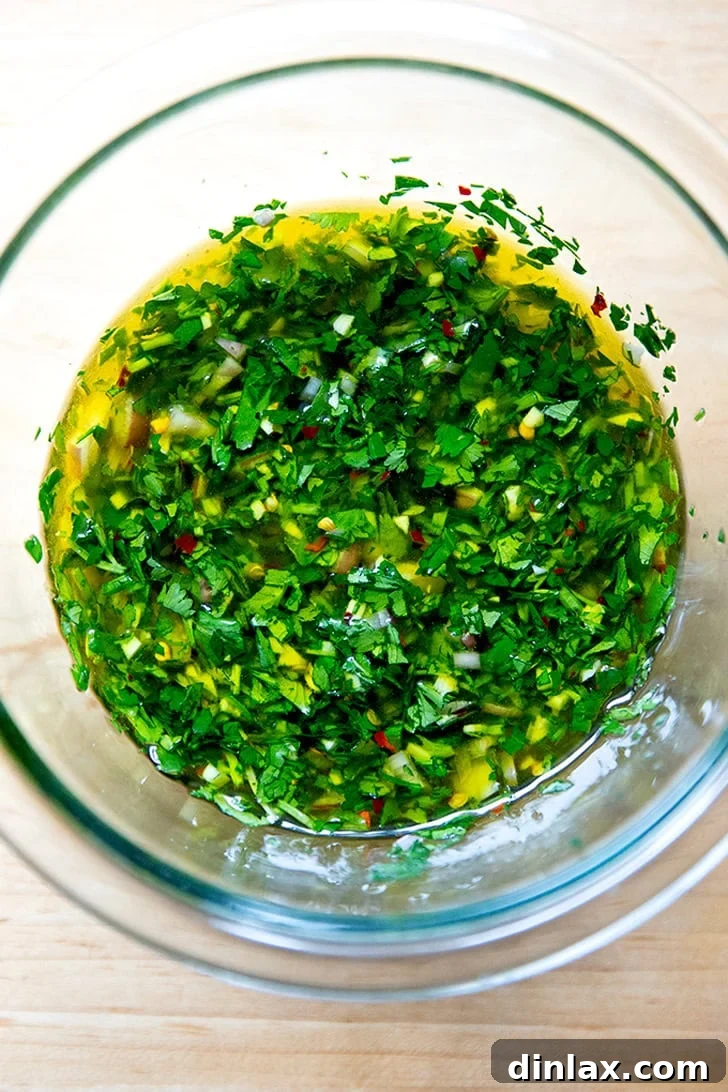
Authentic Homemade Chimichurri: Your Ultimate Guide to Argentina’s Zesty Herb Sauce
Often hailed as the national condiment of both Argentina and Uruguay, chimichurri boasts a rich history and a myriad of preparation styles. While variations abound, the core essence remains: a simple yet profound blend of fresh herbs, garlic, vinegar, and olive oil. Our recipe provides a perfectly balanced rendition, featuring both fragrant parsley and bright cilantro, complemented by the subtle pungency of shallots and garlic, seasoned with salt and a touch of crushed red pepper flakes, all bound together with premium extra-virgin olive oil and a hint of white balsamic vinegar. The true beauty of chimichurri lies in its incredible adaptability, allowing you to tailor it to your personal taste. We’ve included extensive substitution notes below to inspire your culinary creativity, ensuring you can craft a version that’s uniquely yours.
This incredibly versatile sauce comes together in mere minutes, making it an ideal accompaniment for a wide array of dishes. Whether drizzled over a perfectly grilled steak, spooned generously onto pan-seared fish, or tossed with a medley of roasted vegetables, chimichurri enhances flavors and adds an irresistible freshness that brightens any meal. Once you experience the convenience and deliciousness of a homemade batch, you’ll find yourself reaching for it to brighten up almost anything on your plate, from eggs to sandwiches. We encourage you to discover the magic of homemade chimichurri soon and elevate your culinary repertoire.
What Exactly is Chimichurri? The Heart of South American Flavor
Chimichurri is more than just a sauce; it’s a culinary emblem deeply woven into the fabric of South American grilling tradition, particularly integral to the “asado” culture of Argentina and Uruguay. Unlike cooked sauces or thick gravies, chimichurri is a vibrant, uncooked condiment, a testament to the power of fresh, simple ingredients. This allows the natural, piquant flavors of its herbs, garlic, and vinegar to shine through, creating a refreshing burst with every spoonful.
Historically, the exact origins of the name “chimichurri” remain a subject of delightful debate, adding to its mystique. Popular theories suggest it might be an Anglicized corruption of “give me curry” uttered by English settlers or Irish immigrants in the 19th century, or perhaps it stems from a native word in one of the indigenous languages. Regardless of its etymology, its place in South American cuisine is firm and revered. Traditionally, it’s spooned liberally over sizzling steaks, chorizos (spicy sausages), and other grilled fare, serving as a tangy, herbaceous counterpoint that cuts through the richness of the meat, cleansing the palate and encouraging another delightful bite. Its fame has since spread globally, becoming a beloved staple for barbecue enthusiasts and home cooks alike.
Why Choose Homemade Chimichurri? Unlocking Unparalleled Freshness and Flavor
While various bottled chimichurri sauces line supermarket shelves, none can truly replicate the unparalleled freshness, vibrant aroma, and nuanced flavor of a batch made from scratch. Embracing the homemade approach offers several compelling advantages that elevate your dining experience:
- Superior Freshness and Potency: By selecting your own ingredients, you ensure peak freshness for the herbs, garlic, and oil. Freshly chopped herbs release their aromatic oils more intensely, resulting in a sauce that truly sings with bright, invigorating flavor, a stark contrast to the often duller, less vibrant notes of store-bought versions.
- Unrestricted Customization: This is where homemade truly shines. Are you a devout garlic aficionado? Feel free to add an extra clove or two! Prefer a gentle warmth over intense heat? Easily dial back the crushed red pepper flakes. Want to experiment with different types of vinegars or a splash of fresh citrus? The power is entirely in your hands. Homemade chimichurri allows for endless customization to perfectly suit your specific palate and dietary preferences.
- Purity and Transparency: Commercial sauces often contain artificial preservatives, stabilizers, added sugars, or excessive sodium to extend shelf life and enhance flavor. When you make chimichurri at home, you have complete control over every single ingredient, ensuring a pure, wholesome condiment free from unwanted additives. You know exactly what nourishing elements go into your sauce.
- Cost-Effectiveness: Fresh herbs, garlic, shallots, and quality olive oil are generally accessible and economically priced. Crafting your own chimichurri is often a significantly more cost-effective alternative to purchasing pre-made options, especially when considering the superior quality you achieve.
- Simplicity and Speed: Despite its gourmet appeal and profound flavor, chimichurri is surprisingly simple and remarkably fast to prepare. It requires minimal culinary skills and only a few minutes of active preparation time, making it an ideal choice for busy weeknights or impromptu gatherings. The reward far outweighs the minimal effort.
The Essential Ingredients for Your Best Homemade Chimichurri
Crafting an exceptional chimichurri sauce begins with a careful selection and understanding of each component. The magic lies in the synergy of these simple yet powerful ingredients. Here’s an in-depth look at the key players in our recipe and their vital contributions:
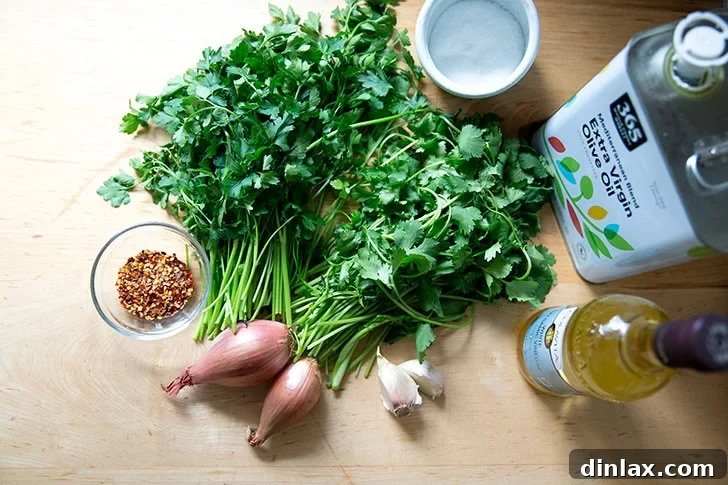
- Fresh Flat-Leaf Parsley: This herb is unequivocally the backbone of traditional chimichurri. Flat-leaf (Italian) parsley is overwhelmingly preferred over its curly counterpart due to its more robust, earthy flavor and tender leaves that chop down beautifully. It imparts an essential herbaceous, slightly peppery, and fresh green note that defines the sauce. Always ensure your parsley is vibrant green, crisp, and free from any wilting or yellowing.
- Fresh Cilantro: While not universally present in every classic Argentinian chimichurri, cilantro introduces a wonderfully bright, citrusy, and slightly pungent layer of flavor that many find irresistible. Its distinctive taste adds a refreshing complexity. However, for those with a genetic predisposition to find cilantro soapy, or simply if you prefer a more classic profile, feel free to use all parsley or even introduce a touch of fresh oregano for an alternative herbaceous depth.
- Shallots (or Red/White Onion): Shallots are chosen for their milder, more delicate onion flavor compared to the often sharper, more aggressive taste of raw red or white onions. Their subtle sweetness complements the other ingredients without overwhelming them. Finely mincing them is absolutely crucial to ensure their flavor integrates smoothly into the sauce without noticeable chunks. If substituting with red or white onion, consider reducing the quantity slightly or rinsing the minced onion under cold water for a minute to mellow its intensity.
- Fresh Garlic: An absolute non-negotiable component, garlic provides the characteristic pungent, aromatic punch that is synonymous with chimichurri. Using freshly minced garlic is paramount; avoid pre-minced jarred garlic as it often lacks the vibrant flavor and aroma of fresh cloves. For those who find raw garlic too intense, you can slightly reduce the amount, or, if you’re truly sensitive, a very quick blanch might mellow it, though this deviates from the raw tradition.
- Vinegar (White Balsamic): The acidic component is critical for balancing the richness of the olive oil, brightening the herbaceous notes, and tenderizing the aromatics. White balsamic vinegar is an excellent choice for its mild, slightly sweet acidity that won’t compromise the vibrant green color of your herbs. Red wine vinegar is a more traditional and widely accepted alternative, offering a sharper, more robust tang. For a different, brighter twist, fresh lemon or lime juice can also be used, or a delightful combination of both citrus and vinegar.
- Extra-Virgin Olive Oil: As the primary liquid base of the sauce, a high-quality extra-virgin olive oil is not merely a carrier but a flavor contributor in its own right. It binds all the diverse flavors together, provides a luscious texture, and imparts its own fruity, sometimes peppery, notes. Choose a robust, flavorful olive oil that you genuinely enjoy on its own, as its character will significantly influence your chimichurri.
- Salt: Essential for seasoning, salt acts as a flavor enhancer, bringing out the best in all the other ingredients. We highly recommend using Diamond Crystal Kosher salt or a flaky sea salt due to their consistent texture and salinity, which makes them easier to measure and less likely to oversalt. If using table salt or other finer varieties, be mindful that they are denser and thus saltier by volume, so adjust your measurements and always taste as you go.
- Crushed Red Pepper Flakes: These fiery flakes introduce a subtle warmth and a gentle, inviting kick that beautifully complements the fresh herbs without overwhelming the palate. The amount is entirely adjustable to your heat preference – use less for a milder sauce, or increase for a more fiery experience. For an even more authentic or fresh approach, a small, very finely minced fresh hot chili pepper (like a bird’s eye chili or a tiny amount of serrano) can be used instead.
Crafting Your Chimichurri: A Simple Step-by-Step Guide for Vibrant Flavor
The beauty of making chimichurri lies in its simplicity. It’s less about complex culinary techniques and more about precise preparation of fresh, quality ingredients. Follow these easy steps to create a perfect batch every time:
Step 1: Prepare the Aromatics and Initiate Maceration
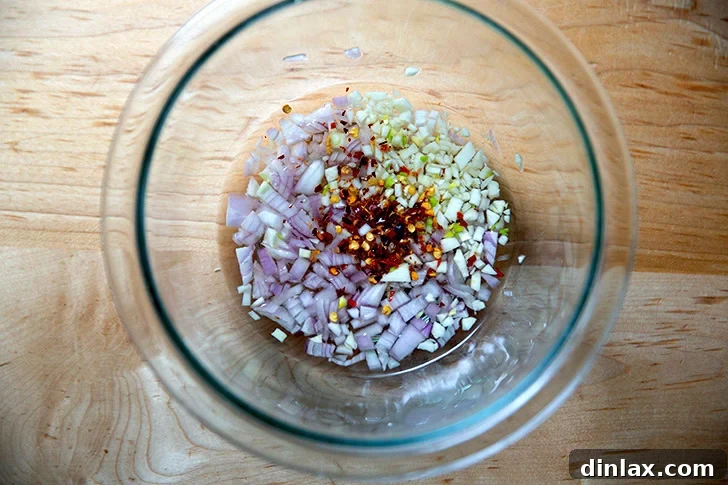
Begin by meticulously mincing your shallots and garlic. The goal here is a very fine chop, almost to a paste-like consistency for the garlic, ensuring their potent flavors are evenly distributed throughout the sauce without any large, assertive pieces dominating. Place these finely minced aromatics into a medium-sized mixing bowl. Next, add the salt, crushed red pepper flakes, and your chosen vinegar (such as white balsamic vinegar, red wine vinegar, or fresh citrus juice).
Stir all these ingredients together thoroughly with a spoon. This crucial initial step is known as “maceration.” Allowing the shallots and garlic to sit and steep in the acidic vinegar for approximately 5 minutes achieves several important things: it helps to slightly soften their texture, mellows their intense raw pungency, and most importantly, encourages their flavors to bloom and infuse deeply into the liquid, forming a flavorful foundation for your chimichurri. While the aromatics are macerating, take this opportunity to finely chop your fresh herbs if you haven’t already prepared them.
Step 2: Incorporate the Fresh Herbs and Premium Olive Oil
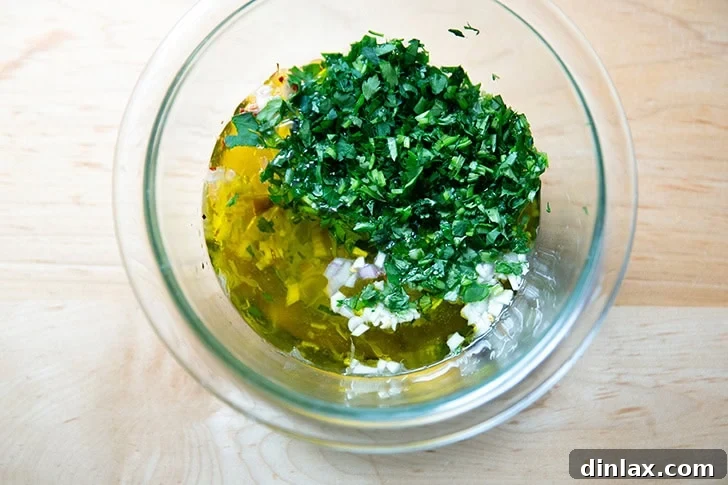
Once your fresh parsley and cilantro are finely chopped to your desired consistency, add them directly to the bowl containing the macerated shallot and garlic mixture. Next, pour in the high-quality extra-virgin olive oil. Ensure the herbs are well-separated and fluffy, avoiding any large clumps, to allow for an even distribution of flavor and texture throughout the sauce. The olive oil will begin to coat the herbs and aromatics, initiating the binding process of your chimichurri.
Step 3: Stir Thoroughly and Season to Perfection
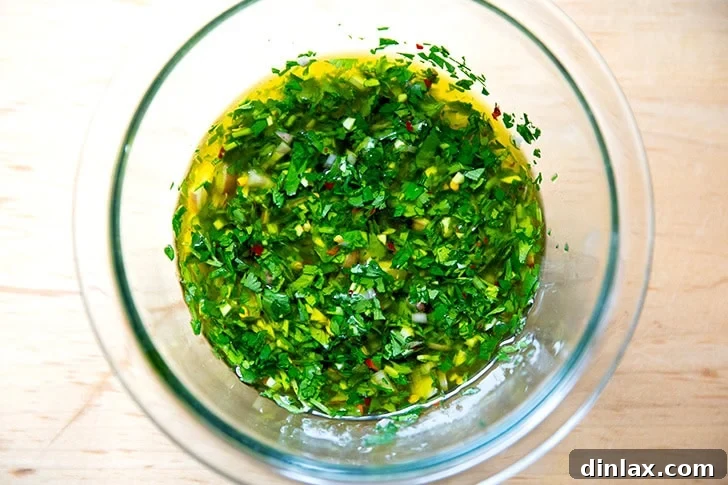
Using a spoon or a whisk, gently but thoroughly stir all the ingredients together. Your aim is to ensure the olive oil, vinegar, fresh herbs, and pungent aromatics are perfectly combined, creating a cohesive and beautifully textured sauce. At this stage, take a moment to taste your chimichurri. This is the crucial step for fine-tuning the flavors to your exact preference. Does it need a little more salt to brighten its profile? A splash more vinegar or citrus for an extra layer of tangy zing? Perhaps another pinch of crushed red pepper flakes for a spicier kick that awakens the palate? Adjust and re-taste until you achieve a perfectly balanced, vibrant, and utterly delicious sauce that excites your taste buds.
Step 4: Transfer for Storage and Optimal Flavor Development
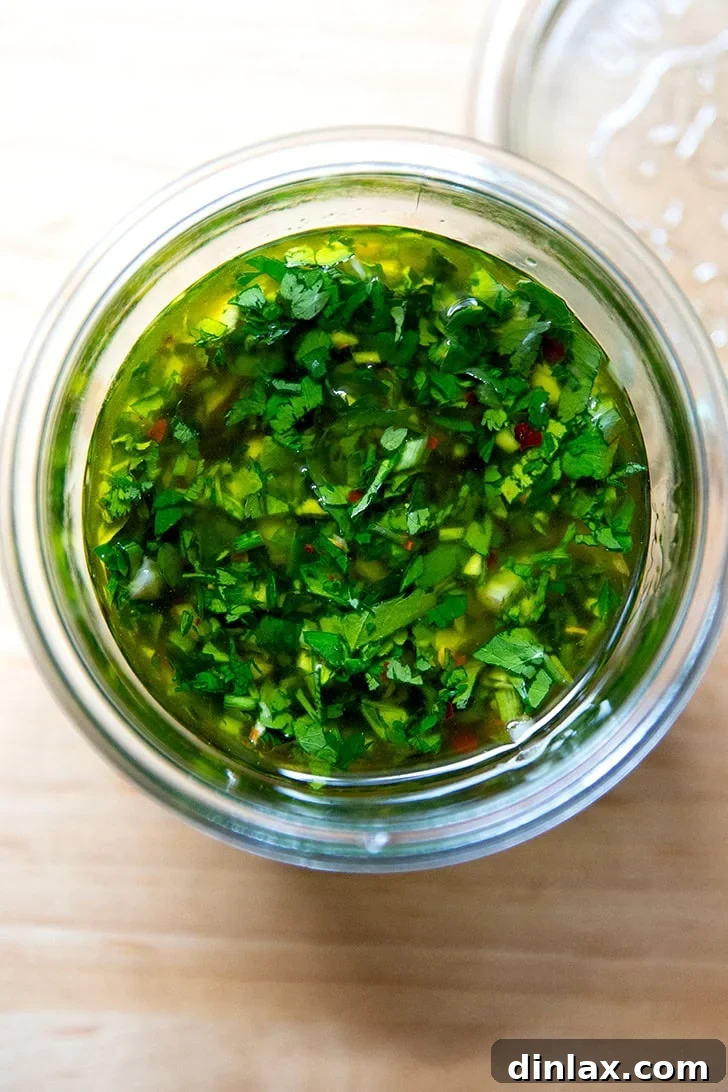
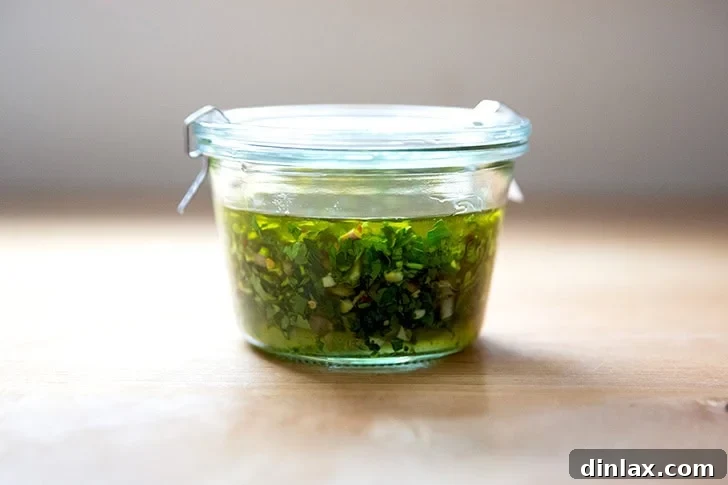
Once you are completely satisfied with the flavor profile, carefully transfer your homemade chimichurri into a clean, airtight glass jar or a sealed container. While it is undoubtedly delicious and ready to be enjoyed immediately, allowing it to rest for at least 30 minutes, or ideally a few hours, at room temperature (or in the refrigerator if storing for longer periods) permits the myriad of flavors to meld, deepen, and harmonize even further. This resting period transforms the sauce, creating an even more cohesive, complex, and intensely delicious condiment.
Mastering Chimichurri: Essential Tips for the Perfect Batch Every Time
While the recipe for chimichurri is wonderfully straightforward, a few key insights and techniques can elevate your sauce from merely good to truly outstanding, ensuring a consistently exceptional result:
- Chop, Don’t Blend (For Authentic Texture): For the most traditional and desirable texture, finely chop your herbs and aromatics by hand. This preserves the individual integrity of the ingredients, giving chimichurri its characteristic rustic, slightly chunky feel. A food processor, if overused, can quickly turn the herbs into a watery paste, losing that vibrant texture and potentially bruising the delicate herbs, which can diminish their fresh flavor. If you absolutely must use a food processor, pulse very briefly and cautiously to avoid over-processing.
- Quality Olive Oil is Non-Negotiable: Since extra-virgin olive oil forms the generous base of this sauce, its quality profoundly impacts the final flavor. Invest in a good quality olive oil that you genuinely enjoy on its own. A robust, fruity, or slightly peppery olive oil will contribute immensely to the overall depth and richness of your chimichurri. Avoid light or refined olive oils, as they lack the flavor complexity.
- The Art of Balance: Taste and Adjust Relentlessly: This is arguably the most crucial tip. The beauty of chimichurri lies in its inherent versatility and the ability to tailor it to your specific palate. Don’t be afraid to taste the sauce multiple times throughout the process and make adjustments. Does it need a little more salt to enhance the herbaceous notes? A splash more vinegar or lemon juice for extra brightness and tang? Perhaps another pinch of chili flakes to awaken the taste buds? The ideal balance should be intensely bright, tangy, satisfyingly garlicky, and deeply herbaceous.
- Allow Flavors to Marry and Mellow: While homemade chimichurri is undoubtedly delicious immediately after preparation, it truly reaches its peak potential after resting. Allowing the sauce to sit for at least 30 minutes, or even a few hours, at room temperature (or in the refrigerator) gives the individual ingredients ample time to infuse their flavors into the oil and vinegar, allowing them to meld and deepen into a more harmonious and complex profile.
- Don’t Drown the Herbs: When adding the olive oil, be mindful of the consistency. You want a beautifully coated, saucy mixture, not a watery or overly oily pool. The herbs should be glistening and suspended in the oil and vinegar, not submerged. You can always add a little more oil if it seems too thick, but it’s harder to correct if you’ve added too much.
- Fine Chop for Optimal Flavor Release: Ensure your herbs, garlic, and shallots are truly finely minced. Smaller pieces mean more surface area, allowing their essential oils and flavors to be released more effectively into the sauce, creating a richer, more integrated taste.
Beyond Steak: Creative and Delicious Ways to Enjoy Your Homemade Chimichurri
While chimichurri’s reputation as the ultimate accompaniment for grilled meats is well-earned, its bright, herbaceous, and tangy flavor profile makes it an incredibly versatile condiment that can elevate a vast array of dishes. Don’t limit its use to just the barbecue! Here are some inspiring and creative ways to incorporate this delicious sauce into your everyday cooking and impress your palate:
- Classic Grilled Meats: The traditional and arguably most iconic pairing! Spoon it generously over any cut of grilled steak (flank, skirt, ribeye), juicy chicken breasts or thighs, succulent lamb chops, or tender pork tenderloin. It’s a game-changer for your next backyard barbecue.
- Elevated Fish and Seafood: Drizzle chimichurri over pan-seared salmon, baked cod, grilled shrimp skewers, or even delicate scallops. The zesty freshness beautifully complements the natural flavors of seafood, preventing it from tasting heavy. It can also be an excellent addition to fish tacos!
- Roasted or Grilled Vegetables: Transform ordinary vegetables into a culinary delight. Toss roasted potatoes, carrots, asparagus, broccoli, cauliflower, or bell peppers with a generous amount of chimichurri after they come out of the oven or off the grill. It adds an instant burst of fresh flavor.
- Breakfast and Brunch Booster: A dollop of chimichurri can magically transform scrambled eggs, fried eggs, or an omelette into a gourmet breakfast experience. Try serving it alongside huevos rancheros or breakfast burritos for an exciting twist.
- Flavorful Sandwich and Wrap Spread: Ditch the mundane mayonnaise or mustard! Use chimichurri as a vibrant, fresh spread in your sandwiches, wraps, or even on burgers. It adds a delicious zest and a beautiful color.
- Irresistible Dipping Sauce: Serve a bowl of chimichurri with warm, crusty bread or focaccia for a simple yet incredibly satisfying appetizer. It’s also fantastic for dipping homemade fries or sweet potato wedges.
- Quick Marinade: While primarily a finishing sauce, chimichurri can also act as a speedy marinade for chicken, fish, or firm vegetables for 30 minutes to an hour. Be cautious with longer marinades due to the vinegar’s acidity, which can “cook” delicate proteins.
- Vibrant Salad Dressing: Thin out your chimichurri slightly with a little extra olive oil or vinegar (or both) to create a lively and herbaceous salad dressing that will elevate any green salad.
- Potato Perfection: Whether spooned over fluffy mashed potatoes, baked potatoes, or crispy roasted potato wedges, a generous amount of chimichurri adds incredible flavor and brightness to any potato dish.
- Unique Pizza Topping: After your pizza comes out of the oven, drizzle some chimichurri over a fresh mozzarella, vegetable, or grilled chicken pizza for an unexpected and delightful flavor enhancement.
- Stirred into Grains: Fold a spoonful of chimichurri into warm rice, quinoa, or couscous for an easy and flavorful side dish.
Chimichurri Variations and Adaptations for Every Palate
One of the most captivating aspects of chimichurri is its remarkable versatility and how effortlessly it can be adapted to personal tastes, dietary needs, or simply what ingredients you happen to have on hand. Feel empowered to experiment and make this recipe truly your own!
- Exploring Herb Combinations:
- Pure Parsley Power: For a chimichurri that leans into a more traditional, deeply herbaceous, and robust flavor, simply use all flat-leaf parsley and omit the cilantro.
- Aromatic Oregano Infusion: Introduce a touch of the Mediterranean by adding a small amount of fresh or dried oregano. Approximately 1 teaspoon of dried oregano or 1 tablespoon of fresh, finely chopped oregano can add a wonderful earthy dimension.
- Refreshing Mint Twist: For a surprisingly refreshing and bright take, particularly excellent with lamb, chicken, or even fruit salads, try incorporating a few sprigs of fresh, finely chopped mint alongside the parsley.
- Other Greenery: Consider a small amount of chives or even green onions for a milder oniony note.
- Acid Alternatives for Different Zest:
- Classic Red Wine Vinegar: The most traditional choice, red wine vinegar delivers a strong, tangy punch that is characteristic of many authentic chimichurris.
- Bright Citrus Juice: Freshly squeezed lemon or lime juice can provide a brighter, more intensely zesty profile. A delightful option is to use a blend of both citrus juice and vinegar for a nuanced tang that offers both sharpness and a hint of fruitiness.
- Apple Cider Vinegar: For a slightly mellower, fruitier acidity, apple cider vinegar can be a good substitute.
- Adjusting the Spice Level:
- For the Mild-Mannered: If you are particularly sensitive to heat, simply reduce the amount of crushed red pepper flakes, or omit them entirely for a completely mild sauce.
- For the Fiery Enthusiast: To intensify the spice, increase the amount of red pepper flakes. Alternatively, incorporate a small, finely minced fresh hot chili pepper such as a jalapeño or serrano (remember to remove the seeds and white pith for less heat, or leave them in for maximum fire).
- Introducing Other Flavor Enhancers:
- Earthy Cumin: A tiny pinch (1/4 teaspoon) of ground cumin can lend a smoky, earthy depth that pairs wonderfully with grilled meats.
- Smoked Paprika: For a mild smoky flavor and a beautiful reddish hue, consider adding a teaspoon of smoked paprika.
- Sweet Paprika: If you prefer the color and a gentle sweetness without the heat, sweet paprika is an excellent choice.
- Adding Textural Richness (Non-Traditional):
- While not part of classic chimichurri, a very tiny amount of finely chopped toasted walnuts or pine nuts can add an interesting textural contrast and a hint of nutty richness, if you’re feeling adventurous and willing to diverge from tradition.
Storage Solutions for Maximum Freshness and Longevity
Proper storage is key to ensuring your homemade chimichurri remains as fresh, vibrant, and delicious as possible, allowing you to enjoy its incredible flavor for days to come:
- Refrigeration for Short-Term Freshness: Once prepared, transfer your chimichurri into a clean, airtight glass jar or a sealed container. Store it in the refrigerator, where it will maintain its peak freshness and flavor for up to one week. It’s natural for the olive oil to solidify slightly in the cold; simply allow the jar to sit at room temperature for about 15-20 minutes before serving, and the oil will return to its liquid consistency. Give it a quick stir before spooning.
- The Olive Oil Seal (Optional but Recommended): For an added layer of preservation and to help minimize oxidation, you can pour a thin, protective layer of extra-virgin olive oil over the top of the chimichurri in the jar before sealing and refrigerating. This creates a natural barrier against air, helping to keep the herbs vibrant and fresh for slightly longer.
- Freezing for Extended Storage: While freezing can slightly alter the delicate texture of the fresh herbs, chimichurri can be successfully frozen for longer storage, typically up to 2-3 months. To freeze, portion the chimichurri into ice cube trays and freeze until completely solid. Once frozen, transfer the individual chimichurri cubes to a freezer-safe bag or container, removing as much air as possible before sealing. When you’re ready to use it, simply thaw the desired number of cubes in the refrigerator overnight or at room temperature for a few hours. While the texture might be slightly softer after thawing, the robust flavor will still be fantastic for cooking, dressings, or as a quick flavor boost in sauces.
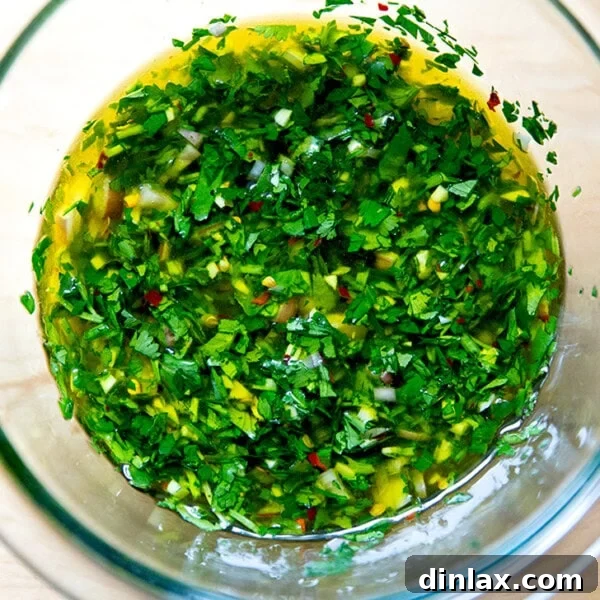
Homemade Chimichurri Recipe
Rated 5 out of 5 stars based on 2 reviews
- Author: Alexandra Stafford
- Total Time: 15 minutes
- Yield: Approximately 1 cup
- Diet: Vegan
- Prep Time: 15 minutes
- Category: Sauce, Condiment
- Cuisine: Argentinian, Uruguayan, South American
Recipe Description
This bright, zesty, and herb-packed chimichurri is an uncooked sauce originating from Argentina and Uruguay. It’s incredibly easy to stir together and famously enhances the flavor of grilled meats, fish, vegetables, and so much more! Prepare to elevate every meal with this vibrant homemade condiment.
This recipe has been adapted from a 2006 article featured in Gourmet Magazine.
Important Recipe Notes:
- This chimichurri recipe is incredibly forgiving and lends itself beautifully to improvisation. Feel free to adjust ingredients based on your pantry and preference:
- Shallots: If shallots are unavailable, finely diced red or white onion can be used as a suitable substitute.
- Garlic: For those sensitive to the strong flavor of raw garlic, you can reduce the quantity or omit it entirely.
- Salt: We consistently use Diamond Crystal Kosher salt or a flaky sea salt for their balanced salinity. When using other types of salt, be aware that their saltiness can vary significantly; always taste as you go and adjust to your preference.
- Crushed Red Pepper Flakes: If you prefer less heat, use a smaller amount than 1/2 teaspoon. For a fresh kick, a small, finely minced hot chili pepper can also be used.
- White Balsamic Vinegar: Excellent alternatives include red wine vinegar, fresh lemon juice, or fresh lime juice. A combination of citrus and vinegar can also provide a delightful complexity.
- Herbs: While we suggest a mix, you have the flexibility to use all parsley, all cilantro, or even introduce a touch of fresh oregano for a different flavor profile.
Ingredients
Please ensure you read all the notes and tips above before beginning your preparation for the best results.
- 2 tablespoons finely minced shallots
- 1 teaspoon finely minced garlic (from 1 small clove)
- 1/4 teaspoon salt (we recommend Diamond Crystal Kosher salt)
- 1/2 teaspoon crushed red pepper flakes (adjust to taste for desired heat)
- 1/4 cup white balsamic vinegar (or red wine vinegar, lemon/lime juice)
- 1/4 cup finely chopped fresh flat-leaf parsley
- 1/4 cup finely chopped fresh cilantro
- 1/3 cup high-quality extra-virgin olive oil
Instructions
- In a medium-sized bowl, combine the finely minced shallots, garlic, salt, crushed red pepper flakes, and vinegar. Stir these ingredients thoroughly. Allow the mixture to macerate for 5 minutes; this step softens the aromatics and allows their flavors to infuse into the vinegar, creating a robust base while you prepare your fresh herbs.
- Add the finely chopped fresh parsley and cilantro, followed by the extra-virgin olive oil, to the bowl. Stir everything together until all ingredients are well combined and evenly distributed. Taste the chimichurri and adjust the seasoning as necessary – you might want more salt, a splash more acid (vinegar or citrus), or additional crushed red pepper flakes to achieve your perfect balance.
- Once the flavors are to your liking, transfer the homemade chimichurri into a clean, airtight jar or container. Store it in the refrigerator for up to one week. For optimal flavor, let it come to room temperature for about 15-20 minutes before serving, and give it a quick stir.